

LED lighting for hospitals: technical guide | Factorled

David Torres
2026-09-28 08:24:26
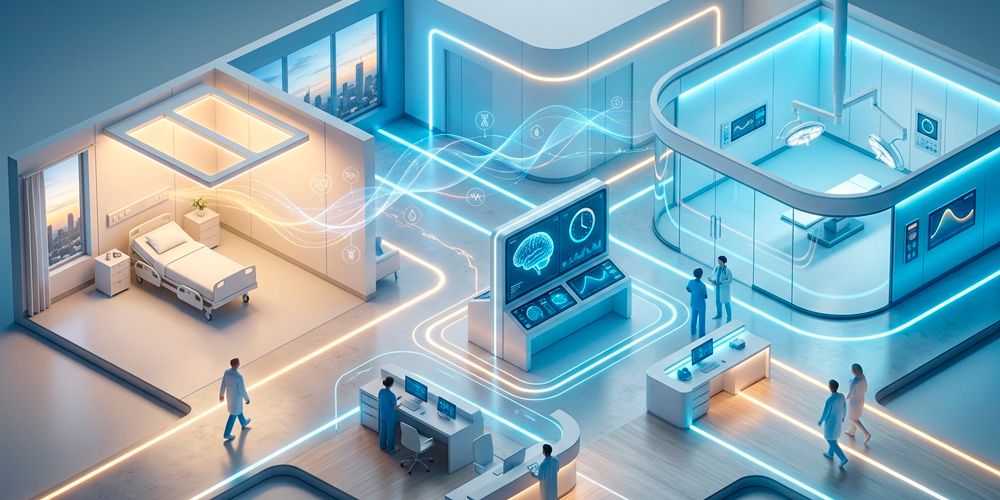
Lighting in healthcare environments is not just a matter of regulatory compliance or energy efficiency: it is a clinical variable. The colour temperature under which a doctor examines a patient can influence the diagnosis. The night light level in an ICU can make the difference between a patient recovering their circadian rhythm or developing postoperative delirium. And observation lighting on an inpatient ward can let the patient sleep or prevent it. This guide brings together the technical and clinical aspects that a specialist installer must master to work with confidence in the most demanding environment in the sector.
1. Why the healthcare environment is different from any other
Hospital lighting has three simultaneous dimensions that make it unique: it is a clinical tool, it is a working environment for professionals and it is the temporary home of patients. These three dimensions have sometimes contradictory requirements that the design must resolve.
Light as a clinical tool
Light as a working environment
Light as a temporary living environment
A meta-analysis published in the Journal of Intensive Care Medicine (2020) analysed 14 studies with more than 2,800 ICU patients. Conclusion: a lighting system with a circadian cycle (bright light by day, dim light at night) reduced the incidence of postoperative delirium by 35% compared with standard uniform lighting.
Postoperative delirium is associated with higher one-year mortality, longer hospital stays and a greater risk of long-term cognitive decline.
The arithmetic is simple: a DALI + Tunable White system in a 20-bed ICU costs between €15,000 and €25,000. A single additional day of hospitalisation in ICU costs between €1,500 and €3,000 per patient.
2. Technical parameters by zone: the complete reference
The standard EN 12464-1:2021 and the technical guide HTM 08-03 are the two main references. This table shows the values for all the relevant zones of a hospital (critical zones are marked with a blue border):
| Zone / space | Lux | Colour temp. | Min. CRI | UGR | Special requirement or criterion |
|---|---|---|---|---|---|
| Operating theatre (surgical field) | 10.000–100.000 | D65 (6,500K) | Ra≥90 R9≥50 | N/A | Specialised medical-grade surgical light. Not general LED lighting. |
| Operating theatre (general ambient) | 1.000 | 4,000–5,000K | Ra≥90 | <19 | Room lighting around the surgical field. Professional medical-standard LED. |
| Recovery / ICU | 500–1.000 | 4,000K | Ra≥90 | <19 | Dual circuit: working (1,000 lux) + night observation (50 lux). HCL system recommended. |
| Inpatient room | 100–300 | 2,700–4,000K | Ra≥80 | <19 | General ceiling light 300 lux + reading light 100 lux + night observation 5 lux. |
| Consulting room / examination | 500 | 4,000K | Ra≥90 | <19 | Ra≥90 essential for visual diagnosis. No flicker. Dimming option. |
| Emergency / triage | 750–1.000 | 4,000–5,000K | Ra≥90 | <19 | High visual demand under stress conditions. No flicker or glare. |
| Patient waiting room | 200–300 | 3,000–4,000K | Ra≥80 | <22 | Stress-reduction environment. A warmer temperature encourages relaxation. |
| Circulation corridors (day) | 200 | 4,000K | Ra≥80 | <25 | High uniformity. No abrupt level changes relative to adjacent rooms. |
| Circulation corridors (night) | 50 | 2,700K | Ra≥80 | <28 | Must not wake patients. Minimum safety level for night staff. |
| Radiology room | 300–500 | 4,000K | Ra≥80 | <19 | No flicker (it degrades image quality). Independent control of the reading light. |
| Clinical laboratory | 500–750 | 4,000–5,000K | Ra≥90 R9≥50 | <19 | Correct colour vision in the analysis of biological samples. |
| Hospital pharmacy | 500 | 4,000K | Ra≥80 | <19 | Precision work and label reading. No shadows on packaging. |
| Nursing work area | 500 | 4,000K | Ra≥80 | <19 | Medication control and documentation. Same standard as an office workstation. |
| Staff changing rooms / toilets | 200 | 4,000K | Ra≥80 | <25 | Occupancy sensor. Mirror light with Ra≥90 to check appearance before the shift. |
← Swipe the table horizontally to see all columns →
Colour temperature scale in the hospital
Each colour temperature fulfils a different clinical function. Warm zones favour rest; neutral and cool zones, diagnostic precision and alertness:
Correspondence between colour temperature and clinical use according to the parameters of EN 12464-1:2021
The standard colour rendering index (Ra) averages 8 colour samples and none of them is a saturated red. The R9 index specifically measures the rendering of saturated red: the colour of blood, inflammatory erythema and vascularised mucosa.
With a low R9 (<20), even if Ra is ≥90, fresh blood can look dark brown instead of bright red. In emergency or in the operating theatre, that perception error can have consequences.
For all clinical zones: Ra≥90 with R9≥50. Non-negotiable. Check both values in the photometric data sheet.
3. Applicable regulations: the installer's legal framework
A lighting project in a healthcare facility is subject to a broader set of standards than any other type of building:
| Standard / regulation | Type | Content relevant to lighting | Responsible for compliance |
|---|---|---|---|
| EN 12464-1:2021 | European standard | Main standard for lighting of indoor workplaces. Applies to all work zones of a hospital: consulting rooms, laboratories, nursing and administration. | Installer + designer |
| HTM 08-03 (United Kingdom) and European equivalents | Health Technical Memorandum | Technical guide for healthcare environments. Defines requirements for operating theatres, ICU, rooms and diagnostic areas. De facto reference in Europe, although not mandatory outside the UK. | Designer + site management |
| EN 60598-2-25 | IEC/EN standard | Specific requirements for luminaires used in clinical areas of hospitals. Defines categories according to the electrical risk to the patient. | Manufacturer + installer |
| Royal Decree 486/1997 | BOE — Spain | Minimum lighting conditions in workplaces, including healthcare facilities. Linked to EN 12464-1. | Installer + company |
| CTE DB-SUA-4 | Spanish Building Code | Mandatory emergency lighting in escape routes, stairs and high-risk areas. Applied more strictly in hospitals. | Designer + installer |
| DALI-2 / IEC 62386 | Control protocol | Control standard in newly built hospitals. Precise control of every luminaire and fault logging. | Systems installer |
| IEC 60601 / ISO 15223 | Medical equipment standards | Only for luminaires classified as medical equipment (examination lamps, surgical lights). Does not apply to general LED lighting. | Equipment manufacturer |
← Swipe the table horizontally to see all columns →
In a hospital, a lighting error is not just a technical problem: it can have clinical consequences. If luminaires with high flicker are installed in a diagnostic zone and that flicker interferes with imaging equipment or causes visual fatigue in a doctor who then makes a diagnostic error, the chain of liability can reach the installer.
Complete technical documentation (data sheet with Ra, R9, Flicker Index, IP certification and Declaration of Conformity) is the installer's only protection. Without it, liability is much harder to delimit.
4. Zone-by-zone design: the 5 most critical units
- Surgical light
- Specialised medical-grade equipment (not general LED lighting): 10,000–100,000 lux, minimal shadow and adjustable temperature between 3,500 and 5,000K.
- Room lighting
- 1,000 lux, 4,000–5,000K, Ra≥90, R9≥50 and UGR<19. The room around the surgical field must be perfectly controlled.
- No flicker
- Flicker Percent <3% and Flicker Index <0.02. Flicker interferes with video-laparoscopy cameras and intraoperative imaging systems.
- Phase control
- DALI scenes: "preparation" (1,000 lux general), "procedure" (surgical light active + dimmed ambient) and "closure" (500 lux + documentation).
- Variable temperature
- Varying the colour temperature between the start and end of the surgical day reduces the surgeon's visual fatigue in long procedures.
- Required IP
- IP54 minimum for room luminaires; IP65 in wet surgical scrub areas. Resistance to broad-spectrum cleaning products.
- Light levels
- Medical work: 500–1,000 lux. Observation: 100 lux. Patient sleep: 5–10 lux. Three completely independent circuits.
- Circadian circuit
- Day: 4,000K / 500 lux. Night: 2,700K / 50 lux automatically. The system follows the solar cycle, not the staff schedule.
- No glare
- The patient is usually lying supine looking at the ceiling. No luminaire must be in the line of sight of the bed-bound patient.
- Individual control
- DALI with per-bed control, adjustable from the nursing station or from the bed itself.
- Tunable White technology
- Essential in ICU. The documented clinical benefit of the circadian cycle requires varying the colour temperature, not just the intensity.
- Fault alert
- The DALI system must report the status of every luminaire in real time. A fault in ICU generates an immediate alert to maintenance.
- Day circuit
- 300 lux / 4,000K. Ceiling lighting for visits, meals and nursing work.
- Reading light
- 100 lux / 3,000K. Individual adjustable wall light over the bed, controlled by the patient from the headboard.
- Night observation
- 5–10 lux / 2,700K on an independent circuit. Lights only the floor and the walkway, without pointing at the bed. Never a downlight over the bed.
- Patient control
- The patient must be able to switch off their personal light and the ambient light without calling the nurse. Patient autonomy = perceived quality.
- Nurse call
- Integration with the lighting system: when the call button is pressed, the room automatically switches to the "working" level.
- Room bathroom
- Independent lighting with occupancy sensor. IP44 minimum and Ra≥80 at the mirror.
- Lighting level
- 750–1,000 lux in examination and critical-care bays; 300 lux in triage; 200 lux in the waiting room.
- Colour temperature
- 4,000–5,000K in bays to maximise staff alertness and diagnostic visibility.
- No flicker
- Emergency patients may arrive with headache or migraine, which flicker drastically worsens. Flicker Percent <3% in all zones.
- IP in cleaning zones
- IP65 throughout the bay area: disinfection between patients uses water and aggressive products.
- Night shift
- Night scene with cool light at the start of the shift to maintain alertness and progressive reduction towards the end.
- Reinforced emergency lighting
- 3 h autonomy (not 1 h as in standard buildings) with coverage in all bays and corridors.
- Mandatory CRI
- Ra≥90 with R9≥50, without exception. Visual analysis of blood, urine and tissue demands maximum colour fidelity.
- Colour temperature
- 4,000–5,000K. Neutral-cool light maximises colour discrimination in samples.
- No shadows
- Very uniform lighting on work surfaces: shadows on samples make analysis difficult.
- No flicker
- Camera microscopes are especially sensitive. Flicker Percent <3% and Flicker Index <0.02.
- IP in the washing area
- IP65 in the material and instrument washing area, where reagent splashes are frequent.
- Biosafety
- Biosafety cabinets and laminar flow hoods have their own requirements. Consult the equipment manufacturer before designing the circuit.
Table of IP ratings by hospital zone
Constant cleaning and disinfection turn ingress protection into a safety criterion, not just a durability one:
| IP rating | Protection | Hospital zones | Technical criterion |
|---|---|---|---|
| IP20 | No protection against water | Dry zones only: offices, administration | Never in bathrooms or cleaning zones: fails within weeks under direct water. |
| IP44 | Splashes from any direction | Room and staff bathrooms | Minimum for ward bathrooms with occupancy sensor. |
| IP54 | Dust + splashes | Operating theatre room luminaires | Added resistance to broad-spectrum cleaning products. |
| IP65 | Dust-tight + water jets | Surgical scrub, emergency bays, laboratory washing | Minimum in any zone with a risk of direct water. |
| IP67 | Temporary immersion | Sterilisation with autoclave or pressure cleaning | Maximum protection for the most aggressive cleaning cycles. |
← Swipe the table horizontally to see all columns →
5. Human Centric Lighting in hospitals: clinical evidence
Circadian lighting in healthcare environments is not a design trend: it has published clinical evidence that justifies the investment from a medical and economic perspective.
| Zone / unit | Light sequence | Documented clinical benefit | Recommended technology |
|---|---|---|---|
| ICU — day/night cycle | Day: 4,000K / 500 lux → Night: 2,700K / 50 lux | Preserving the circadian rhythm reduces postoperative delirium by up to 35% (Journal of Intensive Care Medicine, 2020). Lower use of sedatives. | Tunable White driver + DALI controller + astronomical timer |
| Inpatient ward — 24 h cycle | 06:00–22:00: 300 lux / 4,000K → 22:00–06:00: 10 lux / 2,700K | Patients recover their sleep-wake rhythm sooner. Shorter average stays in reference studies. | Dimmable TW panel + bed occupancy sensor |
| Waiting room — anxiety reduction | 200 lux / 3,000K with gentle variation during the day | Warm light reduces the perceived waiting time and the anxiety of patients and relatives (Karolinska Institutet studies, Sweden). | Dimmable TW downlights + automatic programme |
| Emergency — night shift | Start: 5,000K / 750 lux → final hours: 4,000K / 500 lux | Cool, bright light at the start of the shift activates staff alertness; it is associated with a reduction in night-time medication errors of up to 20%. | TW panels with automatic per-shift programming |
| Operating theatre — preparation and closure | Preparation: 4,000K / 1,000 lux → Procedure: surgical light → Closure: 4,000K / 500 lux | A smooth transition between ambient and surgical light prevents the surgeon from losing visual adaptation. | DALI with scenes programmed by surgical phase |
| Neonatology | Day: 3,000K / 200 lux diffuse → Night: 2,700K / 10 lux | Newborns are extremely sensitive to light; the circadian cycle is critical for their neurological development. Uniformity mandatory, no direct bright spots. | Large-area opal LED panel + DALI + occupancy sensor |
← Swipe the table horizontally to see all columns →
A DALI + Tunable White system on a 30-bed ward costs between €20,000 and €35,000. If it reduces the average stay by 0.5 days, an effect documented in HCL studies on inpatient wards, the freed-up capacity is calculated as follows (reference average stay: 6 days; cost per bed: €500/day):
Admissions/year = 30 beds × 365 days ÷ 6-day stay ≈ 1,825 admissions
Bed-days freed = 1,825 admissions × 0.5 days ≈ 912 bed-days/year
Capacity freed = 912 × €500 ≈ €456,000/year
These are not direct savings: they are beds available for new admissions. The argument is not financial in the strict sense, but any medical director or healthcare manager understands it immediately: the investment is recovered in weeks of care capacity.
6. Control system: DALI is the standard in hospitals
The DALI-2 (IEC 62386) protocol is the de facto standard in hospital lighting for new builds and major refurbishments. Its advantages over uncontrolled systems are especially relevant in the healthcare environment:
| Zone | Control system | Operation | Key benefit |
|---|---|---|---|
| Inpatient ward | DALI + astronomical timer + bed occupancy sensor | Automatic day/night control per room. Night observation on an independent circuit. | BACS class A. The greatest saving in the hospital's highest-consumption zone. |
| 24 h emergency department | DALI + per-shift programming | Scene per shift (morning/afternoon/night). Cool light at the start of the night shift. | Automatic switching eliminates manual configuration by staff. |
| ICU | DALI + TW + occupancy sensor + astronomical timer | Precise control of every luminaire, circadian cycle and immediate fault alert. | The most complex system and the one with the greatest documented clinical benefit. |
| Consulting and examination rooms | Dimmable DALI with manual scenes | "Examination" (1,000 lux), "consultation" (500 lux), "dark" for screen-based equipment. | The doctor adapts the light to each type of examination. |
| Operating theatres (ambient) | DALI with scenes by surgical phase | Pre-procedure, procedure and closure, integrated with the surgical light. | Integration with the hospital's global BMS. |
| Corridors and circulation | Occupancy sensor + automatic night reduction | Occupied: 200 lux. Unoccupied: 50 lux. Night: 30 lux. | Maximum saving with minimum risk. Never a total switch-off in circulation routes. |
| Waiting rooms | Astronomical timer + TW (optional) | Warmer light in the afternoon to reduce relatives' anxiety. | Real impact on the perception of the service. |
| Staff work areas | DALI + daylight sensor (if there is a window) | Same standard as an office, with daylight harvesting wherever there is daylight. | Visual wellbeing on long shifts. |
← Swipe the table horizontally to see all columns →
In a hospital, lighting control is part of the critical infrastructure. These three reliability requirements distinguish a hospital installation from a commercial one:
- Guaranteed local operationEvery luminaire must operate autonomously even if the control network fails. DALI drivers have a fallback mode to a predefined light level.
- Redundancy in critical zonesICU, operating theatres and emergency must have emergency circuits completely independent of the general DALI system.
- Real-time fault reportingAny luminaire fault is notified to the hospital's maintenance system. In ICU, a lighting fault can be an emergency.
7. The 7 critical mistakes that cannot be made in a hospital
In the healthcare environment, lighting mistakes can have clinical consequences. These are the 7 mistakes no specialist installer can make in a hospital or clinic project:
| Critical mistake | Typical situation | Clinical / legal consequence | Correct solution |
|---|---|---|---|
| LED with flicker in the operating theatre or examination room | Low-cost driver with Flicker Percent >10% in a diagnostic zone. | Interferes with medical cameras, video-laparoscopy and imaging equipment. Can cause artefacts in diagnostic images. | Flicker Percent <3% and Flicker Index <0.02 in all medical zones. Medical-grade drivers verified in the data sheet. |
| Unsuitable colour temperature for diagnosis | 3,000K lighting in a consulting or examination room. | Under warm light, the skin does not correctly show erythema, cyanosis or jaundice. Risk of error in visual examination. | 4,000–5,000K in all diagnostic zones, with Ra≥90 and R9≥50. |
| No dual circuit in rooms | A single light source for general lighting and night nursing work. | Switching on the light to check the patient at night wakes them and disrupts their sleep cycle. | Independent night observation circuit: 5–10 lux, with no direct glare to the patient. |
| Insufficient or poorly distributed emergency lighting | Emergency lights only at exits, with no coverage in 30 m corridors. | In a power failure, staff cannot move around safely. Risk for critical patients. | 1 lux minimum on the centre line of escape routes, 5 lux in high-risk areas and 3 h autonomy. |
| Ignoring the R9 index in clinical zones | Luminaires with Ra≥90 but R9 <20 in diagnostic zones. | Blood, erythema and inflamed tissue are not perceived correctly. | Ra≥90 with R9≥50 in laboratories, operating theatres and examination. Ra alone is not enough. |
| Luminaires unsuitable for wet zones | IP20 luminaires in ward bathrooms or material cleaning zones. | Direct water jets during instrument cleaning cause an IP20 to fail within weeks. | IP65 minimum with a risk of direct water; IP67 in sterilisation with autoclave or pressure cleaning. |
| Glare to the bed-bound patient | Downlights aimed directly over the bed. | The patient looks at the ceiling: continuous glare causes discomfort and hinders rest. | Never downlights over the bed. Indirect lighting, side wall lights or low-luminance optics. |
← Swipe the table horizontally to see all columns →
The installer's protocol: 7 steps for an error-free hospital project
- Zone the hospitalClassify each space according to its clinical function and assign lux, colour temperature, CRI and UGR in accordance with EN 12464-1:2021.
- Require Ra≥90 and R9≥50 in clinical zonesCheck both values separately in the photometric data sheet of every luminaire for diagnosis, examination, operating theatre or laboratory.
- Control flickerSelect drivers with Flicker Percent <3% and Flicker Index <0.02 in all medical zones.
- Design independent circuitsSeparate working, reading and night observation (5–10 lux) in rooms and ICU, with no luminaires in the patient's line of sight.
- Assign the IP rating by zoneIP44 in bathrooms, IP54 in the operating theatre room, IP65 in emergency bays and washing areas, IP67 in sterilisation.
- Programme DALI-2 control and HCLScenes by zone, Tunable White circadian cycle, fallback mode and real-time fault notification.
- Size the emergency lighting and documentEmergency lighting with 3 h autonomy and a complete technical dossier: Ra, R9, Flicker Index, certified IP and Declaration of Conformity.
8. How the specialist installer wins healthcare projects
Hospital projects are the ones with the greatest technical complexity in the sector. They are also the highest in value per square metre and the ones that generate the longest-lasting business relationships. These are the keys to accessing this market:
Hospital LED panel Ra≥90 R9≥50 UGR<19 with DALI-2 driver
The reference panel for consulting rooms, laboratories, emergency and diagnostic zones: clinical-grade colour rendering, certified visual comfort and a low-switching-frequency driver that meets the flicker limits required in environments with imaging equipment.
Also available in a Tunable White version for ICU, inpatient wards and emergency with HCL programmes. Supplied with photometric data sheet, Flicker Index, certified IP and Declaration of Conformity for tender specifications.
Conclusion: lighting that cares for those who heal and those who are healed
The healthcare environment is the sector where lighting has the greatest potential impact on human health. A good installation does more than comply with regulations and reduce consumption: it contributes directly to better clinical outcomes, safer staff and a more dignified patient experience.
For the specialist installer, this sector represents projects of high technical value, long-term business relationships and the satisfaction of working in an environment where the quality of the work has real consequences for people. There is no more demanding sector. Nor a more rewarding one.
Factorled products for hospitals and healthcare facilities
- LED panel Ra≥90 R9≥50 UGR<19For consulting rooms, laboratories, diagnostic zones and clinical work.
- Tunable White LED panel Ra≥90For ICU, inpatient wards and emergency with HCL programmes.
- Dimmable Ra≥90 LED downlightFor inpatient rooms and waiting rooms.
- Anti-glare LED downlightFor zones where the patient's line of sight is directed at the ceiling.
- Low-switching-frequency DALI-2 driverFlicker Percent <3% and Flicker Index <0.02.
- DALI occupancy sensor for hospital useWith adjustable detection zone for single rooms.
- IP65 waterproof luminaire Ra≥80For cleaning zones, sterilisation and ward bathrooms.
- Emergency luminaire with 3 h autonomyFor hospitals with a 3-hour requirement (versus 1 h standard).
Factorled for the healthcare sector: products and certified technical documentation
We supply medical-grade LED products with all the documentation a hospital project requires: Ra, R9, Flicker Index, certified IP, Declaration of Conformity and DALI-2 compatibility.
UGR<19 Ra≥90 LED panels with R9≥50, verified-quality DALI-2 drivers, Tunable White luminaires for hospital HCL and DALI occupancy and daylight sensors. For tenders, we prepare the complete technical dossier required in the specifications.
Article written by the Factorled technical team · factorled.com