

Magnetic Tracks and Accessories
1 product
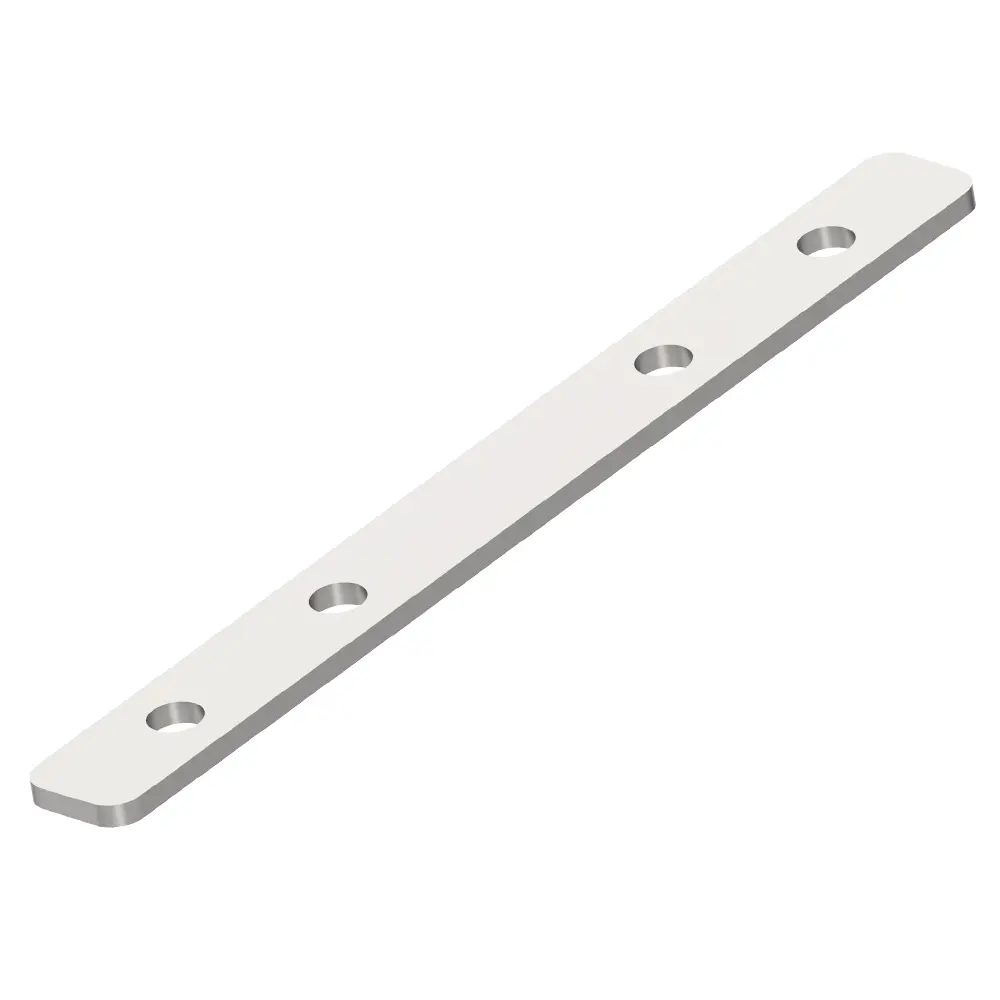
Straight Joint for LED Magnetic Track SLIM
0,71 €
VAT included
Ref: VR005-92276
Magnetic tracks and accessories to shape your lighting
Well-planned lighting starts before you switch on the first light fitting. It starts when you picture where you want light, which areas you need to connect and how you would like to feel in that space. Magnetic tracks and accessories are the foundation for turning that idea into a coherent installation, with a layout that suits both the design of the room and how it is used every day.
Magnetic tracks, also known as magnetic rails, hold and power compatible light fittings that attach by means of magnets. The accessories complete the system: depending on the range, they can be used to join sections, handle changes of direction, bring in the power supply or adapt the mounting to the ceiling. Choosing these elements carefully helps every piece fit together and gives you a neat finish.
Perhaps you are planning a line of light over the living room, an arrangement for a shop or an installation that links several work areas. Whatever the project, it is worth starting with the right structure. That is what will let you place the light fittings exactly where they are needed and enjoy a visually tidy result.
Magnetic tracks: the foundation of a flexible lighting system
A magnetic track is the profile that holds the light fittings and carries the system's electrical connections. Its role goes beyond marking a path across the ceiling: it determines which modules you can install, how they are arranged and which components you need to complete the assembly.
Within the same compatible range, you can combine different light fittings and, where the system allows, change their position to suit a new layout. This flexibility is especially useful in spaces that evolve: a living room where you rearrange the furniture, a shop that refreshes its collections or a display area that needs to highlight different items.
That is why, when choosing magnetic rails, it is worth thinking about both the initial arrangement and the adjustments you might need later. Planning the route, the power feed points and the capacity of the system can make future changes easier, always within the limits of the installation.
Which type of magnetic track suits your project
How the track is installed affects both the visual result and the preparation the space requires. Depending on the range, you can find surface-mounted, recessed or suspended solutions. Each option meets different mounting conditions.
- Surface-mounted magnetic tracks: these are fixed onto the mounting surface, leaving the profile visible. They can suit projects where you want the line of the track to be part of the design and where no recess has been planned to build it in.
- Recessed magnetic tracks: these are built into the ceiling or into the support designed for them. You need to check the available space, the profile dimensions and the installation conditions before the finishing work is carried out.
- Suspended magnetic tracks: these hang at a certain distance from the ceiling using compatible suspension elements. They let you adjust the height of the system according to what it allows and what the project needs.
Picture how the route will look from the entrance and from the areas where you spend most time. A line centred over a table, an arrangement that follows a counter or a layout that tracks the furniture can bring order and continuity to the room.
Magnetic accessories to join, power and complete the system
Magnetic lighting accessories include the components designed to complete a magnetic track installation. Although they are grouped under that name, not all of them are held in place by magnets: some are used for joining, fixing, power supply or finishing.
Connectors and joining pieces let you link sections or handle certain changes of direction, depending on the design of the range. It is important to distinguish between a mechanical joint, which secures the profiles, and an electrical connection, which provides power continuity. A part may do one or both; check its technical data sheet.
Power components connect the track to the electrical supply intended for the system. In installations that require an external driver, it must be compatible with the operating voltage and sized according to the load and the manufacturer's instructions.
Other elements, such as end caps, fixings or suspension kits, help complete the assembly. They are discreet details, but choosing them from the outset lets you plan an installation with neat finishes and no loose ends left to resolve.
How to choose compatible magnetic rails and accessories
Before combining components, check which system they belong to. Not all magnetic tracks, accessories and light fittings are compatible with one another, even if they look similar or share a dimension. Compatibility must be stated by the manufacturer.
To prepare your selection, bear these points in mind:
- Range and dimensions: check the track profile, the connection type and the compatible references for each accessory.
- Operating voltage: it must match that of the light fittings and the system's power components.
- Mounting type: choose tracks and fixings suited to a surface-mounted, recessed or suspended installation, depending on your project.
- Route and joints: define the sections, corners and connection points before working out the components you need.
- Load and system limits: check the total wattage of the light fittings, the power supply capacity and the electrical and mechanical limits stated by the manufacturer.
- Dimming and control: if you want to dim the light or use specific controls, check that every element involved is compatible.
With these decisions made, it is easier to choose the light fittings and distribute the light according to what happens in each area. You can keep directional lighting for highlighting objects and combine it with other compatible modules wherever you need more continuous light.
An installation that suits the way you live in your space
In a home, the route of the tracks can help connect different areas without losing the character of each corner. In a shop, it can follow the arrangement of shelving and display units. And in an office, it can be organised around the activity areas, taking into account the lighting needs of each workstation.
The aim is for the structure to make sense within the space. Before deciding on the length and position of the tracks, consider the ceiling height, the position of the furniture and the reach of the light fittings you are going to use. It is also wise to plan access to any components that may need maintenance.
When every element is well chosen, the whole conveys a sense of order. The light works with the space, the details find their place and the installation blends naturally into the room.
Frequently asked questions about magnetic tracks and accessories
Are magnetic tracks and magnetic rails the same thing?
Yes. In lighting, both terms are commonly used to refer to the profiles that hold and power light fittings with magnetic attachment. What determines compatibility is the system's technical specification, not the name used.
Which accessories do I need to install a magnetic track?
It depends on the route and the type of installation. You may need power components, joints, connectors, end caps and fixings or suspension kits. Check which components are included with each product and which must be purchased separately.
Can I join several sections of magnetic track?
Many systems allow sections to be joined using specific accessories. You should check that the intended joint is compatible, whether it provides electrical continuity and what length, load and power limits the manufacturer sets.
Do accessories from one brand work with another brand's tracks?
You should not assume so. Dimensions, electrical contacts, fixings and the control system may differ. Use combinations whose compatibility has been expressly confirmed.
Do all magnetic tracks need an external driver?
Not all of them use the same configuration. Low-voltage systems need a suitable driver, which may be external or built into a specific solution within the range. Check the track's requirements before choosing one.
Can the installation be extended later on?
It may be possible if the system allows extensions and compatible components are available. Before adding sections or light fittings, check the power supply capacity, the fixings and the limits of the system. Allowing for this possibility in the initial design helps you assess future needs.
Explore our magnetic tracks and accessories category and find the right components to shape your project. Start with a compatible, well-planned foundation: every section, every joint and every point of light will help create a more comfortable space, made to measure for you.
Más en Magnetic LED Lighting