

LED Bulbs for Industrial Warehouses
4 products
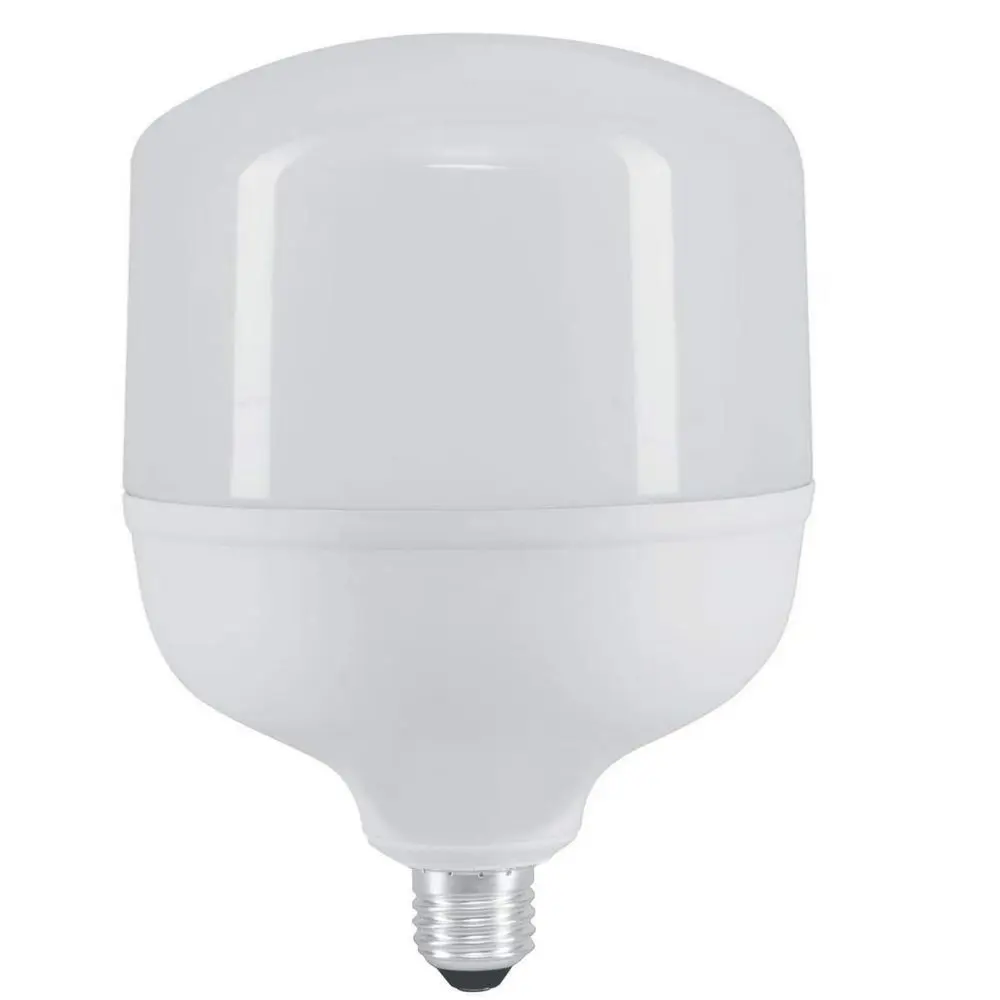
LED Lamp bulb - 50W - 130Lm/W - E27 - IP20
9,44 €
VAT included
Ref: LB50W
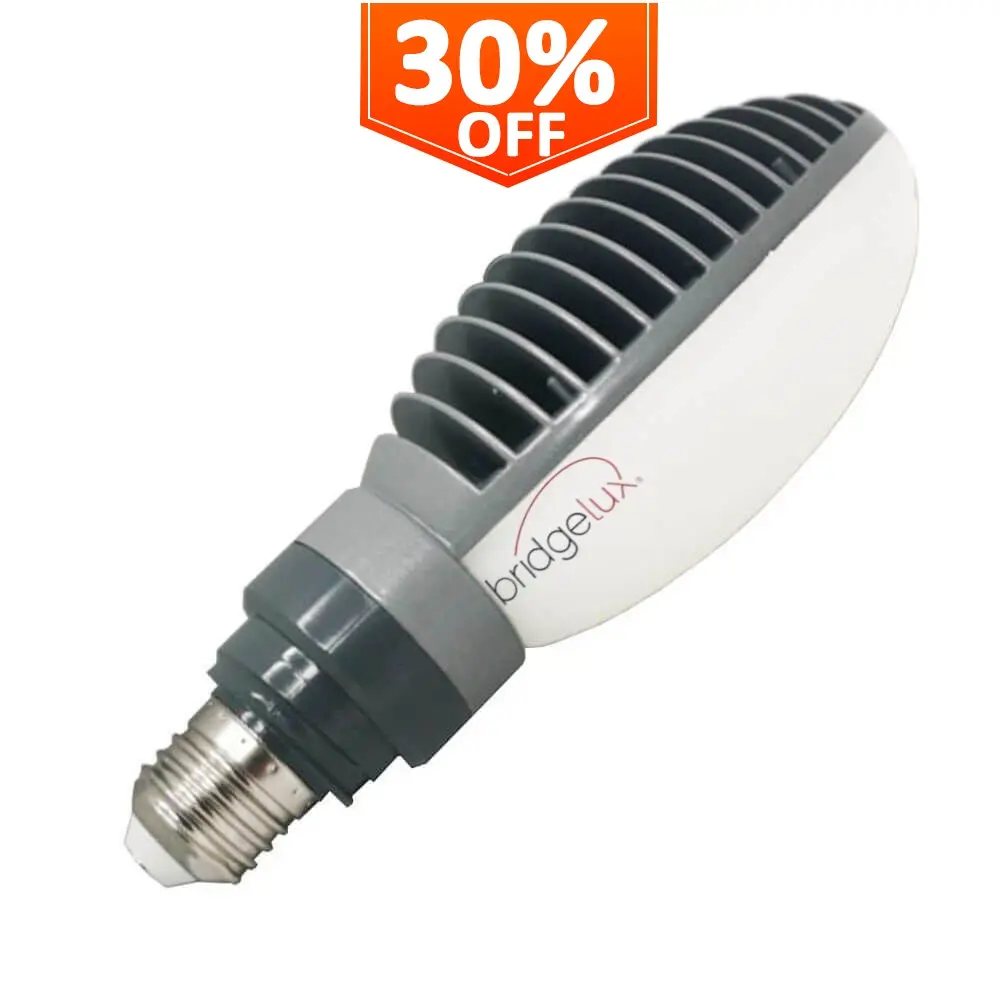
LED Lamp bulb 36W BRIDGELUX E27 - 167 Lm - High Resistance
21,21 €
VAT included
Ref: FLB36WS3
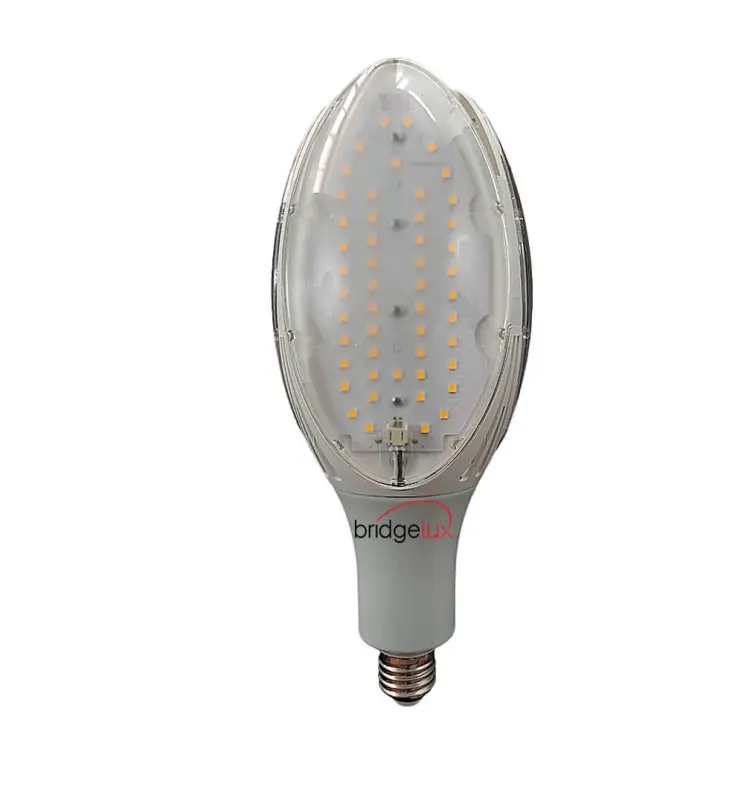
LED Lamp Bulb 45W - High Luminosity
21,74 €
VAT included
Ref: FLB45W
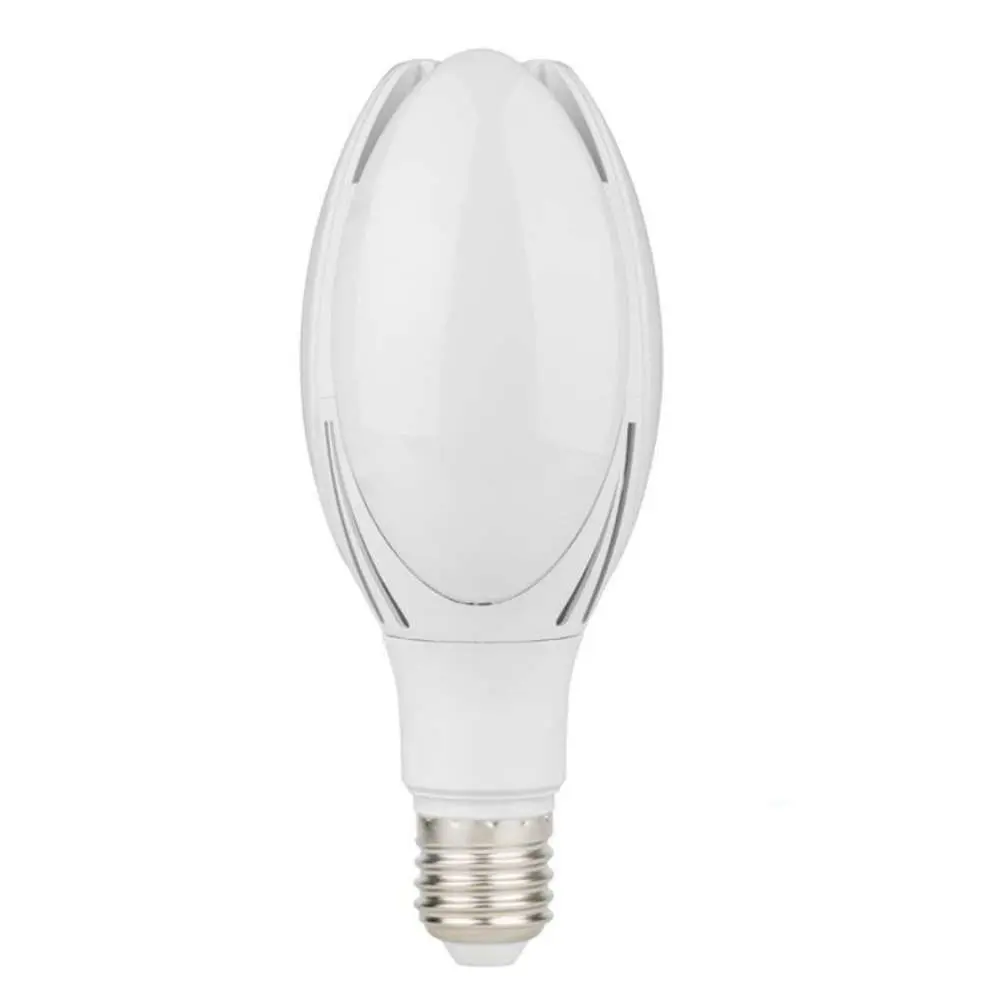
LED Bulb ED90 40W for Streetlight | E27 Socket High Resistance | 300º
15,50 €
VAT included
Ref: FLB40WS2
LED bulbs for industrial buildings: industrial LED lighting, from a single lamp holder to the whole building
A light point fails, an identical replacement is ordered and someone goes up to change it. In industrial buildings that routine holds until the failure is the fourth of the quarter and the access platform starts turning up on the timesheet every month.
From there, there are two routes. One is to replace only the light source and leave the old housing where it is, with its fixing, its supply cable and its reflector. The other is to take the whole fitting down and install a new luminaire. The first takes minutes per point and barely touches the installation; the second costs more up front and, along the way, fixes the optics, the sealing and the ability to dim. The decision is not about taste or budget: it comes down to mounting height, the condition of what is already hanging and annual operating hours.
LED technology works for both approaches, and that nuance gets lost every time two quotes are compared on wattage alone. A screw-in retrofit and an LED high bay can deliver similar luminous flux and behave very differently three years on, because the real difference is not in the emitter: it lies in how the heat is dissipated and in which optic distributes the light.
We manufacture what we sell, so we have this conversation with the datasheet in front of us. The advantage is not visible when you buy, it shows when you reorder: order three single units in two years' time and they arrive identical to the ones you installed, same beam and same white, without that mismatched row that gives away at a glance which one was replaced. The warranty points the same way, three years as standard, rising to 6 depending on the product, and with a retrofit that translates into something very measurable: how many times you have to go back up to that point. In industrial spaces of a certain size, that is half the installation sorted. Tell us what you have installed today and at what height, by emailing uk@factorled.com or calling 654 777 000 during business hours, and we will tell you which of the two routes works better in your building before you order anything.
Aluminium, not the diode, decides lifespan: bases and fins on LED bulbs for industrial buildings and high-power LED lights
Different things happen inside the glass, which is why the change is not a clean swap. A sodium or metal halide lamp produces light in an electric arc, needs control gear to start and gives off much of its heat outwards by radiation. A solid-state emitter runs on direct current behind a driver and has to shed its heat by conduction, through the body of the fitting itself. That textbook detail is what decides which retrofit survives in an industrial building and which does not.
Hence the fins. A screw-in lamp designed for industrial use does not have the smooth bulb of the one you screw in at home: it has a finned aluminium body around the base, and that metal mass is what keeps the semiconductor junction within its operating range. When the junction runs hot, luminous flux drops and the colour shifts. No fuse blows and nothing breaks: the point stays lit and gives less every year. The durability of a screw-in retrofit is decided by the aluminium, not the LED.
The base determines the rest. Our range covers E27 and E14 screw bases, plus GU10, MR16, AR111 and G9 for dichroic, accent and decorative lighting; in an industrial building the relevant one is the screw base, because it is the one already fitted in the lamp holder of the old housing. And that lamp holder imposes two limits worth checking before placing the order: the weight it can bear when suspended and the air around the body of the lamp.
The second causes more surprises than the first. A compact lamp mounted base-up inside a closed housing ends up surrounded by its own hot air: the heat rises, hits the reflector and stays there circulating. The same lamp hanging in open air, in an open batten or a bare lamp holder, runs several degrees cooler and lasts considerably longer. If the old housing is closed and sealed, the sensible approach is to assume it will perform below its datasheet and choose with some headroom.
When comparing two retrofits, always ask for the same three figures: flux measured at the fitting output and not at the semiconductor, real lm/W of the complete unit, and beam angle. All three must be on the datasheet; if any is missing, ask for it before confirming the order.
Direct replacement for sodium vapour: the industrial LED lamp that fits without touching the luminaire
The installed base of high-pressure sodium is still hanging because, in its day, it delivered: plenty of flux per watt and cheap replacements. What it never delivered was colour. Sodium concentrates almost all of its spectrum in the yellow, so any colour coding, cable ties, shelf labels, floor markings, stops reading as a code. In an order-picking facility, that goes from a nuisance to picking errors.
This replacement is one of the most rewarding in industrial lighting, because it involves no building work. The lamp screws into the same lamp holder, and the reflector, the glass, the fixing and the cable running up to the distribution board all stay where they are. The only thing to deal with is the control gear: ballast, ignitor and capacitor come out of the circuit and the lamp holder is wired directly to mains. It takes an electrician fifteen minutes per point, and it must be done without exception: leaving a ballast in series with an electronic driver is the fastest way to destroy both.
While you are up there, check three parts that have been hanging for as many decades as the lamp. The porcelain lamp holder, which loses contact pressure through thermal cycling and heats the base. The glass gasket, which no longer seals once it has hardened. And the reflector, which, if pitted or oxidised, returns far less light than it did when it was installed.
That reflector is the small print of direct replacement. The optic of a sodium housing was designed around a long arc tube that emitted in all directions, whereas a solid-state lamp emits downwards, in a cone. Much of the reflector geometry stops doing its job. The result is still better than the starting point, it switches on instantly, does not go dark after a brief power dip and renders colour properly, but it is not what the same emitter would give hanging with its own lens. When the reflector is sound, the screw-in retrofit works out perfectly; when it is not, you pay for new electronics so that half the installation ends up lighting the roof.
Go up, open a housing, look at the reflector and send us a photo: from that we can tell you whether the retrofit pays off across your installed base or whether the complete fitting should be quoted, and either way the goods are dispatched to the Spanish mainland (península) as soon as the order is confirmed.
Replace the lamp or move to a round-body LED high bay: what type of luminaire your industrial building needs
The two routes part ways over four questions, and none of them has anything to do with what the box costs.
The first is height. Below six metres, with housings in good condition and few points, the screw-in retrofit does the job without question: the distance is short, the old optic still distributes the light and the labour saving is tangible. Above that, every extra metre costs flux at an accelerating rate and the distribution depends more on the lens than on the watts. In a building nine or ten metres to the roof truss, an LED high bay with its own optic does a job that a recycled discharge housing cannot.
The second is the condition of what is hanging. Open one up and look inside. If the gasket no longer seals, if the glass is clouded on the inside, if the wiring flakes when touched, putting new electronics in there means investing in a container that will fail before its contents. In that case replacing the complete fitting is not a whim: it is the best solution and, over two years, also the cheapest.
The third is how many points there are and what it costs to reach them. The access platform, the permit for working at height and the electrician's hours cost the same whether you go up to screw in a lamp or to take a fitting down and hang a new one. When labour outweighs materials, and on high roofs it always does, the gap between the two options narrows dramatically, and it pays to go up just once and get the job done.
The fourth is control. If at any point you will want to dim or switch on by presence detection, the decision is already made: that lives in the luminaire's electronics and cannot be added later by screwing anything in.
With those four answers, the split usually looks like this. Screw-in retrofits in low workshops, mezzanines, technical offices and small buildings with a recent installation. UFO LED high bays in manufacturing, logistics, cold rooms and anything above seven metres. And a mix of the two in buildings that grew in phases, which is the most common case. Combining two lighting solutions in the same building is not a botch job: it is what you get when each zone is solved according to what it needs.
There is one figure that almost never makes it into the quote and that matters more than any other. Discharge lamps lose flux continuously and drag along a maintenance and replacement cycle that comes round every few thousand hours; a well-cooled LED high bay operates on a different lifespan scale, so the replacement budget empties and working at height stops being a monthly event. On a high roof, maintenance costs end up weighing more on the bill than the materials. When lighting requirements include night shifts or continuous operation, the difference shows within the first year. We manufacture the industrial high bays in our range, which is why we can guarantee that continuity when it is time to reorder.
Send us the number of points, the height and how many times you went up last year, and we will send back both options priced on the same sheet, retrofit lamps versus complete luminaires, so the decision is made with both figures in front of you and not on a hunch that one is cheaper.
Wattage equivalence does not tell you which LED luminaires or which industrial LED high bay your building needs: tell us what you have installed and we will calculate it
Wattage equivalence is a legacy of discharge lighting and does more harm than good. Comparing the consumption of two different technologies says nothing about what reaches the floor, which is the only thing that gets measured and the only thing that matters to the people working underneath.
The right calculation has two figures and applies equally to the screw-in retrofit and the complete luminaire. The first is the real flux measured at the fitting output, never at the semiconductor: with the high efficacy declared for the range, from 160 to 200 lm/W depending on the version, two 150W units can differ by thousands of lumens. The second is the lux each task requires, which is not the same in a circulation aisle, at an assembly station or at a quality-control bench. With those two figures the replacement calculates itself and no longer depends on what was printed on the old lamp's box.
There is a third factor that works in your favour and that nobody notes down: what you are removing no longer delivers what it claimed when new. It has spent years gradually losing flux, so the real starting point is below the paper figure. Measuring with a lux meter before buying takes half a morning and changes the order.
The financial side is solved with the same arithmetic. A low-energy luminaire delivering the same flux, multiplied by the hours the building is lit each year, is what turns a replacement into an investment rather than an expense. The range's high energy efficiency is what moves the electricity bill, not the wattage on the label. Send us the wattages you have installed and the operating hours and we will send back the equivalence point by point, whether it comes out at 100W or the calculation calls for 200W, with the screw-in retrofit and the complete luminaire priced on the same sheet.
Driver, DALI and remote control: dimming your industrial LED installation by work area
An industrial building rarely needs all its light at once. The loading dock works in bursts, the racking aisles are used a few hours a day and the production line runs a fixed shift. Keeping everything at full output for nine hours so that three are put to use is the most expensive leak in an installation, and also the easiest to close.
The high bays in the range dim via 1-10V, an analogue signal wired with two conductors alongside the supply, understood equally by a wall-mounted dimmer, a timer or the building management system; the digital bus comes in when each point needs to be addressed individually, and radio frequency when nobody is going to run control cable. On top of that base sits the sensor: the standardised socket on the top of the fitting takes it as a push fit, without opening the electronics, and with it presence detection keeps a low background light level that only rises when there is movement.
That is where the money appears. A twenty per cent background level in empty aisles, with full output only beneath the forklift, can cut night-shift consumption to a fraction, without anyone working any worse. In fixed work areas, assembly, inspection, packing, dimming is used the other way round: to compensate for daylight from the rooflights at midday and keep the workstation evenly lit throughout the working day.
Splitting industrial LED lighting into zones also brings order to the installation. Storage areas need little and in bursts, the dock needs a lot and in bursts, the line needs constant light. Grouping each onto its own circuit with its own setpoint costs less than oversizing the whole system, and the Zigbee controller stores scenes by time slot without anyone having to go back to the distribution board.
That leaves colour temperature, which is decided by the same zone logic. Neutral white is the one that holds up well over a long working day in industrial interiors; warm white is reserved for adjoining offices and circulation areas. With the switchable-colour versions, the setting is chosen at installation. One more point that saves complaints: residual flicker from a poorly powered luminaire causes eye strain even if nobody notices it with the naked eye, so driver quality matters as much as the lumens it delivers. And here lies the limit of screw-in LED bulbs for industrial buildings: dimming lives in the fitting's electronics, so if you are going to want control, ask for it from the outset and save yourself a second order.
Sealing is not inherited through the thread: IP65 and 120º optics in the LED high bay that withstands dust and washdown
The codes on the datasheet are not marketing decoration: they are standardised tests and state exactly what the fitting can withstand.
The ingress protection rating is written as two digits. The first measures solids, and at its maximum it means that dust does not get in, not even the fine dust a forklift kicks up on a concrete floor. The second measures water, and the level declared on the datasheet of our high bays withstands the jet from a cleaning hose, the same one used to wash down a cutting room or a wash bay. That pair of digits is what has been tested and put in writing; any other resistance promised verbally must appear on the datasheet before you accept it.
Those figures are what decide whether your old housing can stay up there, which is why they matter when choosing a retrofit. A screw-in lamp inherits the sealing of the housing it screws into, not its own: if the glass gasket has hardened, dust and moisture get in just the same, however pristine the new lamp is when it arrives. When the point is in a washdown area, a cold room or under an overhead crane, that detail is what tips the balance towards taking the fitting down rather than persisting with the lamp.
Beneath all that is the build of the industrial LED high bay, and that is where the comparison between the two approaches is settled: screwing in, you inherit the body already hanging there; taking it down, you buy one designed for that point. Fins that hold the junction temperature and with it a long service life, an SMD emitter listed on the datasheet as an OSRAM SMD 3030 chip and Philips Xitanium or Sosen electronics, the component that most determines how many years the fitting will stay in service.
These are high-quality components, with known curves and traceable spare parts, not anonymous parts that force you to take the whole fitting down. A lens designed specifically for that distance is what makes the installation efficient and durable and what enables it to withstand the most demanding conditions of industrial interiors. None of that is inherited through the thread, so when the point calls for it, what you need is the complete luminaire.
If your building has an overhead crane or pressure washdown, say so when ordering: the sealing you need varies from case to case, and that also determines whether the retrofit does the job or whether the complete fitting needs replacing. Ask for the datasheet for the product code and check it before signing off the order.
A single delivery note for the yard, the loading dock and the football pitches: LED spotlights, outdoor LED floodlights and LED linear lighting beyond the warehouse
The ceiling of the production area covers half the job. The rest is outside, and in the corners nobody puts on the plan until night work comes round.
Start with the yard and the loading dock. High bays do not belong there: floodlights do, on poles, on façades or on the canopy itself, with die-cast aluminium housings, tempered glass and continuous gaskets, and with the beam angle chosen by mounting height rather than square metres. Loading and unloading areas are also where cutting corners costs the most: between a manoeuvring lorry, a pallet truck and someone on foot, a distribution with hard shadows multiplies the risk of accidents. An even lux level across the entire manoeuvring area, with no peaks or dead zones, is what really helps to improve visibility at that point.
Inside, there are the low ceilings. Mezzanine, maintenance workshop, service corridor, cold room: heights of two and a half to three and a half metres where a high bay causes glare and distributes light poorly. That is where weatherproof fittings and battens come in, and they are also the natural replacement for the continuous fluorescent runs still installed across half the industrial estate. Adjoining offices get panels, and there the figure that matters is UGR.
Continuous linear lighting solves a different case: long aisles between racking, picking areas and loading bays where an unbroken band of light is preferable to a string of separate points.
Then there is the sports side, which on many industrial estates shares ownership with the building: courts, sports halls and outdoor pitches. There the approach shifts focus, uniformity, glare towards the stands, DMX control when there is broadcasting or events, and the fitting is chosen by photometry rather than lumens. We cover that family with the same manufacturing and reordering standards as the industrial range.
The package is completed by what always gets ordered late: emergency and exit sign lighting, which comes with its own regulations; street lights and columns for internal roads; and solar lighting for perimeter fencing and paths where running a cable costs more than the light point itself. All of that goes in the same order and the same shipment as the box of retrofit lamps, so ask for the full list in one go: a single delivery note, a single shipment and a single person on the other end of the phone for the whole installation.
What to settle before signing the order for LED bulbs for industrial buildings: quality and price, installation and maintenance of the retrofit
What do I do with the ballast and ignitor if I only change the light source?
They come out of the circuit. The ballast, ignitor and capacitor of the discharge housing are disconnected and the lamp holder is fed directly from mains. Leaving them in series with the electronics is a guaranteed failure, and on top of that they would keep drawing power on their own. It is a job for an electrician and is done at the time of the changeover, with the supply isolated and verified. If that inspection reveals a burnt lamp holder or a hardened gasket, it makes more sense to take the fitting down than to persist with the retrofit.
How long does the changeover take to pay back?
It depends on three variables and nothing else: the hours the industrial LED lighting is on each year, the wattage you remove and the wattage you install. With split shifts and continuous operation, the major energy saving shows in the first billing cycle. In a building that is lit two hours a day, the return on investment stretches out, and then it is worth looking at the other side of the equation, which is the maintenance you no longer have to do. Send us the operating hours and current wattages and we will send back the calculation together with the replacement proposal.
Can I buy at trade prices if I install lighting or resell?
Yes. Send the registration form and your company documents, or proof of self-employed registration if you work on your own account, to uk@factorled.com and we will open your trade account. Once validated, you move onto trade pricing with volume discounts, something that shows immediately with retrofits, because these lamps are ordered by the box rather than one at a time. You also get access to a downloadable product catalogue with your logo and details, to show your customers; the option of having parcels shipped without a visible sender; and dropshipping, with the range linked to your online shop and stock levels updated daily. Separately, there is credit, which lets you defer payment of your invoices and is approved after reviewing each application. Because we manufacture, the best price does not come from cutting corners on components: it comes from having one less link in the chain.
How is a box of retrofit lamps shipped and how long does it take to arrive?
That parcel rarely travels alone: it goes in the same shipment as everything else you order, so the lead time is set by the delivery zone rather than the size of the box. The Spanish mainland (península) is the shortest route; the Balearic Islands (Baleares) and Portugal are one step behind, and the Canary Islands (Canarias), Ceuta and Melilla involve the DUA customs procedure, so in those cases we speak to you before dispatching anything. The estimated lead time for your address appears when you confirm the order. The shipping cost is calculated by the basket based on weight, volume and destination, and you see it on screen before paying, since a full pallet and a box of retrofit lamps do not cost the same to ship. As soon as the shipment leaves, you receive an email with the tracking number.
What if something arrives damaged or I have surplus material?
With the carrier still in front of you, note any visible damage in writing on the delivery note before signing; and if you discover the damage when unpacking, let us know immediately. Returns because you ordered too much are covered by our policy, provided the box comes back exactly as it left, with no tape or labels stuck on the outside and with everything it contained: inner packaging, manuals and accessories. Return shipping is at your expense, and if any of those items is missing, the refund will not be issued in full. Requests are opened from the customer area with an RMA, without phoning, and nothing should be sent before we approve it. The warranty, as mentioned above, starts at three years and goes up to 6 depending on the product: for a point hanging at nine metres, that is counted in trips up you save.
Send us the dimensions of the industrial building, the clear height and a photo of what is installed today: we will send back wattage, quantity and layout before you buy anything, and tell you straight whether the screw-in retrofit does the job or whether the fitting needs to come down. For that you have two lines, 654 777 000 and the landline 91 805 67 67, plus the email address uk@factorled.com. And if you already know what you have installed, the product code is all you need to finalise the reorder of LED bulbs for industrial buildings.
Más en Industrial Warehouse Lighting