

200W UFO LED High Bay
7 products
New
Industrial LED High Bay 200W-150W-100W UFO ENDURANCE OSRAM CHIP DURIS E 2835
79,90 €
VAT included
Ref: ENDUR-HB200W
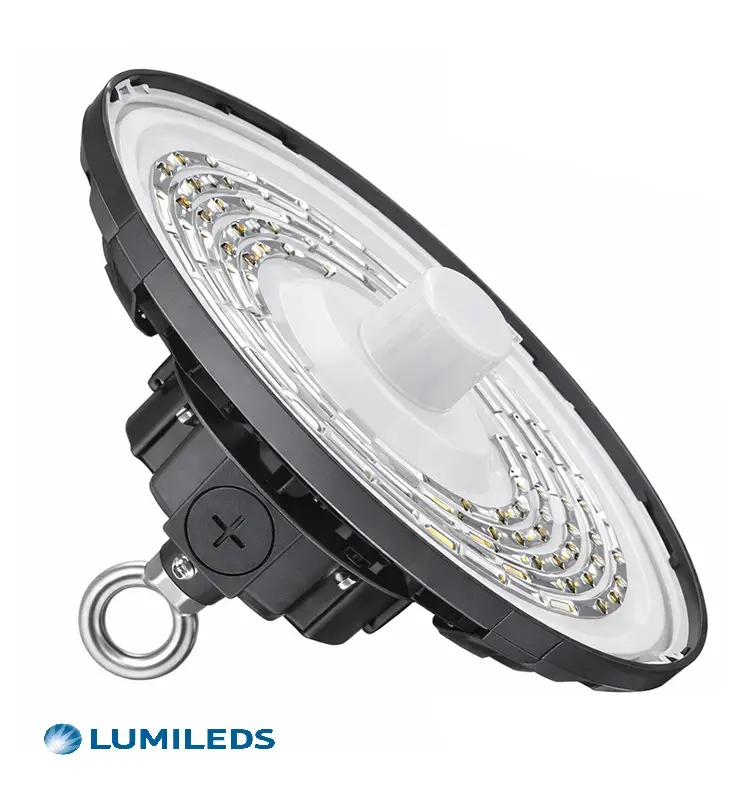
Industrial LED High Bay 200W UFO FRANCE 3CCT 200Lm/W | Smart Motion Sensor | Sosen Dimmable 1-10V | OP 60º - 90º
129,47 €
VAT included
Ref: SENS200W-91293
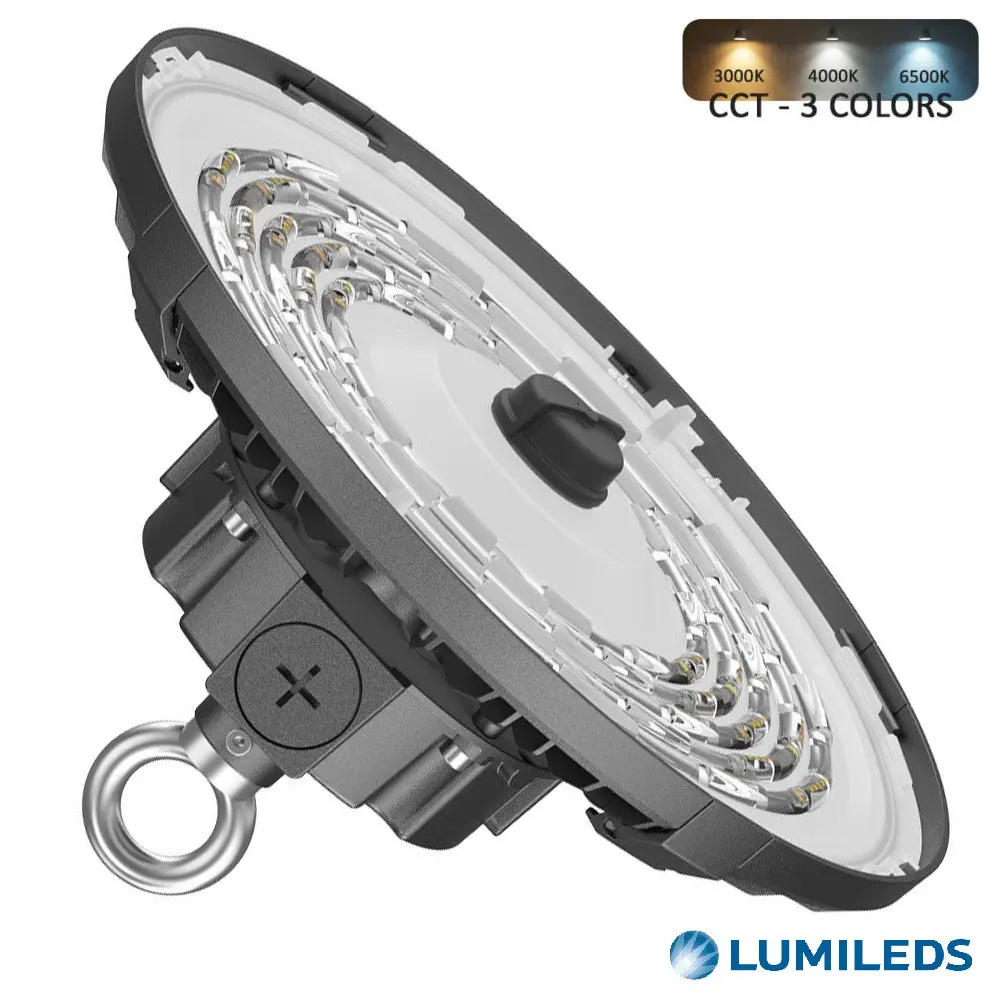
Industrial LED High Bay 200W | UFO FRANCE 3CCT | SMD2835 Lumileds 200Lm/W | Zhaga Plug And Play | Sosen Dimmable 1-10V | 60º-90º
119,90 €
VAT included
Ref: HB200W-CCT-91293
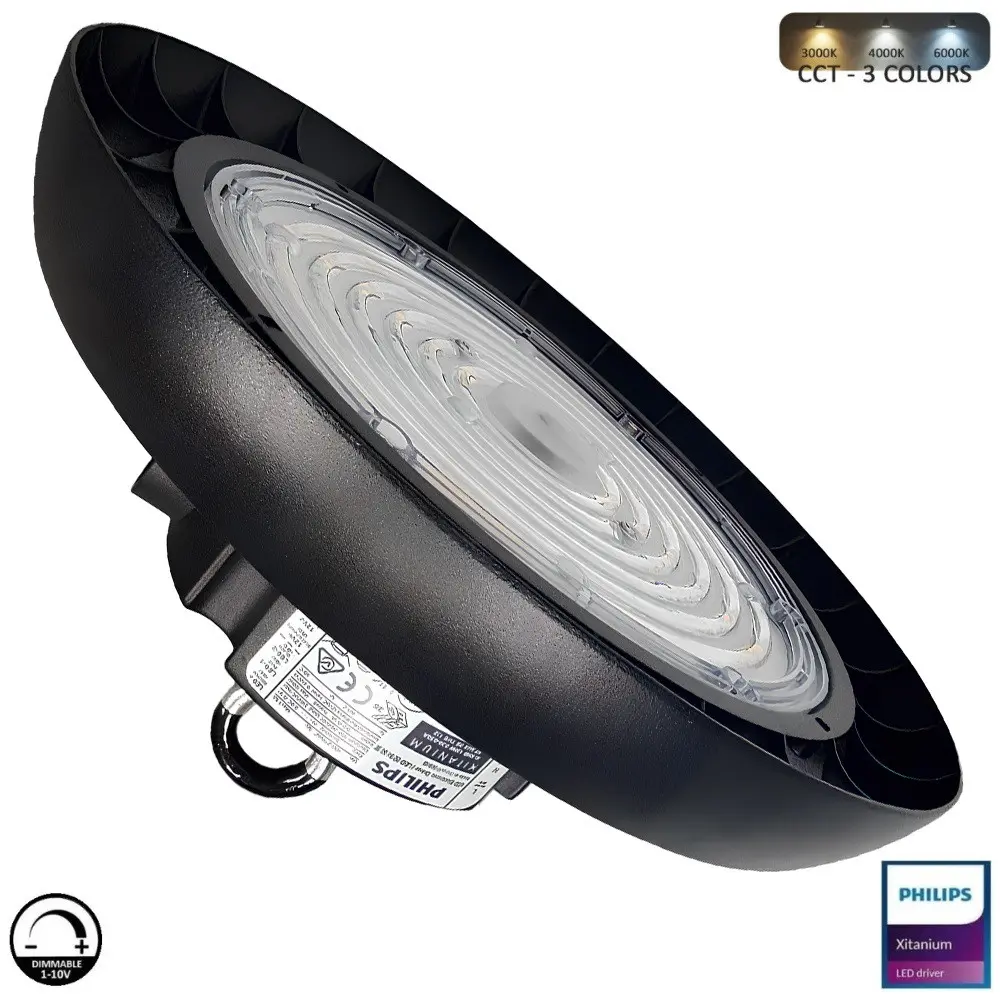
Industrial LED High Bay 200W-160W-120W | UFO GERMANY | 3CCT | Philips Xitanium Driver | Dimmable 1-10V
95,90 €
VAT included
Ref: HBGER200W-CCT-91436
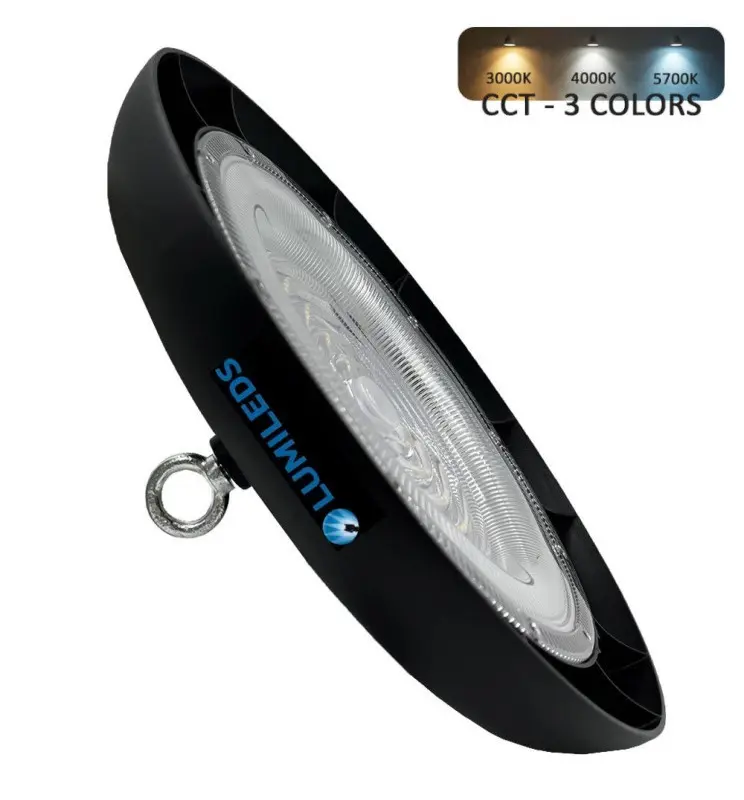
Industrial LED High Bay 200W UFO - NEW TITAN CCT - CHIP LUMILEDS SMD 2835
59,42 €
VAT included
Ref: HB200W-CCT-91336
Industrial LED High Bay 80W-100W-150W-200W - UFO - OPORTO - CHIP LUMILEDS
83,43 €
VAT included
Ref: HB-MULTI
200W High Bay LED UFO DIAMOND Philips Xitanium - Dimmable 1-10V - 170lm/w - IP65
97,02 €
VAT included
Ref: HBPHL200W
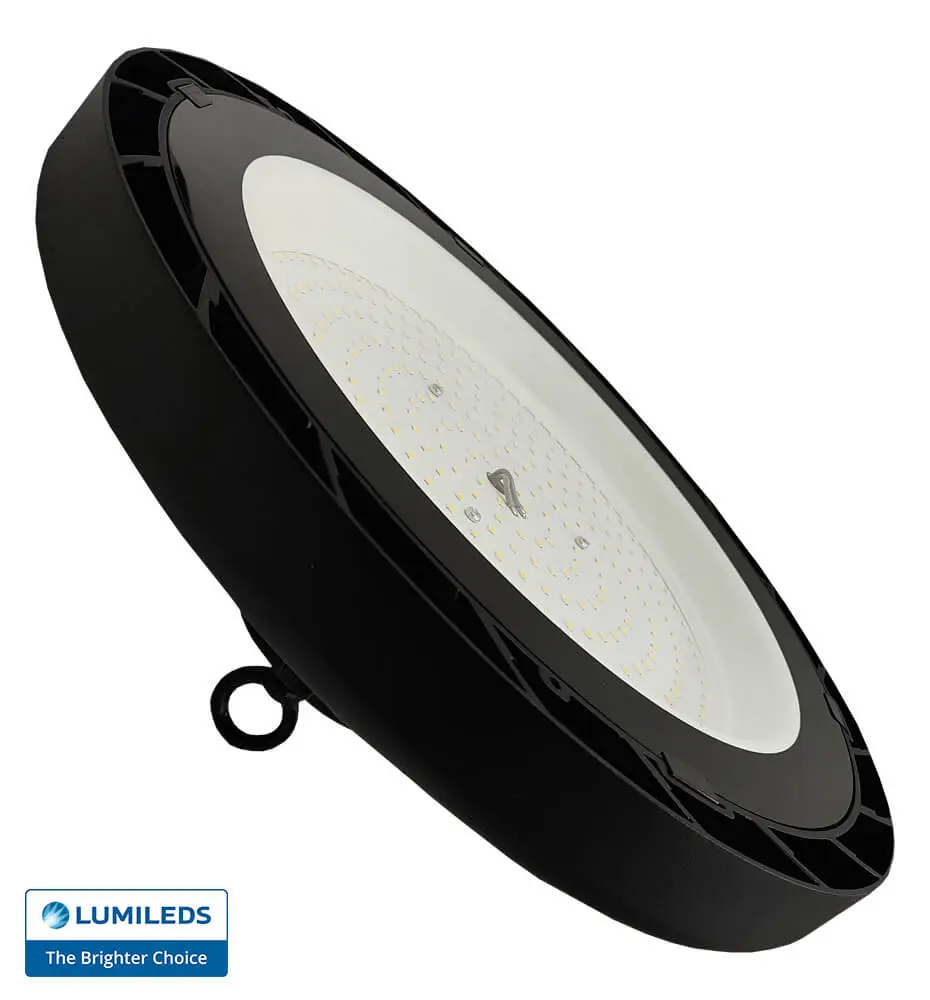
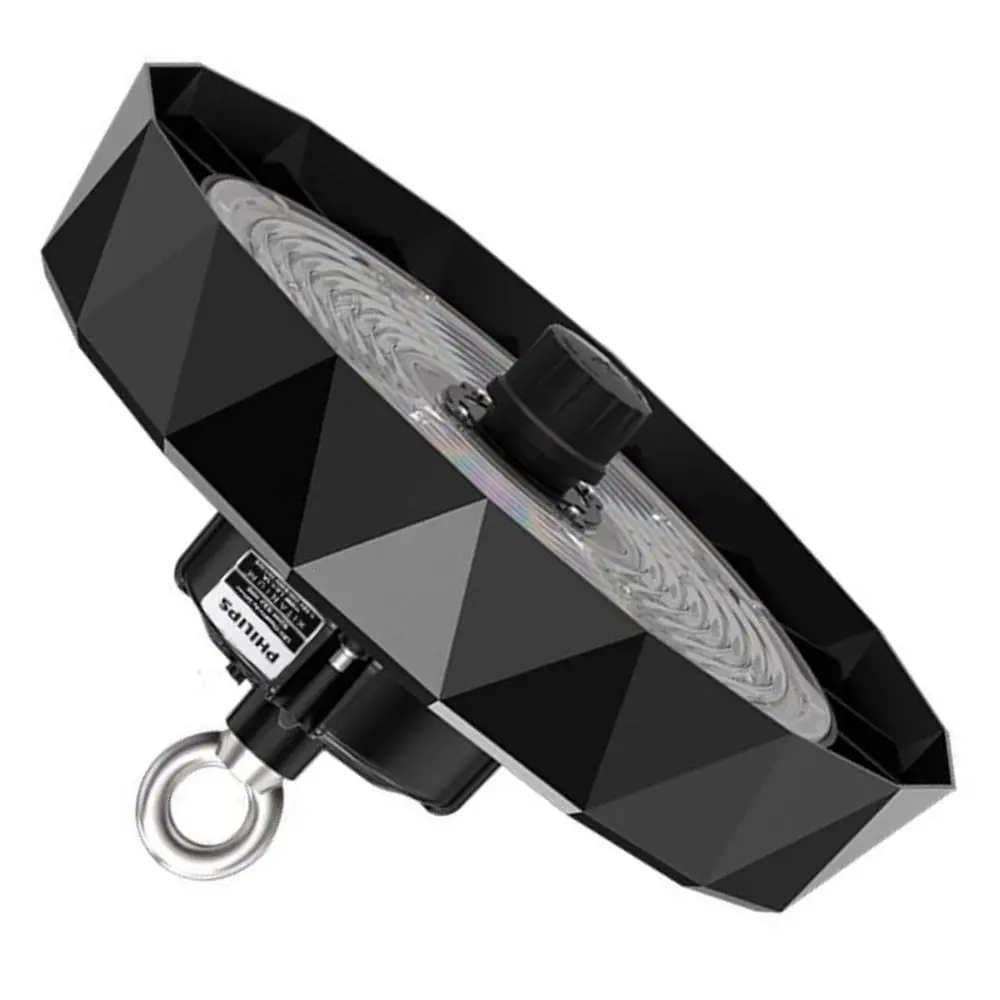
200W UFO LED high bay: the highest-output unit in the range, ready to sign off on the delivery note
A 200W UFO LED high bay is not bought on the number printed on the box. It is bought on what is inside: which chip is soldered to the board, which electronics power it, how much aluminium sits above it to carry the heat away and which optic it leaves the factory with. That is what determines the real flux reaching the floor. And it is also what determines whether, a few years on, it still delivers the same output or has quietly dropped to half-mast without anyone measuring it.
This is the kind of industrial luminaire that is hung in industrial buildings from seven metres upwards: high output and efficiency in a single unit, without doubling up light points to reach the lux the working plane calls for.
We manufacture the range, so the breakdown can be told component by component instead of being summed up in an adjective: chip and electronics, beam distribution, housing and sealing, power selector, colour temperature and what goes into the package when you confirm the order. With those six details you can specify the lighting for an entire industrial building. Without them you are choosing from a photo. The number of light points and the mounting height are decided beforehand, on the wattage page; here you decide which product code to order. If you already have that calculation finalised, email us at uk@factorled.com with the series, the beam angle and the colour temperature and we will send the order back to you ready to go.
What goes inside an industrial 200W UFO LED high bay and cannot be changed later
At this wattage you are paying for what you cannot see. Two fittings that look identical in the box differ on four lines of the datasheet, and those are exactly the four you should demand in writing before agreeing quantities.
The first is the aluminium body, because here it has to shed twice as much heat as the lowest setting in the range. Heat dissipation is passive, so the question for the supplier is not what material the housing is made of: it is how much exchange surface it has and how the board sits against the metal. When that interface is poorly designed, the chip runs hotter than expected and the output drops month after month without anyone noticing until someone goes up with a lux meter.
The second is the board, fitted with LEDs arranged in a ring rather than bunched in the centre. That layout is what allows a single unit to deliver the powerful, efficient lighting that in industrial installations would otherwise mean multiplying the light points in the project. And that shows up in the installation budget: fewer fixings, fewer metres of cable and fewer hours on the access platform.
The third is where the driver is housed. At the top of the range it has to sit in its own compartment, with a sealed cable entry and away from the hottest part of the assembly, because electronics age with temperature much sooner than the semiconductor does.
And the fourth is the optic it leaves the factory with, which is fixed when you place the order and can only be corrected afterwards by fitting a reflector from the outside. With those four lines settled, the order goes right first time, and the unit you replace in three years' time fits the same slot without anyone noticing the swap.
The UFO with SMD chip and Philips driver: the performance you can demand in writing from a 200W UFO LED high bay
The chip sets the ceiling of what the unit can deliver. In this range we fit OSRAM, Bridgelux or Lumileds LEDs, and the figure to look for on the datasheet is not wattage but efficacy: between 160 and 200 lm/W depending on the product code. Put simply, these are the lumens per watt that reach the floor for every watt that passes through the meter. It is the only figure that lets you compare two high bays without opening them up.
That efficacy is what turns high energy efficiency into something measurable on the electricity bill rather than a catalogue adjective. At 200 lm/W, every light point you remove from the project is contracted power that never comes back.
The driver is the other half of the story, and the component that causes the most failures when corners are cut. It works on the building's mains supply, not on a clean laboratory socket. When the fitting has surge protection, a spike on the line is just a scare; when it does not, it takes the electronics with it and means going back up to height again.
LED lifespan is stated in hours until a given percentage of remaining luminous flux, not in years of warranty. They are two different things and should not be confused when comparing datasheets. A long lifespan is not guaranteed by the semiconductor on its own: it comes from the semiconductor running cool, and what keeps it cool is the metal above it.
Almost anyone can achieve day-one brightness. What separates a good unit from a mediocre one is the luminous flux it retains after thousands of hours switched on in a building at thirty degrees under the roof. That is why the breakdown matters: the chip sets the maximum, the aluminium decides how much of that maximum is left in five years. Each product code states its chip, electronics and efficacy on its own datasheet: request it from uk@factorled.com and put it alongside whatever you have on the table before agreeing quantities.
90º optic as standard, 60º reflector when the aisle calls for it: two product codes on the same order line
The lens is fitted to the unit as it leaves the production line, and the beam angle is stated on the datasheet alongside the photometric curve. It is not an adjustment: once the fitting is hung, it cannot be changed without taking it down.
The 90º lens is the one fitted to most units at this wattage, and the one supplied by default when the order does not specify otherwise. In high-rack warehouses that is the distribution supplied, which is why it pays to write the beam angle on the delivery note line rather than take it for granted.
The 60º reflector, on the other hand, is an accessory. It fits over the lens from the outside, without opening the body or touching the electronics, and narrows the cone so the light travels down the aisle instead of washing the sides of the racking and being lost outside the working areas. That makes it ideal for industrial environments where goods are stacked high and the aisle works as a long, narrow channel. It can be ordered in the same consignment as the units or later on, once you have the lux meter in hand.
A wide beam angle is also available in the catalogue and is the one supplied for low-ceiling industrial spaces, workshops and wide production halls. What does not exist is a single unit that does them all: the lens is chosen when you order and ships fitted, so that box on the delivery note matters more than any other. If you are torn between two, tell us the aisle width before the goods are dispatched.
IP65, aluminium housing and the weight your structure has to bear before you place the order
The sealing is rated at IP65 ingress protection: fully dust-tight and protected against water jets from any direction. That covers the real conditions in an industrial building: sawdust, flour, textile fibre and hose-down cleaning in the food industry.
The same sealing allows outdoor use under cover, at loading docks, dispatch canopies and covered manoeuvring areas. The product performs the same indoors as outdoors; what changes is not the ingress protection but the ambient temperature the metal has to cope with.
The housing is made of aluminium, and on the upper face an innovative aluminium heat sink multiplies the surface area in contact with the air. Heat dissipation depends on it and, with it, keeping the working temperature at the semiconductor junction constant throughout the hours the high bay is switched on. The figure you need to provide is the temperature under your roof in August: that is what decides whether this wattage runs comfortably or at its limit in your building, and it is the first question we ask when a project is specified at the top of the range.
That is what drives the real durability of the assembly and its resistance to conditions that are standard in an industrial building: airborne dust, overhead crane vibration and temperature swings between first thing in the morning and midday under a metal sheet roof. Optimal performance even under accumulated heat depends more on the metal than on the semiconductor itself, and the slim design reduces package height without cutting into that exchange surface.
And then there is the weight, the part nobody looks at until they are on the access platform. Aluminium, board and driver all hang from a single point. Before going up, have the system decided: chain to beam, threaded rod to slab or trolley on rail. An improvised fixing turns a good product into an incident report. If the roof is sandwich panel, the fixing always goes to the structure and never to the panel. Tell us what roof you have and the weight per point, and the proposal comes with the suspension accessory included: a single access platform hire and a single trip up.
Power selector on the same UFO LED high bay: one product code in the van for projects with different wattages
The multi-wattage version has a switch accessible on the body itself. With it, the same unit works as a 200W LED high bay, drops to the 150W UFO LED setting or stays at the 100W level, and the setting is fixed on the ground, before it goes up. After that, it cannot be changed without taking the unit down.
For volume buyers, that unit is worth three. A single product code on the shelf covers projects with different wattages, stock no longer multiplies by wattage and restocking is simpler: you order the same box and configure it when you hang it. For the installer, it means the van leaves with one product code instead of three, and for the reseller it is tied-up stock that is not left stranded when a project falls through halfway.
An electrical detail that is always forgotten: if you drop down a setting, the circuit protection is still sized for the maximum wattage of the light point. There is no need to change it, but it is worth noting on the distribution board which setting each unit was left on. Two years from now, when someone measures actual consumption and it does not match the datasheet, that note will save a whole morning of checks with a clamp meter in hand.
And a point that saves arguments on site: the switch changes the wattage, not the distribution. If the light spreads too wide, the reflector is what corrects it; lowering the wattage only leaves the space darker with the same distribution problem. Efficient lighting comes from getting both boxes right, not just one. On the delivery note, the multi-wattage version goes on its own line, and trade pricing applies the volume discount from the first box.
Cool or neutral white: the setting you leave marked between the 200W UFO 6000K and the 4000K version
Colour temperature does not change how much light falls below, it changes how everything below looks. And that decision is made at the order stage, because afterwards it cannot be corrected without replacing the unit.
6000K is cool white light, with a bluish-white appearance. It suits areas with visual inspection, quality control, parts checking or reading small labels at high speed. The eye perceives more contrast and defects stand out sooner.
Neutral white is what works in industrial and commercial environments where the building is shared with offices, a trade counter or a customer service area. It is not tiring over a long shift and does not leave that operating-theatre feel nobody likes after eight hours beneath it.
Versions with switchable CCT solve the dilemma another way: the same body lets you set the colour temperature at installation, with three settings. For resellers, that means one product code on the shelf instead of three. For installers, it means being able to adjust on site when the client sees the result and changes their mind.
Check the CRI too before finalising the order. In logistics and production a standard index is enough; in a paint shop, in textiles or wherever shades need to be told apart, the colour of the goods is part of the job, and there the colour rendering index counts for more than a handful of extra lumens. Colour temperature and optic are fixed in the order and cannot be corrected later: send them to uk@factorled.com along with what the building is used for and we will confirm which one fits before the goods are dispatched.
1-10V dimmable industrial LED high bay: the order box you cannot tick later
The analogue control signal lets you adjust the output from a wall-mounted potentiometer, a time switch or a building management system. The decision is made before buying: a unit that does not have those electronics cannot be dimmed later.
The motion sensors in the catalogue are Zhaga Merrytek radar sensors. They fit into the standardised socket on top without opening the body or removing the driver, and their control interface is 0-10V dimmable, which should not be confused with the control signal of the high bay itself. Alongside them are the 60º reflectors, remote controls and the Zigbee controller for grouping zones.
Before confirming, it is worth having three UFO LED details settled: series, optic and colour temperature. With those, the order goes right first time and you avoid the most common return in this family, which is the right product with the wrong beam.
For warranty cover, the baseline is 3 years and it goes up to 6 depending on the product code you choose. Dispatch is fast and goods do not sit in a queue; the estimated delivery time for your area is shown when you confirm the order, and for the Canary Islands, Ceuta and Melilla there is also advance contact to process the DUA customs document. The basket calculates shipping before you confirm payment, based on the three variables that drive this product: how much the package weighs, how much space it takes up and where it is going. A single unit and a full pallet of high bays are not shipped the same way, so they are not priced the same way either. When the package leaves our warehouse you receive the shipment tracking number by email.
A trade account changes four things for installers and resellers: volume discounts, a catalogue with your logo and details, parcels delivered with no visible sender, and dropshipping, with the range loaded into your shop and updated daily. Credit lines with deferred payment are subject to approval, case by case. To open one you need the registration form plus documentation proving your company or your self-employed status, all sent to uk@factorled.com; and if you have an installation question, call us: 91 805 67 67 for the landline, 654 777 000 if you prefer mobile.
Last-minute questions before signing off your UFO high bay order
What is marked on the box of a 200W UFO LED high bay?
The label shows the full product code, the beam angle it left the production line with, the colour temperature setting it is configured to and whether the unit is fixed-output or dimmable. Those are the four details to check against your delivery note on receipt, before the goods go up to the ceiling. With a large batch, the habit that saves headaches is opening one unit per pallet while the lorry is still unloading and going over those four lines.
Can I add the reflector or the sensor once the building is already fitted out?
Yes, and that is precisely what avoids a second full trip up. The reflector fits over the optic from the outside, without opening the body, so it can be ordered after measuring, once you have confirmed that the beam spreads too wide over the aisles. The radar sensor goes into the standardised socket on top and connects right there, with no wiring back to the distribution board. Both can be done in a single visit with an access platform, without dismantling the installation.
How does the high bay's control differ from the radar sensor's?
They are two different interfaces that are constantly confused. The unit dims via the luminaire's analogue signal, and the radar output works on its own scale. In practice you do not need to do anything: the assembly is compatible and the standardised socket handles the coupling. It only matters if you are going to integrate the industrial lighting into a centralised management system, in which case it is worth mentioning when you order.
Can it cope with an open loading dock or a cold store?
IP65 sealing covers dust, humidity and pressurised water, so covered loading docks and dispatch canopies are no problem. In the cold, what you need to look at is not the ingress protection but the driver start-up at sub-zero temperatures and the range stated on the datasheet. Send us the temperature of the space and we will tell you which product code handles that range before the order is finalised.
How do I buy at trade prices if I am fitting out several industrial buildings?
By registering as a business. You fill in the form, attach the documentation for your business and, once validated, trade pricing is activated on your account: volume discounts are applied automatically on every product page. To fit out several buildings, the practical approach is to send the list of product codes by zone with their beam angle and colour temperature: the order is finalised on that list and the goods ship already separated, so nobody has to open boxes on site.
Más en UFO LED High Bay