

LED High Bay for Industrial Warehouses
15 products
New
Industrial LED High Bay 200W-150W-100W UFO ENDURANCE OSRAM CHIP DURIS E 2835
79,90 €
VAT included
Ref: ENDUR-HB200W
New
Industrial LED High Bay 150W-100W-80W UFO ENDURANCE OSRAM CHIP DURIS E 2835
69,80 €
VAT included
Ref: ENDUR-HB150W
Industrial LED High Bay 150W UFO FRANCE 3CCT 200Lm/W | Smart Motion Sensor | Sosen Dimmable 1-10V | OP 60º - 90º
106,48 €
VAT included
Ref: SENS150W-91292
Industrial LED High Bay 200W UFO FRANCE 3CCT 200Lm/W | Smart Motion Sensor | Sosen Dimmable 1-10V | OP 60º - 90º
129,47 €
VAT included
Ref: SENS200W-91293
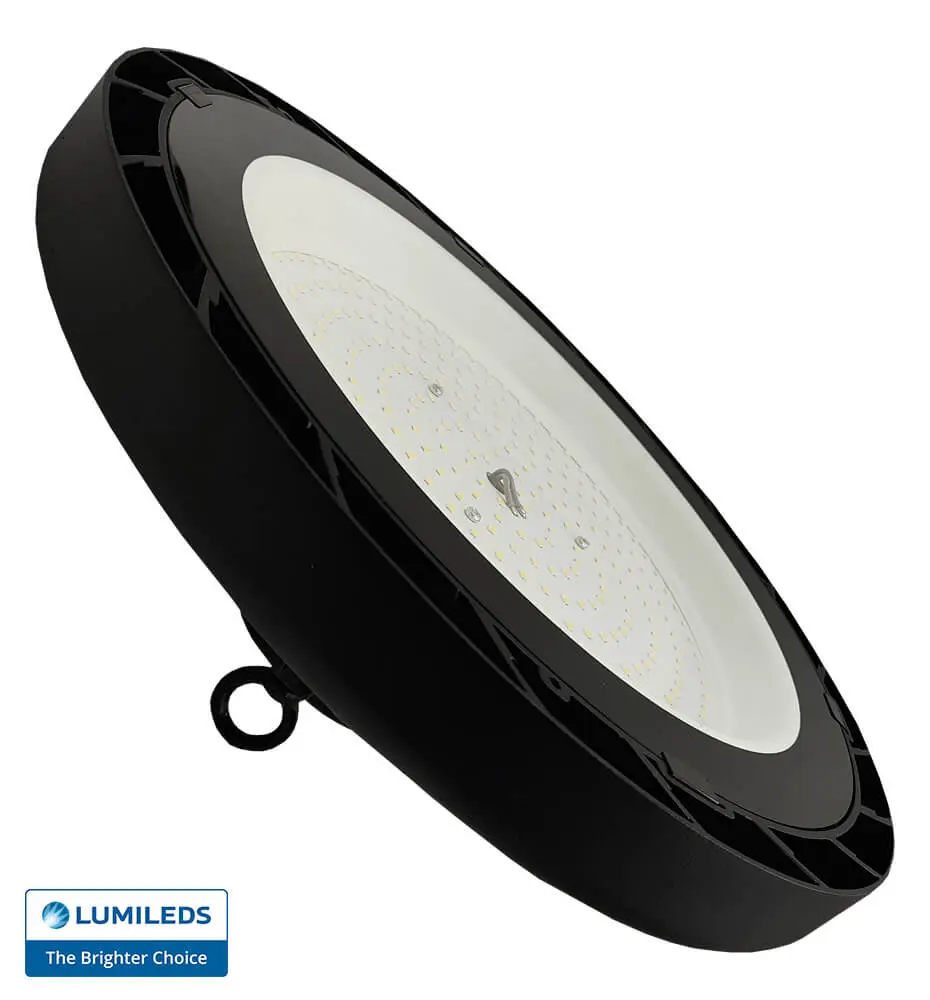
Industrial LED High Bay 150W | UFO FRANCE 3CCT | SMD2835 Lumileds 200Lm/W | Zhaga Plug And Play | Sosen Dimmable 1-10V | 60º-90º
95,90 €
VAT included
Ref: HB150W-CCT-91292
Industrial LED High Bay 200W | UFO FRANCE 3CCT | SMD2835 Lumileds 200Lm/W | Zhaga Plug And Play | Sosen Dimmable 1-10V | 60º-90º
119,90 €
VAT included
Ref: HB200W-CCT-91293
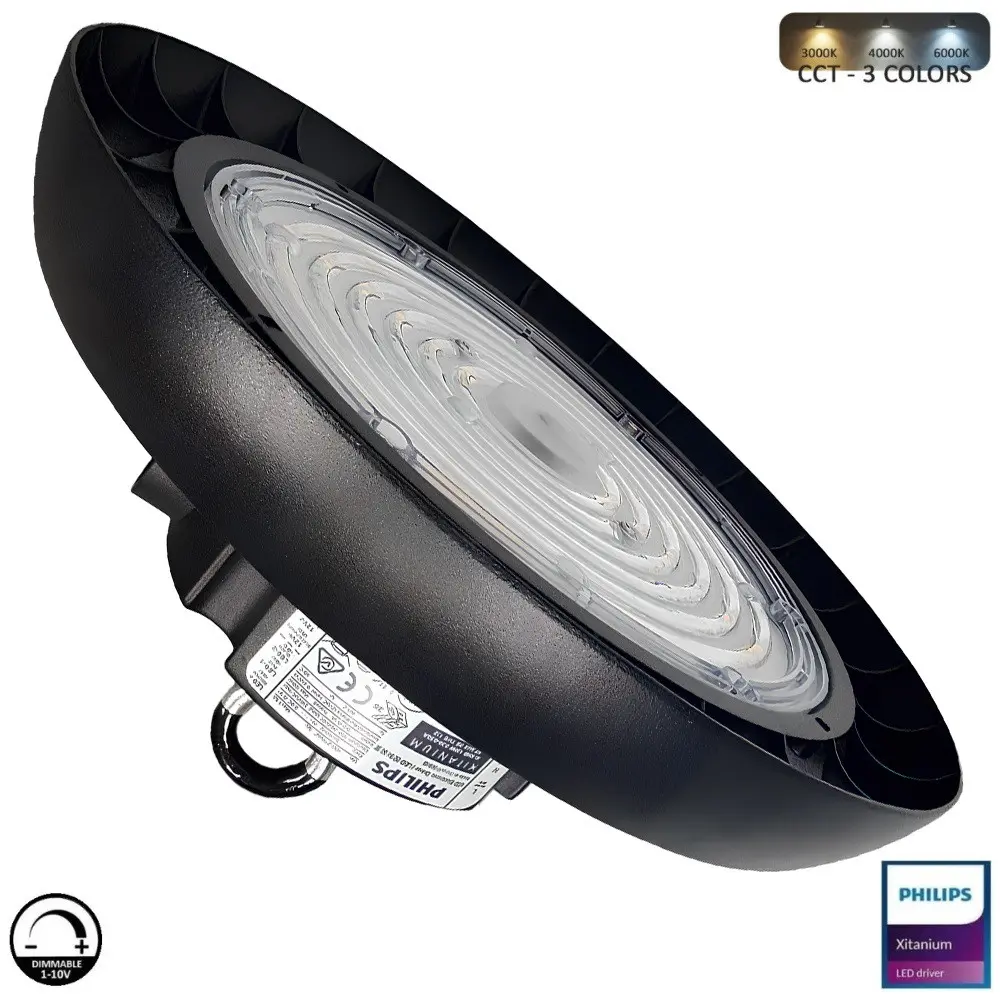
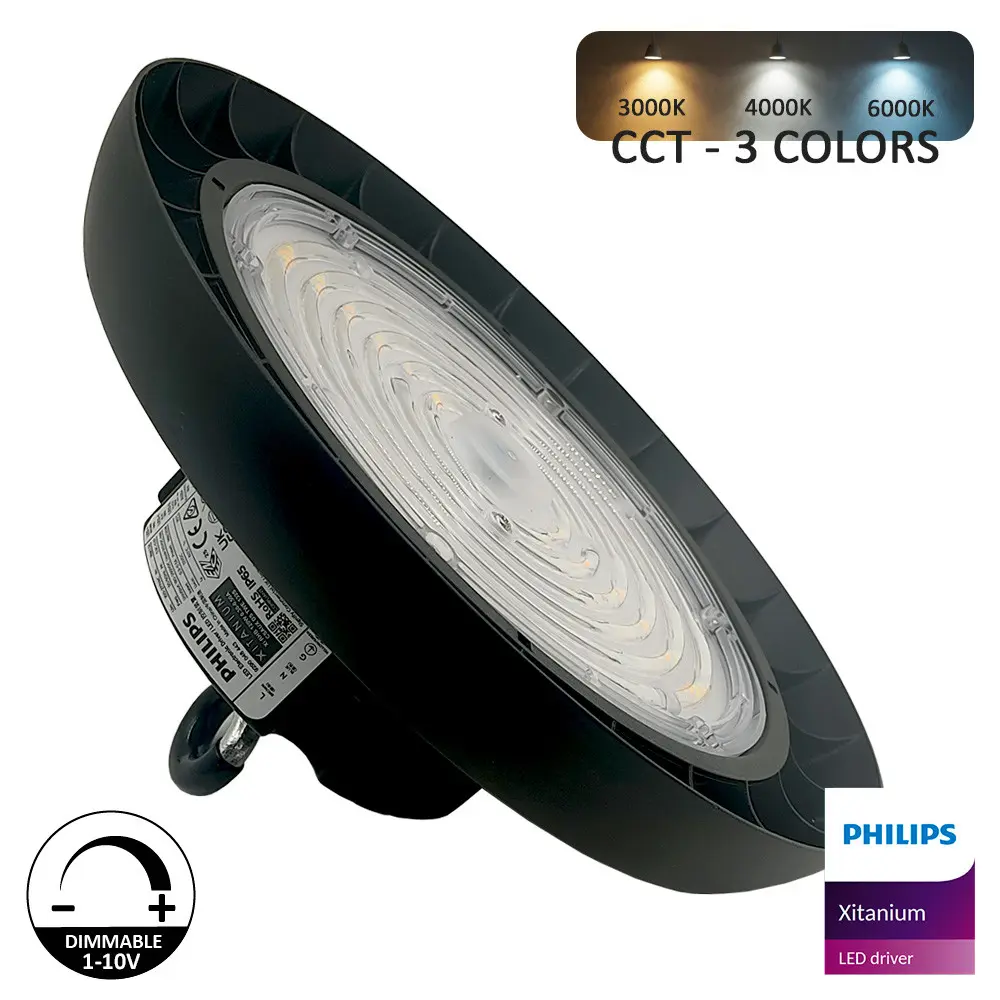
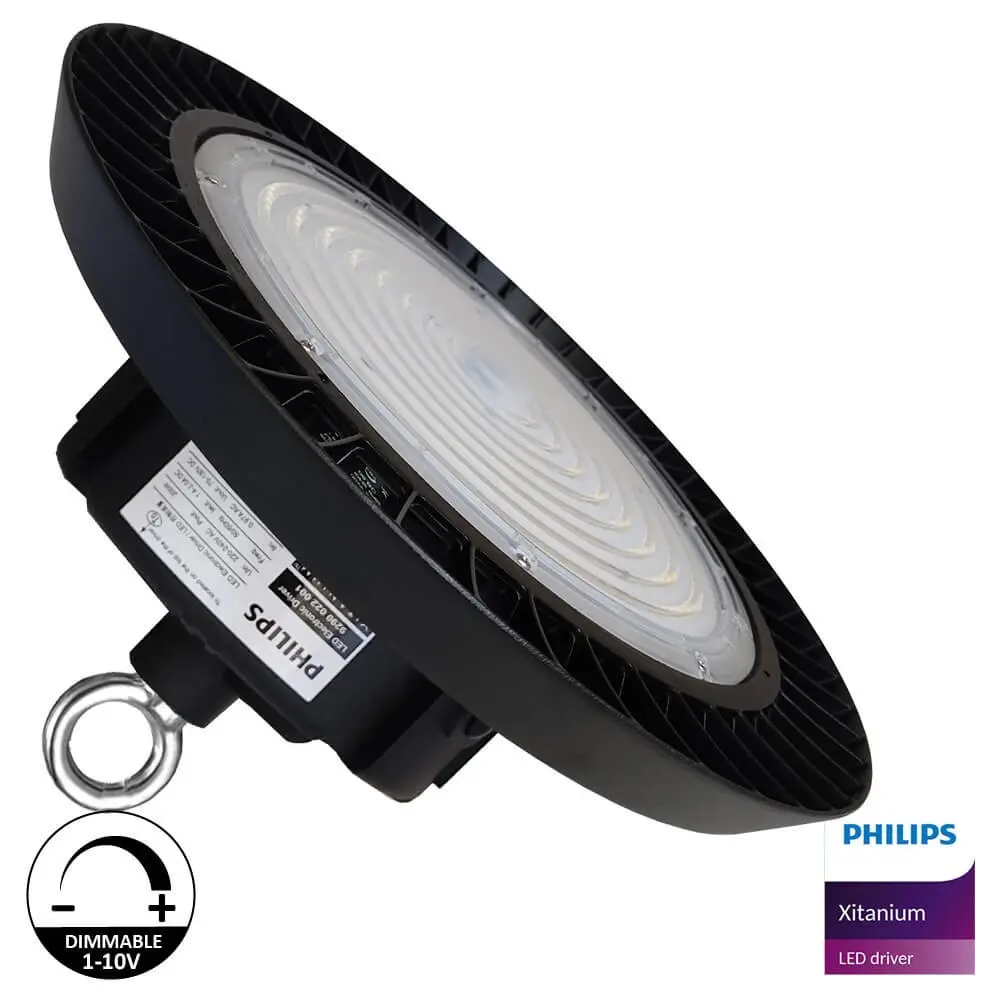
Industrial LED High Bay 200W-160W-120W | UFO GERMANY | 3CCT | Philips Xitanium Driver | Dimmable 1-10V
95,90 €
VAT included
Ref: HBGER200W-CCT-91436
Industrial LED High Bay 120W-100W-80W | UFO GERMANY | 3CCT | Philips Xitanium Driver | Dimmable 1-10V
79,90 €
VAT included
Ref: HBGER100W-CCT-91435
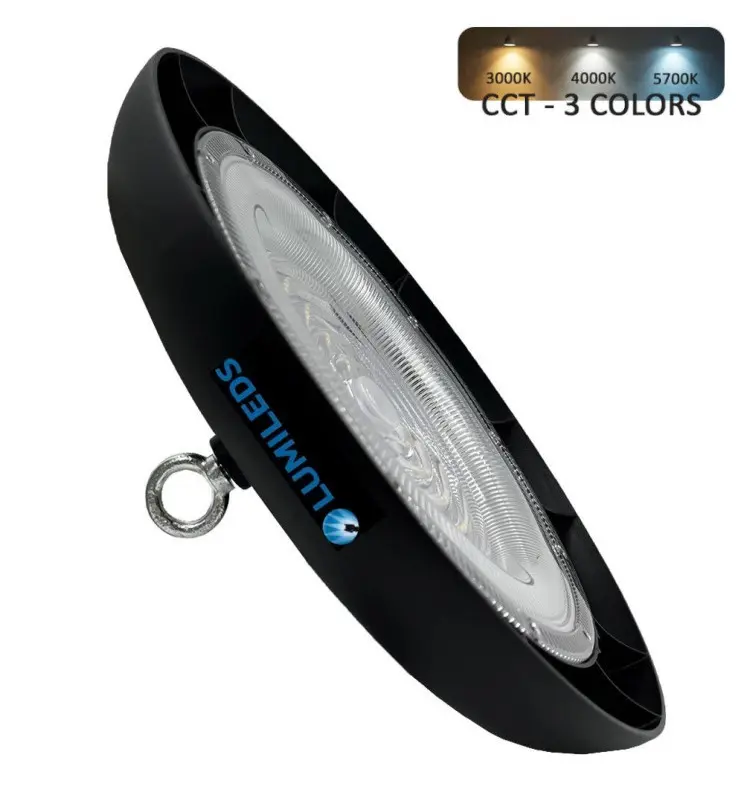
Industrial LED High Bay 200W UFO - NEW TITAN CCT - CHIP LUMILEDS SMD 2835
59,42 €
VAT included
Ref: HB200W-CCT-91336
Industrial LED High Bay 150W UFO - NEW TITAN CCT - CHIP LUMILEDS SMD 2835
46,49 €
VAT included
Ref: HB150W-CCT-91335
Industrial LED High Bay 80W-100W-150W-200W - UFO - OPORTO - CHIP LUMILEDS
83,43 €
VAT included
Ref: HB-MULTI
High Bay LED 150W -170Lm/W- UFO NEW ITALY PHILIPS XITANIUM - 1-10V DIM
89,90 €
VAT included
Ref: NEW-HBPHL150W
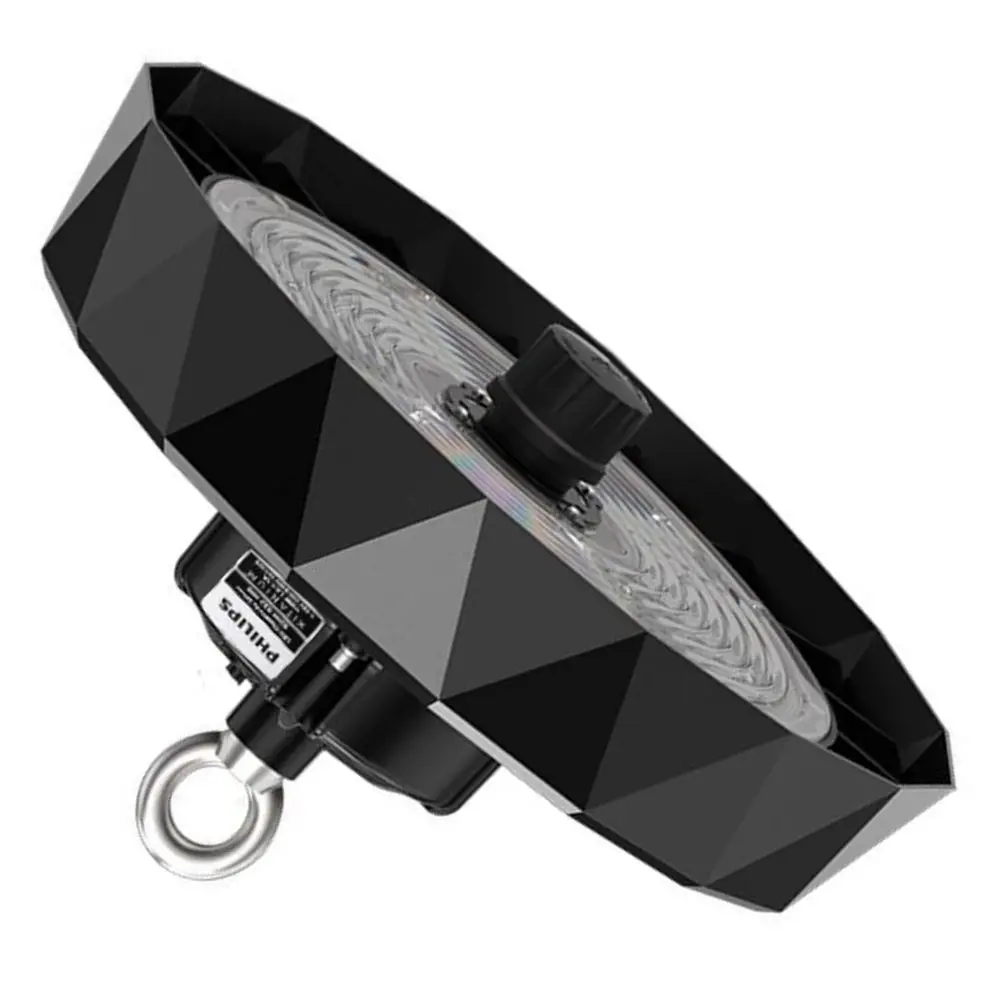
200W High Bay LED UFO DIAMOND Philips Xitanium - Dimmable 1-10V - 170lm/w - IP65
97,02 €
VAT included
Ref: HBPHL200W
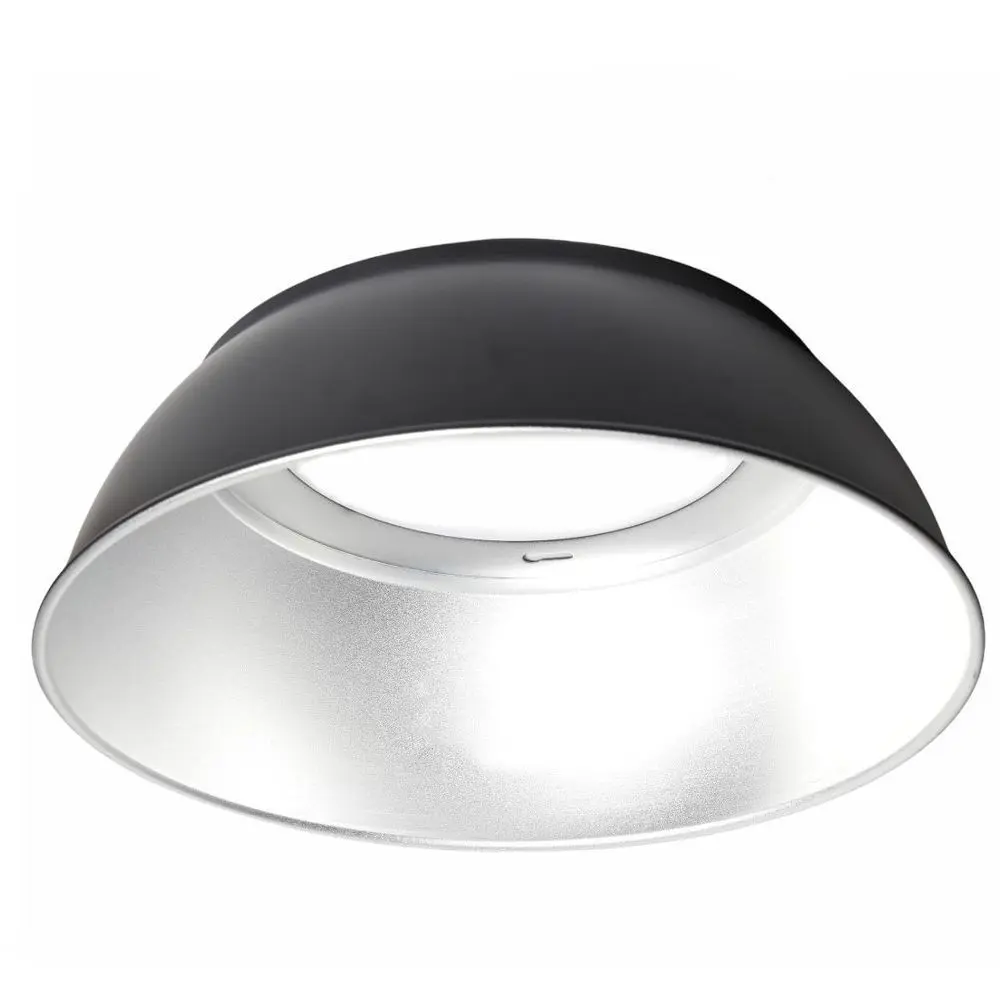
Reflector - 60º - High Bay LED 200W UFO ENDURANCE Osram Chip
16,71 €
VAT included
Ref: CV-HB200W-ENDUR
Reflector - 60º - High Bay LED 100W-150W UFO ENDURANCE Osram Chip
12,41 €
VAT included
Ref: CV-HB100W-150W-ENDUR
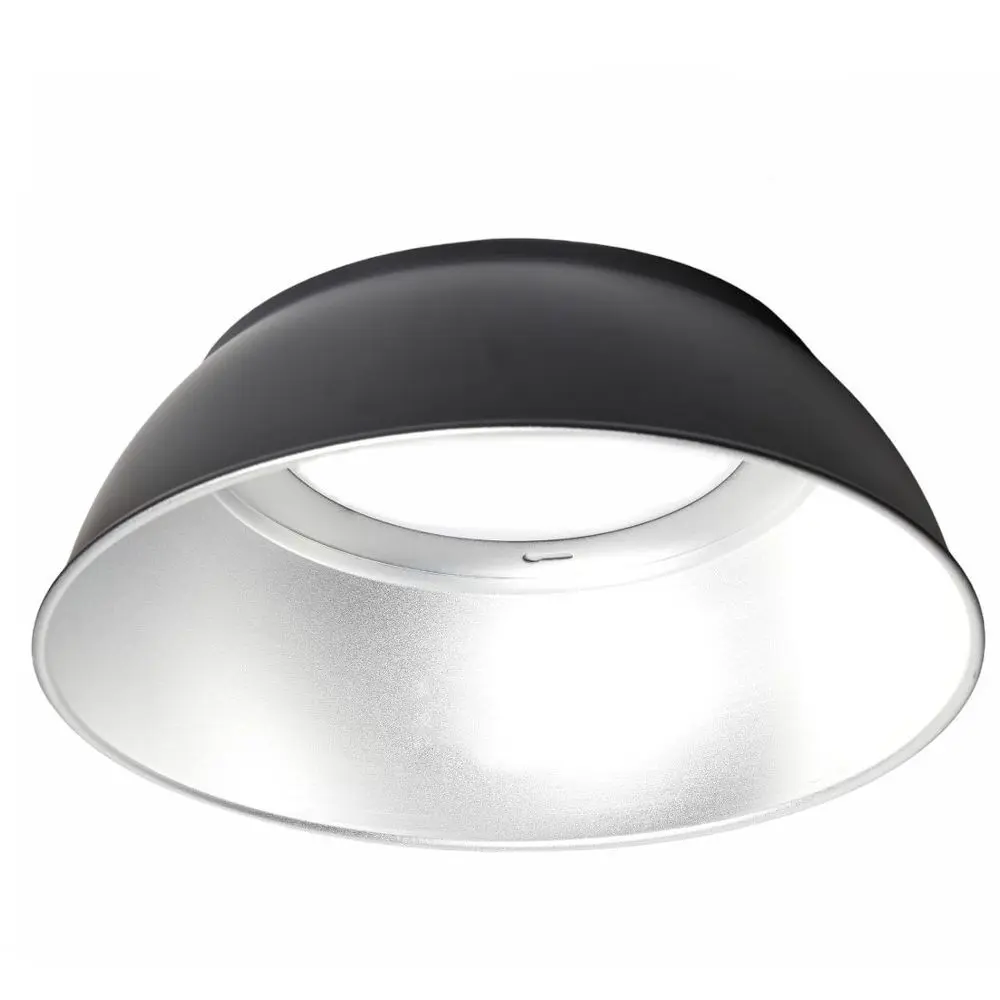
LED high bay lights for industrial buildings: how many you need, what wattage and what spacing
An order for LED high bay lights for an industrial building almost always arrives in the reverse order to the one the calculation needs: first the wattage, then the quantity and finally, if at all, the height. Anyone looking for high bay lighting has usually decided on 150W before knowing what height the fittings will hang at. And height is precisely the figure that rules everything else.
Sizing a high-level industrial lighting installation is arithmetic. You need four figures: floor area, clear height to the structure, the lux required by the task carried out underneath and the real luminous flux of the luminaire you are going to install. With those four you get the number of lighting points, the wattage of each one and the spacing between them. Without them you get something else: pools of light under each point and gloom in the aisles between the racking.
We manufacture what we install, and that changes the order of the conversation. We can match wattage and optics to the calculation instead of bending the calculation to whatever happens to be in stock. In factories and warehouses the usual mistake is not buying too little total wattage; it is distributing it badly.
The full calculation is below: how many units a floor area needs, how far apart they hang, how much light each type of work requires and what happens when someone tries to light a twelve-metre height with four very powerful points. Your lighting needs may be those of a two-bay workshop or a transit warehouse: the numbers change, the method does not. And if you would rather skip the arithmetic, send the floor plan with heights to uk@factorled.com and we will send back the grid of lighting points, the wattage of each one and the spacing between them before you buy anything.
From floor area and mounting height to luminous flux: the number of points for LED high bay lights in an industrial building comes before choosing the LED lamp
The method fits on one line: required lux multiplied by the floor area, divided by the utilisation factor and the maintenance factor. That gives the lumens to be installed. Then you divide by the flux of the chosen unit and the number of points appears.
An example with round figures. A 1,000 m² building, 40 by 25 metres, eight metres clear to the roof truss, used for storage and order picking. The task requires 200 lux on the working plane. First multiplication: 200 x 1,000 = 200,000 useful lumens.
Now the two factors that hardly anyone applies and that decide whether the installation stands the test of time. The utilisation factor accounts for what is lost through reflection off walls, roof and floor; in a tall building with a dark structure and full racking it is around 0.75. The maintenance factor covers dirt build-up on the optics and lumen depreciation over the years, and 0.8 is a prudent figure in a dusty environment. Multiplied together they give 0.6.
200,000 divided by 0.6 is 333,000 installed lumens, or in other words 333 lumens per square metre. A 150W LED high bay with an efficacy of 170 lm/W delivers around 25,500 lumens. The division gives thirteen units, and because the grid has to work out in rows and columns, the real installation rises to fifteen: five columns by three rows.
Skip those two factors and the calculation stops at 200,000 installed lumens, a third below what the task required. The building starts out correctly lit and, three years later, with dirty optics and depreciated flux, it is below 130 lux without anyone being able to explain where the loss came from.
Height enters the calculation twice, and it is worth keeping the two apart. It enters the utilisation factor, because a tall, narrow building sends to the walls light that a low, wide one makes use of. And it enters the spacing between points, which is what decides uniformity. The same lumens spread over fifteen points or over seven do not give the same result: the average may match, the minimum value will not.
A note on efficacy, because it moves the result more than wattage does. Our ranges sit between 160 and 200 lm/W, and within that margin it is the optic fitted to each unit that decides. At 200 lm/W those 333,000 lumens come from 1,665 W installed; at 125 lm/W you would need 2,664 W for the same light, with the same number of points and almost double the contracted power. A building's energy efficiency is decided in that division. Ask for the datasheet before confirming the order: the figure to compare is the lm/W of the complete fitting with its optic installed, and that figure is multiplied by every point in the project.
Mounting height already decides your wattage: send us the height and we will tell you which industrial LED high bay goes into the order
Raising the luminaire does not reduce light proportionally: it reduces it by the square. Double the distance to the working plane and the illuminance that arrives is divided by four. That is why the wattage per point of an LED high bay for an industrial building does not come from the square metres or from what was fitted last time, but from the mounting height, then corrected with the optic.
We manufacture eight wattages, from 80 to 200 W, and which of them goes into your order is determined by the division above, not by what was chosen last time. Each level has its own datasheet, with its height range and its flux measured with the optic fitted, and that is where to look for the detail once you know which one you need.
What is worth remembering here is the rule that puts them all in order: below seven metres a 100W industrial LED high bay works close to the floor and the grid closes up naturally; in the seven-to-nine-metre band, the most common in logistics industrial environments, the 150W industrial model covers most projects; and above twelve metres you need a 200W UFO with a narrow optic, because at that distance a wide cone sends more light to the walls than to the floor. Send us the clear height and we will tell you which of the eight fits the calculation, with the datasheet for that wattage attached to the quotation.
An industrial luminaire is specified by flux, not by wattage. Two 150W units with efficacies of 160 and 200 lm/W are 6,000 lumens apart; in a fifteen-point building that adds up to 90,000 lumens, three whole units. When you compare wattages, compare luminaire lumens measured with the optic fitted, not chip lumens.
When ordering, check which models are multi-wattage, because they have three or four output settings selectable on the fitting itself before it is hung. That solves the rounding problem, which is where consumption slips away unnoticed. When the calculation calls for thirteen points and the grid forces fifteen, a multi-wattage 200W LED high bay drops one setting and recovers the excess without changing product or redoing the grid. With switchable CCT the same happens with colour temperature: a single model on the shelf and the kelvin decision made at installation, not at ordering.
Trade habit always pushes upwards, towards the big wattage, because it seems to cover more floor. At medium height what it actually does is concentrate: the surplus power does not spread itself out, it stays in the circle underneath. A 180W LED high bay hung at seven metres leaves a very bright cone under the point while the minimum in the aisle stays where it was. When you are torn between two levels, ask for a sample unit and hang it in the real space before placing the full order: it costs less than correcting fifteen points already installed. And if the installation is phased, open a trade account beforehand, because volume discounts are calculated on the order and not on the first box.
Tighten or widen the spacing without losing uniformity: 60º reflector, 120º beam and the grid each UFO LED high bay can support
What sets the spacing between points is not the height of the building but the effective mounting height: the distance from the working plane to the luminaire. If you hang at eight metres and the working plane is at 0.85, you are working with 7.15.
With a 90º or 120º optic, spacing ranges from one to one and a half times that effective height. In the example above, between seven and ten and a half metres. Against the walls you leave half that distance, because the perimeter point only spreads light inwards. With a 60º optic the grid tightens to a range of 0.7 to 1 times the effective height: the cone is narrower and, if you space them the same, a valley of shadow appears right in the middle of the aisle.
The beam angle is what translates watts into area covered. An open 150W UFO LED and an identical narrow one give exactly the same flux and do not give the same installation: the narrow one concentrates and reaches the floor from twelve metres, the open one covers a wider area and falls short at height. In industrial spaces with six-metre racking and narrow aisles the narrow optic always wins, because the light has to travel down a gap, not spread out over the top of the stock.
Here is the most expensive mistake, and it is the reason for this page. Back to the 1,000 m² building. Someone proposes lighting it with seven 200W units instead of fifteen 150W ones. The sum looks reasonable: 1,400 W against 2,250 W, eight fewer boxes and eight fewer hours of installation. Installed flux stays at 238,000 lumens against the 333,000 the calculation required, 29% short, and that already condemns the average level. The serious part comes next: with seven points the grid ends up at 10 by 12.5 metres, between 1.4 and 1.75 times the effective height. Under each UFO LED high bay there is too much light, and in the centre of the square formed by four of them half is missing.
Uniformity is measured as the ratio between the minimum and the average value. In the task area the target is 0.6; in the immediate surroundings, 0.4. Below that the eye picks it up without a lux meter: you notice the step when moving from one zone to another and your eyes tire of readjusting throughout the shift. Hardly anyone asks about uniformity when buying, and it is the first complaint a month after switching on. Send us the floor plan with the racking layout and we will send back the grid drawn out: spacing between points, optic per zone and the minimum you will get in the middle of the aisle. With that in hand the order is placed knowing what will be measured afterwards, not hoping it works out.
Set the colour temperature by task before ordering: from circulation areas to inspection in workshops and warehouses, with daylight from the rooflights working in your favour
Before multiplying anything you have to set the lux level, and that figure is not chosen by the buyer: it is tabulated by task in the standard for lighting of indoor workplaces, and with it in front of you it is later possible to justify what has been installed in each zone.
For the purposes of this page it is enough to remember the order of magnitude and the two extremes between which everything else moves. A section used only for circulation falls in the low band of that table; storage with permanent staff, which is the case in the example above, sits in the middle band; and a fine visual inspection station goes several times above that figure. We agree the exact value for each area with you as soon as you tell us what happens under each section of roof, because it is the number that multiplies the rest of the calculation and the one that decides how many units you end up ordering.
The difference between 200 and 500 lux is not a nuance. It multiplies installed lumens by two and a half and, with them, the number of points. That is why a building that mixes circulation with assembly stations needs two grids rather than a single wattage spread evenly. The sensible approach is to provide the base level across the whole floor and reinforce the specific workstation, rather than raising everything to the level of the most demanding task.
Colour temperature is decided by task and by shift. In industrial interiors the standard is 4000K, and a 150W 4000K LED gives that neutral white without the warmth of 3000K, which looks dull at height, and without the bluish cast of 6000K, which becomes tiring over eight hours straight. For verification and visual inspection go up to 5000K or 5700K, because detail contrast improves. The catalogue includes switchable colour temperature models, which lets you leave the choice open until the real use of each zone is known.
CRI is a separate matter and usually gets left out of the conversation. A CRI of 80 is enough for storage and circulation. To check finishes, paint or colour-coded wiring you need 90, and it is worth saying plainly: the colour rendering index sets the highest quality of colour identification you are going to get, and it cannot be offset by adding lux. With CRI 70, brown and black cables still look alike even with the building at 750 lux.
Rooflights enter the calculation in two ways. They cut operating hours in the middle of the day, and they call for a control system that makes use of that daylight rather than ignoring it. A sensor that measures the level at floor height and dims the row next to the translucent roof panels does more for consumption than any wattage adjustment in the order. Tell us what happens in each zone and we will finalise the list with the colour temperature and CRI for each section; if that has not been decided yet, ask for the switchable colour temperature version and the choice is made up there, on installation day.
If a high bay is not the right fit, another industrial light goes into the same order: LED linear, LED weatherproof batten, LED tube, LED spotlight or outdoor LED floodlight
The calculation also tells you when a high bay is not the fitting that solves the industrial LED lighting of a given zone. Below five metres the cone has no distance in which to open and the floor ends up in circles, so in that band a continuous line over the aisle or the workbench spreads light better. In damp areas, cold rooms and loading docks the criterion shifts from flux to sealing. And outside the building the point is sized by height and angle, not by the square metres of the yard.
In an industrial setting the decision rule comes down to two questions. More than five metres to the suspension point and an open floor? High bay. Low ceiling, long working lines or water present? Another family does the job with fewer units and better uniformity, and that part of the project is quoted separately within the same order. High bays also appear in high-ceiling retail spaces, DIY stores, car showrooms and sports halls, where the height is industrial even if the use is not. Tell us what is under each section of roof and we will tell you what should be lit with LED high bays for industrial buildings and what is better left to another family, with both in the same proposal.
Aluminium, Philips driver and OSRAM LED chip: the IP65 protection and service life that stand behind an order for UFO industrial LED high bays
The finned aluminium body performs a thermal function before an aesthetic one: it is the path by which the heat from the electronic components escapes into the air, and the junction temperature at which the diode operates depends on it. The larger the heat-dissipation surface, the lower the temperature rise in steady operation and the more slowly the flux depreciates. Two units with the same diode and the same wattage can differ by 20% in flux at 50,000 hours purely because of how they shed heat.
In LED technology the typical failure is not in the diode but in the electronics. A driver shut inside a poorly ventilated housing loses capacitors and fails well before the light source, so we fit components with published curves and available spare parts, and the diode comes from OSRAM depending on the range. When the driver runs cool, the whole fitting has a much longer service life than the package label suggests. The board is declared on the datasheet as SMD LED technology, with its package reference, and not as a generic promise.
The ingress protection rating is the line that tells you what gets inside the body, and it is worth reading with the floor below in mind: where forklifts run, dust is raised and cleaning is done with a hose, IP65 sealing is not something to cut back on. In the office area that requirement drops and there is no point paying for it.
Durability in an industrial building comes down to three measurable things, and none of them is wattage: real gasket sealing, heat-dissipation surface and quality of the electronics. With those three sorted, the long service life stated on the datasheet stops being a catalogue figure and becomes a lower maintenance cost: fewer trips up to height, less access platform hire and fewer shifts working with a dark gap in the grid.
Before placing an order for dozens of units, also look at what happens afterwards: our LED high bays come with a three-year base warranty and up to six depending on the model, and because we manufacture the range ourselves, a unit replaced in four years' time arrives with the same beam angle and the same colour temperature as the seventy already hanging from the roof. Ask for the datasheet of the range you are going to install and check those three points before signing; if it is a volume order, trade pricing applies to the whole order and the goods leave for site without delay.
Lines with a dimmable LED driver, DALI, motion sensor and remote control are chosen now: that is where the high efficiency and low energy consumption of your industrial LED high bay come from
The dimmable driver is fitted at the factory, and an LED high bay ordered without that electronics does not become dimmable later on. It is the box that costs least to tick correctly on the order form and the most expensive to correct once the building is up and running.
Our units dim via 1-10V, an analogue signal compatible with almost everything: a wall potentiometer, a time switch, a PLC or a building management system. The radar motion sensor that fits the Zhaga connector on top works with a 0-10V interface, and the two figures coexist without conflict because they describe different things: one is the luminaire's dimming input, the other the detector's output.
The radar works with microwaves, not with the body's heat signature: it makes no difference to it whether it is a moving forklift or an operator bundled up in cold-store clothing. In the calculation this becomes a zoning strategy: in racking aisles with intermittent traffic, one detection point per aisle with a 10% background level rising to 100% as people pass cuts operating hours without anyone having to press anything.
When the building has several zones with different schedules, DALI pays off. It addresses each point individually, allows grouping and regrouping without touching the wiring and reports back the status of each one, including faults. In installations of fifteen or twenty units the analogue signal is more than enough; from fifty or sixty points with staggered shifts, the bus pays for itself. Radio-frequency remote control is the option for small installations: it sets scenes and levels without a control panel or bus, passes through partition walls and does not need to be pointed.
The savings calculation is done in hours, not watts. A building with 2,250 W installed that runs 4,000 hours a year consumes 9,000 kWh. With zone detection and a background level, the real average operating level falls to 60% without anyone changing their habits, and the first place that cut shows up is the electricity bill. Added to the energy efficiency of the fitting itself, the difference compared with an old discharge-lamp installation is calculated kWh for kWh with the previous year's consumption in front of you, without resorting to brochure estimates. Tick the dimming box on the order form even if automation comes in a second phase: the driver already fitted cannot be changed, but the sensor can be added later. If you are not sure which zones should be separated, call 91 805 67 67 and we will go through it with the plan in front of us.
From floor plan to delivery note for LED high bays in an industrial building: LED luminaires, high-power LED lighting and delivery times
I only have the square metres and the height. Can you tell me how many units to order?
With those two figures you get an estimate, not a calculation. The task lux level is missing, which is what does the multiplying, and we need to know whether there is high racking, a light or dark roof and defined aisles, because that shifts the utilisation factor. Send us the floor area, clear height, intended use and, if you have it, the floor plan with the racking layout, and we will send back the number of points, wattage per point, optic and spacing. We send the calculation by email from uk@factorled.com, and if you would rather go through it on the phone you have two lines open: 91 805 67 67 and 654 777 000.
Can I fit fewer, more powerful units and still reach the lux level?
For the average level, sometimes yes. For uniformity, no. A lux meter in the centre of the building may give you the number you were looking for while the midpoint between luminaires is at half that, and that difference is what you notice as you walk and what tires the eyes. Spacing between points must stay below one and a half times the effective height with an open optic, and tighter still with a 60º optic. When the budget is tight, it is better to drop one wattage level and keep the number of points than the other way round.
I have six-metre racking and two-and-a-half-metre aisles. Does the same solution work?
Not with the same optic. A narrow aisle between high stock is a well: light has to come in from above and reach the floor without bouncing off the sides, so you line up one row of points per aisle, with a narrow optic and short spacing. If the racking is mobile or the layout changes with the season, a dimmable industrial LED high bay with per-aisle detection is what saves you redoing the installation every time the warehouse is rearranged.
I need to expand in three years' time. Will the same model still be available?
That is the reason for manufacturing rather than reselling. We control the range, so an extension to a building or the replacement of individual units is supplied with the same optic, the same wattage and the same colour temperature, without a different-looking row showing up against the light. That timeframe is also covered by the manufacturer's warranty: three years as standard and up to six depending on the product. And if you buy the second phase as a company or as a self-employed professional, open a trade account beforehand: registration is processed by sending the registration form together with proof of your business activity.
How far in advance do I need to place the order?
It depends on where the building is, and it is worth knowing before agreeing the setting-out date with the installer. Goods are dispatched quickly and you see the estimated delivery date for your location when you confirm the order; that is the reference for fixing the setting-out date, not a counter-top promise. The Canary Islands, Ceuta and Melilla require a preliminary step: discuss it with us and process the DUA. Shipping is priced by weight, volume and delivery zone, and is shown before you confirm payment. The email with the tracking number goes out as soon as the order leaves the warehouse. When the goods arrive, check the packages with the carrier present: anything that arrives damaged is noted on the delivery note before signing, and anything found on opening the box must be reported to us as soon as you see it.
Send us the floor area, height and use to uk@factorled.com and we will send back the calculation with the number of units, wattage and spacing before you confirm anything. If you are buying in the name of a company or as a registered self-employed professional, send that documentation with the registration form and the same proposal will reach you with trade pricing and volume discounts; for orders covering a whole building, payment deferral of up to 60 days can also be considered. The LED high bays for industrial buildings that come out of the calculation are supplied with fast shipping, and the cart calculates transport by weight, volume and zone before you confirm payment.
Más en LED High Bay