

Indoor Industrial Lighting
11 products
New
Industrial LED High Bay 200W-150W-100W UFO ENDURANCE OSRAM CHIP DURIS E 2835
79,90 €
VAT included
Ref: ENDUR-HB200W
New
Industrial LED High Bay 150W-100W-80W UFO ENDURANCE OSRAM CHIP DURIS E 2835
69,80 €
VAT included
Ref: ENDUR-HB150W
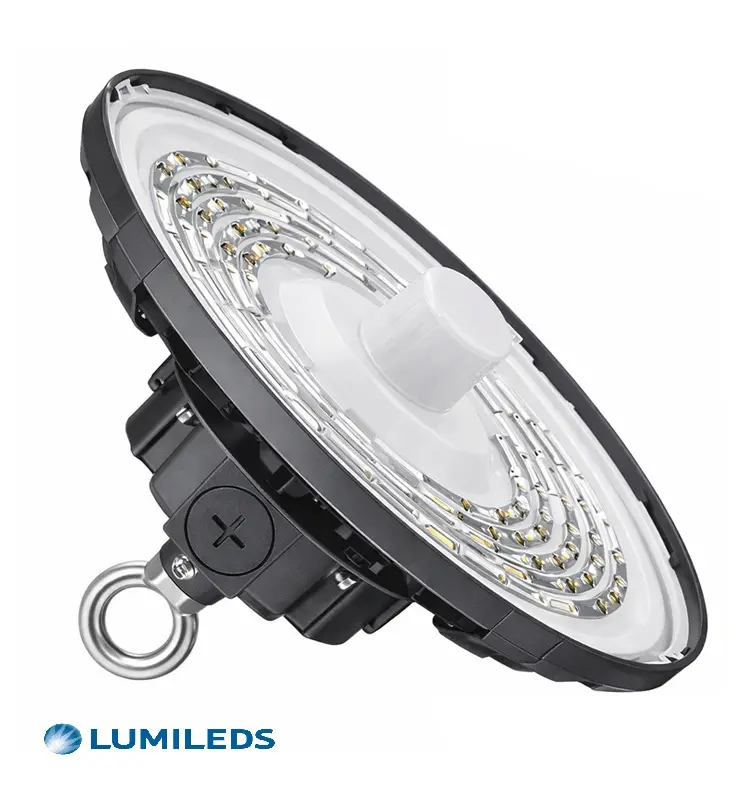
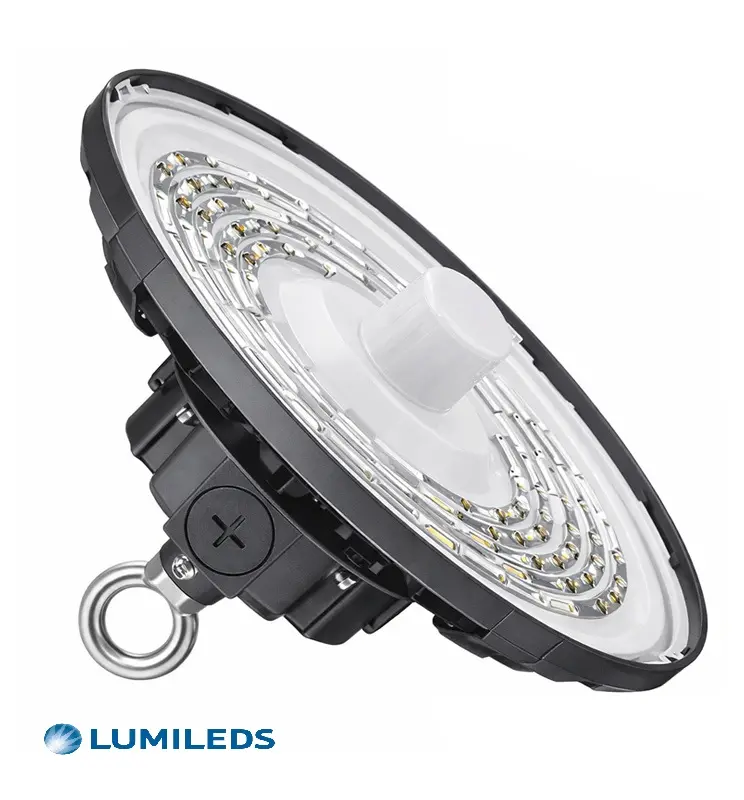
Industrial LED High Bay 150W UFO FRANCE 3CCT 200Lm/W | Smart Motion Sensor | Sosen Dimmable 1-10V | OP 60º - 90º
106,48 €
VAT included
Ref: SENS150W-91292
Industrial LED High Bay 200W UFO FRANCE 3CCT 200Lm/W | Smart Motion Sensor | Sosen Dimmable 1-10V | OP 60º - 90º
129,47 €
VAT included
Ref: SENS200W-91293
Industrial LED High Bay 150W | UFO FRANCE 3CCT | SMD2835 Lumileds 200Lm/W | Zhaga Plug And Play | Sosen Dimmable 1-10V | 60º-90º
95,90 €
VAT included
Ref: HB150W-CCT-91292
Industrial LED High Bay 200W | UFO FRANCE 3CCT | SMD2835 Lumileds 200Lm/W | Zhaga Plug And Play | Sosen Dimmable 1-10V | 60º-90º
119,90 €
VAT included
Ref: HB200W-CCT-91293
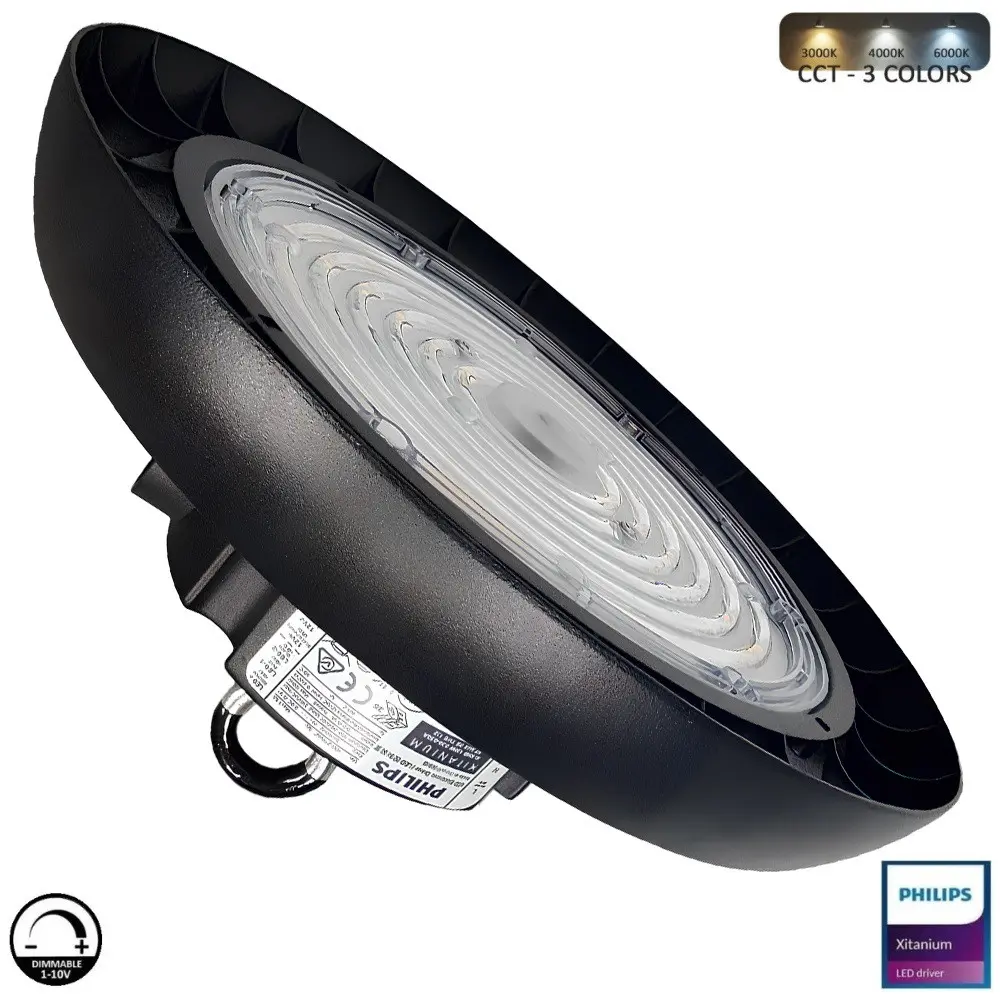
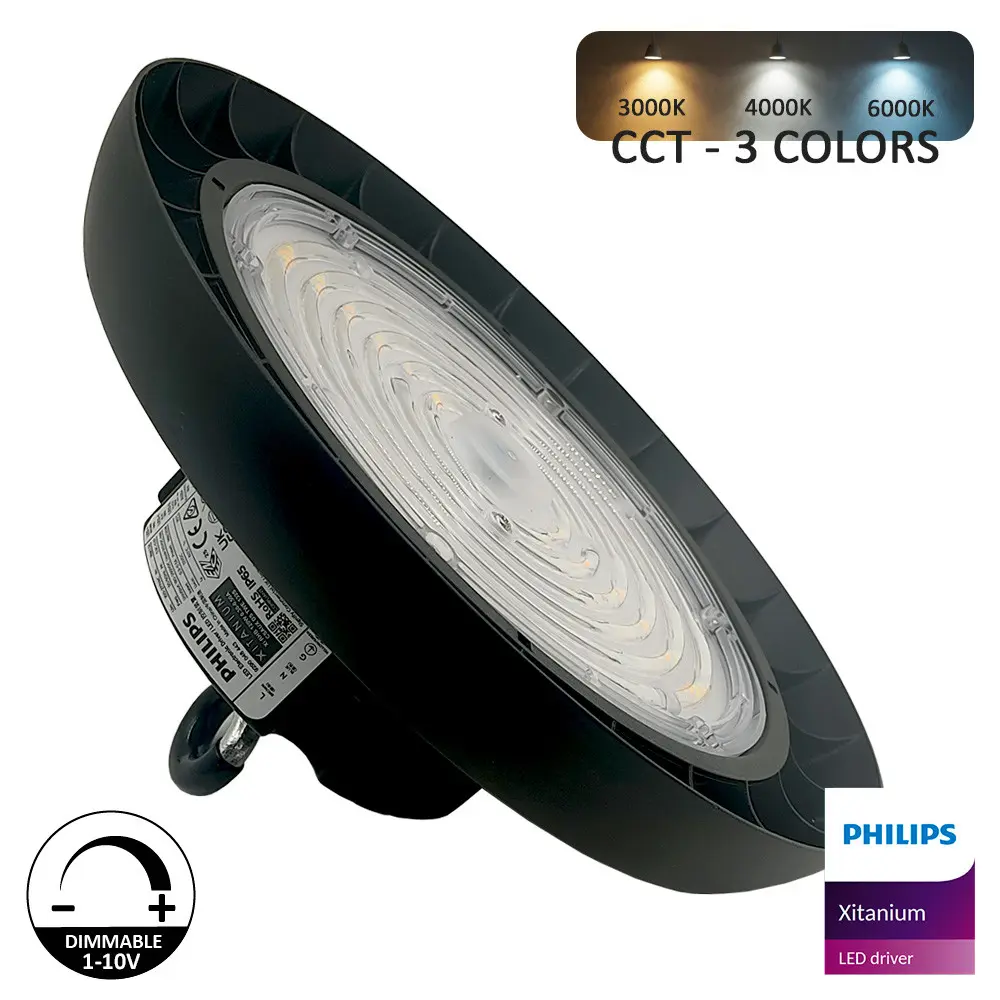
Industrial LED High Bay 200W-160W-120W | UFO GERMANY | 3CCT | Philips Xitanium Driver | Dimmable 1-10V
95,90 €
VAT included
Ref: HBGER200W-CCT-91436
Industrial LED High Bay 120W-100W-80W | UFO GERMANY | 3CCT | Philips Xitanium Driver | Dimmable 1-10V
79,90 €
VAT included
Ref: HBGER100W-CCT-91435
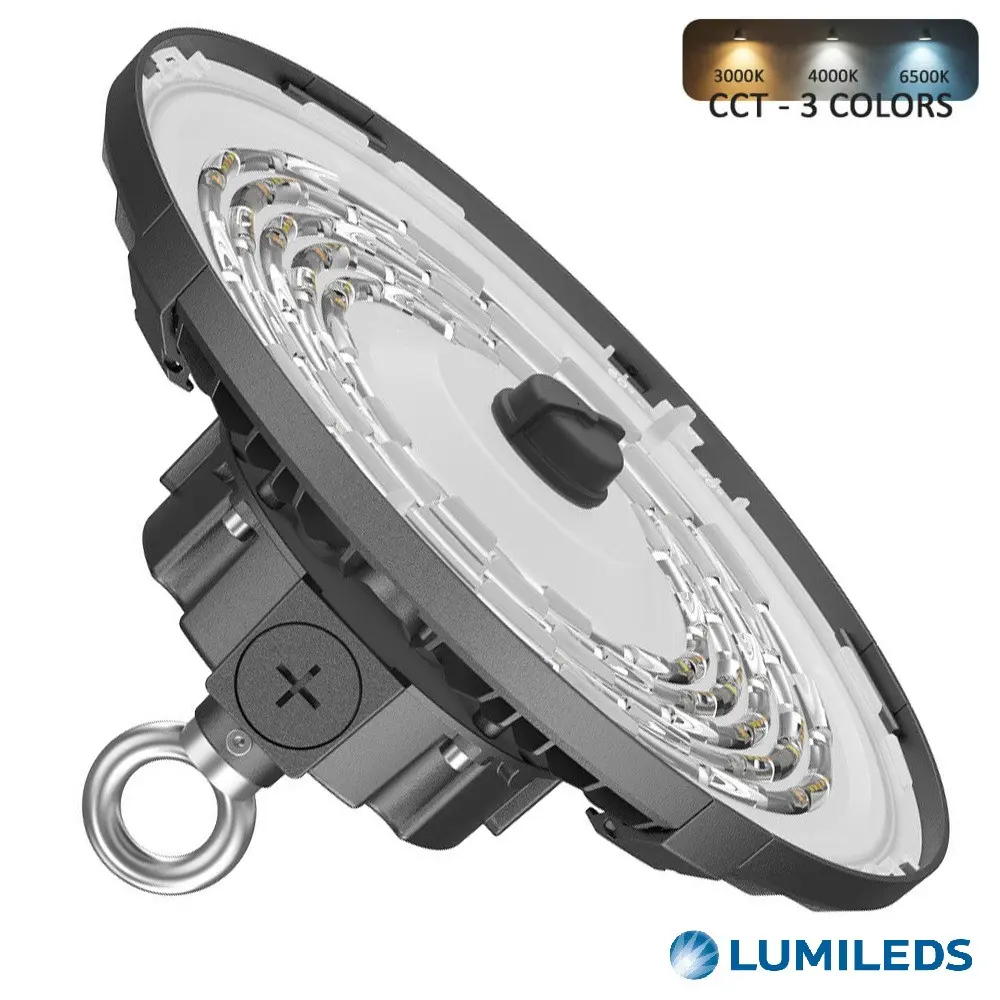
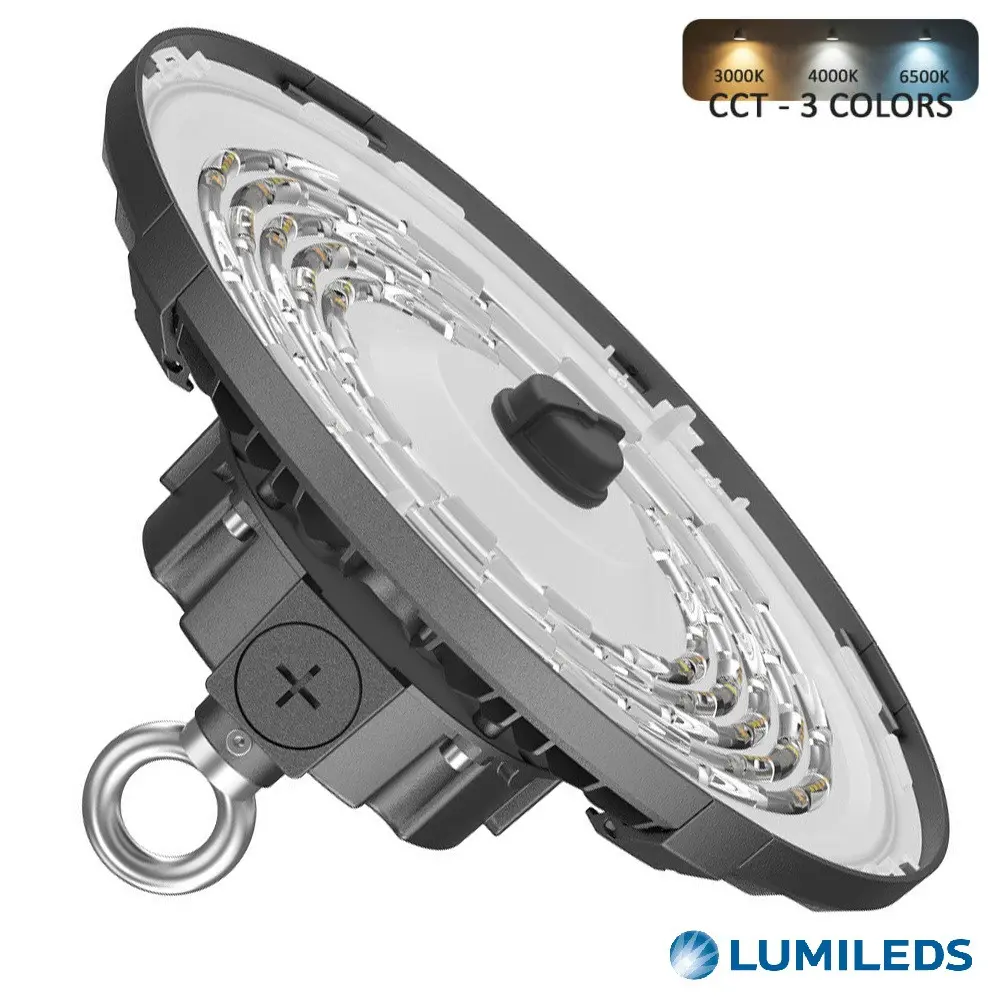
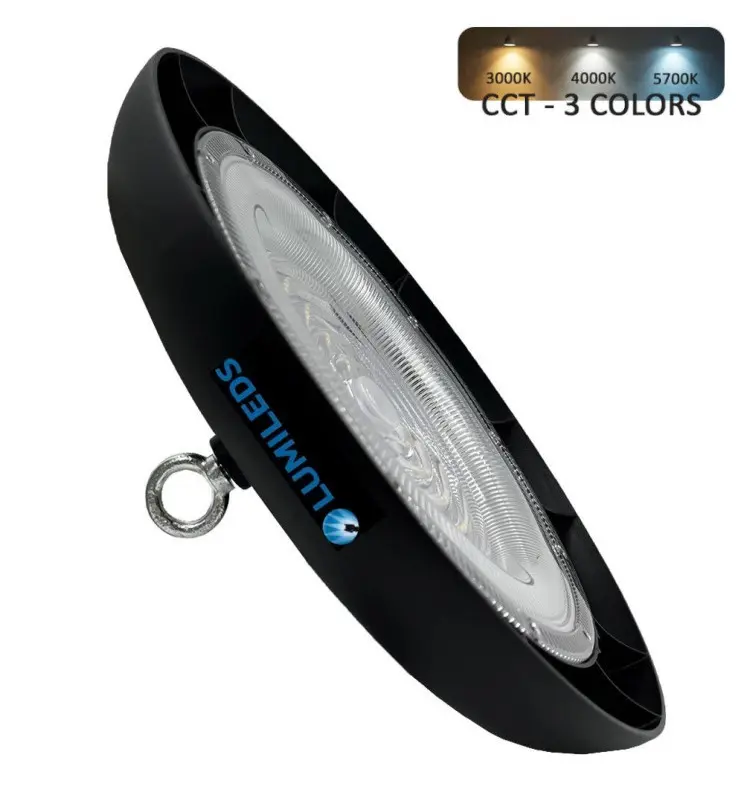
Industrial LED High Bay 200W UFO - NEW TITAN CCT - CHIP LUMILEDS SMD 2835
59,42 €
VAT included
Ref: HB200W-CCT-91336
Industrial LED High Bay 150W UFO - NEW TITAN CCT - CHIP LUMILEDS SMD 2835
46,49 €
VAT included
Ref: HB150W-CCT-91335
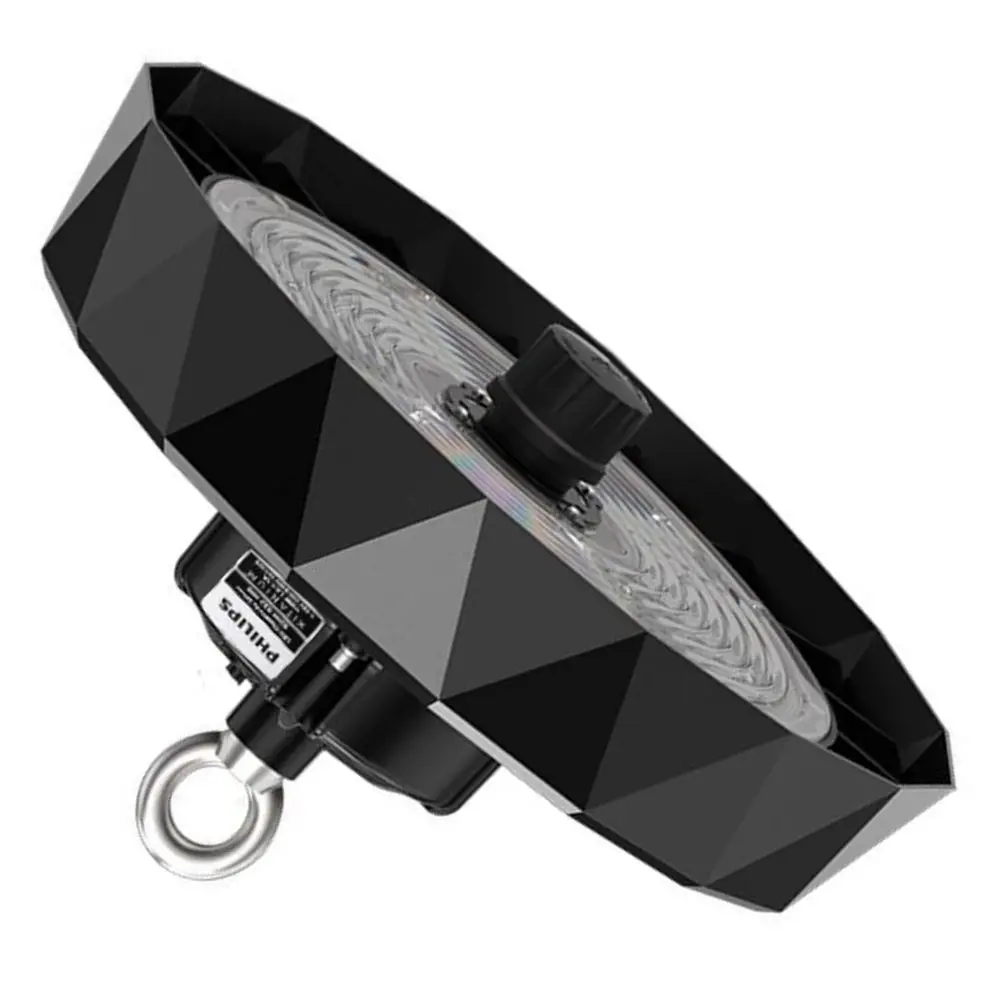
200W High Bay LED UFO DIAMOND Philips Xitanium - Dimmable 1-10V - 170lm/w - IP65
97,02 €
VAT included
Ref: HBPHL200W
Indoor industrial lighting that puts the light on the workstation and keeps it out of people's eyes
Inside a building, light is judged on the plane where the workpiece sits, not on the ceiling. You can have eighty fittings suspended over the assembly line and still have a serious problem if the operator checking a joint is working in their own shadow, or if, on looking up, they meet a point of glare that leaves an afterimage on the retina for half an hour.
Indoor industrial lighting is designed task by task, and that principle shapes what you end up buying: how many lux each workstation needs, how evenly they are spread from one end to the other, how much glare the source produces and how faithfully it renders the colour of whatever is being inspected. Send us the floor plan with the use of each area to uk@factorled.com and you will get back the fitting layout, the beam angle and the wattage per point before you buy anything.
FactorLED manufactures the luminaires that go into that scheme, and being the manufacturer changes the conversation: you can ask for the datasheet with the real luminous flux, the beam angle, the colour temperature in kelvin and the dimming type, and then keep the same product reference when, two years down the line, half a dozen fittings in a row need replacing without anyone noticing the swap. In our LED industrial lighting what sits inside the fitting is declared on the datasheet: OSRAM, Bridgelux or Lumileds chips, and a Philips Xitanium or Sosen driver. The warranty starts at three years and extends to six depending on the product.
This page is about what happens indoors: from the shop floor to the production office. In industry it is common to carry outdoor criteria indoors, and that is where almost every comfort problem begins. If you are torn between two product families, settle it in five minutes by calling 91 805 67 67 before you place the order.
Two separate lighting calculations and one order: an indoor lighting design does not work for the building's outdoor areas
Outdoors, the weather is in charge: driving rain, ice, a thirty-degree swing between the small hours and an August midday, wind on a light point nine metres up and UV all year round. LED floodlights that work in the open are chosen first for sealing, so the IP rating matters before the wattage does: IP65 withstands pressure jets and IP67 temporary immersion, and a robust housing counts for more than a decimal point of efficacy when the fitting spends the winter in harsh weather.
Indoors it does not rain, and the problem shifts to the eyes of the people working underneath, so an indoor lighting design is won or lost entirely on visual comfort. That changes the products we will propose: a different beam distribution, a different diffuser and a different mounting approach, with the fitting suspended from the structure or fixed on brackets. Ask for the datasheets of both families and compare them with the plan in front of you; they go out by email the same day.
That does not mean there is nothing harsh indoors. Sanding dust, steam in hose-down cleaning areas, airborne grease above an industrial fryer, constant vibration next to a press or ammonia in a cold room are all different operating conditions, and they call for a different sealing level within the same range. Tell us what is in each area and we will fix the reference block by block, without opening a new supplier for every building.
Even the calculation plane changes: lighting for a manoeuvring yard is measured at ground level, and the shop floor on the working plane, at around eighty-five centimetres. An outdoor fitting installed indoors usually hits the lux level and ruins comfort, because its beam is designed to cover area from a distance. These are two separate lighting calculations: request them separately and do not mix what goes outside with what goes inside in the same order.
A single level for the whole floor means overpaying: the right industrial lighting is specified by work area
UNE-EN 12464-1 does not allocate lux per square metre: it allocates them per task. A circulation aisle is covered with a hundred maintained lux, and so is a racked warehouse without continuous activity; as soon as there is order picking and label reading, it rises to two hundred. Rough assembly and non-precision machine work call for 300 lux, medium assembly and routine inspection do not go below five hundred, and fine inspection or visual finish checks go up to 1,000 lux on the exact spot where the workpiece sits.
That last nuance is what stops you overspending: you do not need to raise the whole floor to a thousand lux, you need to raise the workbench. The standard allows different levels in the task area, in the immediate surrounding area and in the background, so lighting the specific areas where quality is decided properly and leaving the rest at a reasonable level is cheaper to install and considerably cheaper to maintain.
In terms of the order, that means different products for each area. Production areas are not alike: a cutting area, a paint area and a packing area call for three different levels even under the same roof and structure. In logistics centres the split is even more uneven, because long racking aisles, loading docks, a consolidation area and a delivery-note checking station, which in lighting terms is an office, all sit side by side. Large manual-picking warehouses and full-pallet ones do not need the same thing either.
Specifying a single level for the whole building is the quickest way to overpay and distribute badly at the same time. Raising an inspection bench from two hundred to five hundred lux shortens the time the eye takes to resolve detail, and that is the honest case for boosting productivity with light. That is how we supply it, by work area: one wattage and beam angle for the aisle, another pair for the bench, with the same manufacturer reference and the same colour temperature in both. Call 654 777 000 with the floor area, height and task of each zone to hand, and you will have the product list by block on that same call.
Beam angle fixes distribution, wattage does not: the recommended lighting for industrial buildings is decided by the angle
You see it on the floor before you see it on a lux meter. If, walking down an aisle, you notice your shadow lightening and darkening every few steps, the installation distributes light poorly even if the average level comes out right in the calculation report. The standard controls this with a ratio, U0, which divides the minimum level in the area by its average level: it allows 0.40 in circulation areas and requires 0.60 for most production tasks.
Light distribution depends on the beam angle far more than on the wattage. Narrow optics concentrate the beam and are used to reach the floor from a great height without losing flux against the walls; wide optics spread light close by and overlap well. A narrow aisle between seven-metre racks and an open-plan assembly hall do not need the same beam, and lighting large spaces with the wrong angle leaves stripes on the floor however many watts you install.
On high ceilings, the lighting system nearly always relies on LED high bays, the family designed for that distance, and ours are supplied with 60º, 90º or 120º beam angles on the same housing. Distribution is fixed by choosing the beam angle that makes the beams overlap, not by maximising the flux of each fitting. A more powerful fitting with the wrong beam leaves the same striped floor, only brighter, and you pay for it twice: in products and in going back up to correct it.
Checking whether your lighting is uniform takes thirty seconds and needs no instrument: walk the aisle and see whether your shadow moves. If it does, send us the clear height and the current grid and we will send back the spacing between fittings that makes the beams cross evenly, together with the resulting number of fittings. Before the large order, buy one unit and hang it over the worst-lit aisle: it is the cheapest test there is.
Same lumens on the datasheet, different glare: the luminaire's industrial design is what determines UGR
UGR is not in the wattage or in the kelvin. It lies in how the source looks from where you are standing. A bare bulb, or an exposed LED board behind flat glass, concentrates very high luminance in a few square centimetres, and that contrast against a dark ceiling is exactly what the index measures.
In the body of the fitting, it comes down to three things: the surface the light leaves from, the material that diffuses it and the angle beyond which you stop seeing the diode when you raise your head. An opal diffuser spreads brightness over the whole face and lowers the index; a clear lens concentrates it and raises it. Glare control is bought there, in the part of the industrial design that does not show up in the catalogue photo and that separates two indoor industrial lighting fittings with the same lumens on the datasheet.
The reference values are easy to remember: UGR ≤ 19 where there are screens and office work, ≤ 22 at most production workstations with medium detail and ≤ 25 for rough work. The figure is calculated for one fitting in a specific room, with its reflectances and geometry, so ask for the datasheet with the calculation conditions alongside before you buy: with that document in hand you can justify the choice to your client, to the health and safety team and to whoever signs off the order.
The batch passed under one light and rejected under another: Ra 90 in industrial LED lamps and high colour rendering LED lighting
A CRI of 80 is fine for moving around and shifting boxes. It is no good for deciding whether a part is properly painted, whether a cable is brown or dark red, or whether a weld bead has the colour it should. Wherever someone judges colour, the reasonable minimum is Ra 90, and it is also worth checking R9, saturated red, which is where cheap diodes fall short and where it shows first: with a low R9, red turns brownish and crimson turns brown.
This is not an aesthetic debate. In electronics, wiring colour codes are read at arm's length and in a hurry. In paint and plastics, a batch that passes under one light and is rejected under another creates a cost nobody had budgeted for. In food and textiles, colour literally is the product. That is where high-quality LED technology pays for itself, because an error of judgement costs more than the fitting that caused it.
Colour temperature is separate from CRI and is often confused with it. Four thousand kelvin is the sensible standard for almost the entire floor: neutral light, without the yellow that dulls contrast or the operating-theatre blue that tires people over long shifts. Only at very demanding inspection stations does it make sense to go up to 5000 or 6000 K, and even then the rest of the building should not jump in colour temperature from one room to the next. Much of the range comes with a CCT selector on the fitting itself, so you can order a single reference for the whole building and set the colour on installation, without duplicating stock.
There is one detail that is almost always discovered too late: colour consistency between units. If you replace three fittings in a row two years later and they come out half a step higher, the whole row stands out from the entrance door. Manufacturing is what allows us to commit to this, which is why the industrial LED lighting we supply keeps its reference and colour temperature available for replacements. If installation is phased, say so when you open your trade account and it will be noted on your customer record.
Offices and control rooms in industrial settings on the same delivery note: UGR ≤ 19 on the screen and a workstation that works
The production office, the quality lab and the control room are inside the same building, and they are not handled with shop-floor criteria. There the benchmark is 500 lux on the desk, UGR ≤ 19 and 4000K. If the ceiling is already a suspended grid, 60x60 or 60x30 panels go in; if it is a slab with no ceiling void, it is solved with surface-mounted panels or ceiling lights. All four families come from the same catalogue, the same order and the same delivery note.
The reason for demanding a low UGR is the screen. A monitor is a mirror: it reflects the whole ceiling, and if the emitting face is very bright it shows up across the document you are reading. Whoever works there ends up turning up the monitor brightness to beat the reflection, and their eyesight suffers long before anyone connects the two. A diffuser that spreads that brightness well solves it at the point of purchase, when it costs the difference between two references rather than a whole installation.
The control room takes it a step further. There the screens are the task, and a high ambient level works against you: you want to be able to lower the general flux and keep the working area lit, with dimmable fittings and dimming compatible with whatever is already installed in the building. An adaptable installation, which dims when the room is only being monitored and brightens when there is an intervention, covers both situations without duplicating fittings or rewiring. Ask for the dimmable version in the order: a driver that leaves the factory without a control input cannot have one added later, and the whole fitting has to be replaced.
And there is a matter of judgement that often gets overlooked: the industrial look of a high bay does not belong over a meeting table, just as an office panel cannot cope with the dust of a cutting area. It is not a question of taste. Neither is designed for the other's location, whether in beam angle, sealing or glare control. Send us the plan by zone and we will tell you which family goes in each, with a single order list for the whole building.
The expensive part is not the fitting, it is going up to change it: durability, energy efficiency and the savings from indoor industrial lighting
Industrial LED lighting is designed to run for many hours at a stretch, and that is where a serious product parts company with one that only looks serious on the datasheet. Service life is not stated in hours alone: it is stated as L80 or L90 at a number of hours and at a specific ambient temperature. L80 at 50,000 hours means that at that point the fitting retains 80% of its initial luminous flux. Without the temperature alongside, the figure is incomplete, because nobody works at twenty-five degrees under a roof in August. Insist on both figures together before comparing two quotes: that is the comparison that decides which one works out more expensive over five years.
What governs that number is the electronics and the chip's junction temperature. Every extra ten degrees is paid for in hours that never come back, which is why an aluminium housing with a heat sink weighs so heavily in the decision: without heat dissipation, even the best diode ages quickly. The Philips Xitanium and Sosen drivers we fit come with declared curves and withstand the thermal drift of a summer under a metal roof; the OSRAM, Bridgelux and Lumileds chips come with the same backing. In a luminaire the diode is almost never the first thing to fail: reliability is set by the electronics that power it. Those components are listed on our datasheet, and that is the document to ask for when comparing two quotes.
On consumption, efficacy is the only figure that genuinely compares: lumens per watt for the complete fitting, never for the bare chip. The high bays we manufacture deliver between 160 and 200 lm/W. Maximum energy efficiency comes from putting the flux exactly where it is needed, and low energy consumption comes from that and from keeping switched off whatever nobody is using at the time. Insist on that figure in writing in the quote before you sign it.
That is where dimming finishes the job. The 1-10V interface lets you set a background level for idle hours and bring the flux to full only while there are people or machines in the aisle. The Zhaga radar motion sensor, with its 0-10V interface, plugs into the fitting's standardised socket: there is no need to open the housing or run new cable back to the distribution board. It works by microwave, so the heavy clothing worn in a cold store does not fool it. Dimming and detection are what turn a correct installation into genuinely efficient solutions, and what let you optimise night-shift costs without leaving areas in the dark. The two control wires are ordered with the fitting and left in place from day one; adding them later means going back up.
That leaves the item that never appears in any comparison: maintenance costs. Replacing a fitting suspended twelve metres up costs considerably more than the fitting itself, once you add the downtime in the area, the permit required for working at height and the hours of access platform. A product that withstands dust and vibration even in harsh conditions, and that keeps delivering its declared optimum performance after years of service, pays for itself in all the times nobody has to go up. The warranty points the same way, three years of cover and up to 6 depending on the product, with the reference kept live on our side so that whatever you replace is identical to what is installed. In extreme temperatures or heavy dirt, start your selection there rather than with the wattage, and order the first phase as soon as it is decided: the goods are prepared quickly and will not be what holds up your schedule.
Before placing your order for high-performance industrial lamps for demanding environments
What information do you need to propose something that fits my facility?
Four things and a plan are enough to get started: floor area and clear height, the actual task in each area, the type of ceiling or structure the fittings will hang from, and daily hours of use. With that you receive a complete proposal, with the right beam angle and wattage and the level achieved on the working plane, instead of a list of loose products. Proposing suitable solutions without that starting point is guesswork. If the building combines very different areas, the sensible thing is to divide it and treat each block separately, because the specific needs of a loading dock and those of an inspection bench are not met with the same products. Send the plan to uk@factorled.com and the proposal comes back priced.
Can I start with one area and expand later without the change showing?
Yes, and that is the most common approach. We manufacture, so the reference does not change: whatever you hang in the second phase keeps the beam angle and colour temperature of what is already up there. That is the tangible advantage of buying from the manufacturer, and it does not depend on what the next import brings. The sensible approach is to start by ordering a single unit, hang it over your most demanding workstation and check with whoever works there how the workpiece looks underneath. Once that decision is made, record the reference in the maintenance file: from then on, expanding or replacing is an order, not a redesign.
What products does indoor industrial lighting include besides what goes on high ceilings?
A wide range that covers the entire building. For suspended grid ceilings, 60x60 and 60x30 panels; for the rest of the indoor areas, downlights, ceiling lights and surface panels. In car parks, cold rooms and hose-down cleaning areas, weatherproof batten fittings and battens come in, as well as T8 tubes. The bulb section covers the usual lamp bases, G9, AR111, MR16, GU10, E14 and E27, and on top of that there are LED strips and flexible neon with their aluminium profiles and controllers, drivers and power supplies, emergency and signage fittings, and the control block with sensors, remotes and dimmers. Working within a single range is what makes it possible to put together consistent LED lighting solutions for every area, in a single order and with a single point of contact.
Are there different terms if I buy as an installer or reseller?
Yes. Once your business account is validated, you move to trade pricing and the discount is applied by volume tier. The catalogue is supplied personalised, with your logo and details, so that it reaches the end customer without ours on it, and shipments go out unbranded, with no sender details visible. If you have your own online shop, dropshipping connects our catalogue to yours and updates stock daily. Deferred payment is also available, subject to review: it is not granted automatically. Registration is completed with the sign-up form and documentation proving your business activity, whether you are a company or self-employed, sent to uk@factorled.com. The sooner it is validated, the sooner you buy at trade prices.
How long does the order take and what do I do if something arrives damaged?
Lead times depend on the zone and there is no need to ask: the one for your address is calculated automatically and shown in writing before you pay. Mainland Spain (the península) is quickest; the Balearic Islands (Baleares) and Portugal are one step behind, European shipments another step further, and the Canary Islands (Canarias), Ceuta and Melilla are handled separately, with a DUA customs document to process and advance notice before dispatch. Whether you order a single unit to test over a workstation or the products for the whole facility, the process is the same. Shipping is priced by the basket according to the weight of the consignment, its volume and its destination, and the amount is shown before you pay. When the shipment leaves, we email you the tracking number.
On delivery, check the package in front of the carrier: if it arrives damaged, note it on the delivery note before they leave. And if the damage appears when you open the box, tell us straight away, without waiting to finish the installation. To return goods at your own discretion, you have the period set out on our returns page, and the box must arrive exactly as it left, with no stickers or tape on it and with the packaging, manuals and accessories inside; return carriage is at your expense, and a deduction is made from the refund if any of those conditions is not met. The route is an RMA from your customer area: the request is opened, you wait for it to be approved, and only then are the goods sent back.
When you are unsure between two levels or two beam angles, the cheap option is to settle it with the plan in front of you. The expensive one is finding out a month later, with the fittings already up and the shift complaining about glare every time they look up. Email uk@factorled.com with the dimensions and use of each area, or call 91 805 67 67; you also have the mobile 654 777 000 if you would rather talk it through with the plan on the table. Out come the proposal, the lead time and the order for your indoor industrial lighting.
Más en Industrial LED Lighting
- LED High Bay
- Industrial Warehouse Lighting
- Warehouse Lighting
- Industrial Light Bulb
- Industrial Fluorescent Lamp
- Industrial LED Batten
- Industrial LED Panel
- Industrial LED Floodlights
- Industrial Ceiling Lights
- Industrial Streetlight
- Industrial Floodlights
- 150W Industrial LED Light Fixture
- 200W Industrial LED
- 400W Industrial Light Fixture
- Suspended Industrial Light Fixture
- Design Lighting