

Industrial Fluorescent Lamp
11 products
PACK10 LED Tube T8 18W 120CM | GXtronic Glass 300º | SMD2835 110Lm/W
29,90 €
VAT included
Ref: TB18W
PACK10 LED Tube T8 24W 150CM | GXtronic Glass 300º | SMD2835 110Lm/W
34,90 €
VAT included
Ref: TB24W
PACK10 LED Tube T8 9W 60CM | GXtronic Glass 300º | SMD2835 110Lm/W
19,90 €
VAT included
Ref: TB9W
PACK10 - LED Tube 9W Glass 60cm 300º - SMD2835 SAMSUNG - High Brightness 130Lm/W
35,09 €
VAT included
Ref: TB9WSS
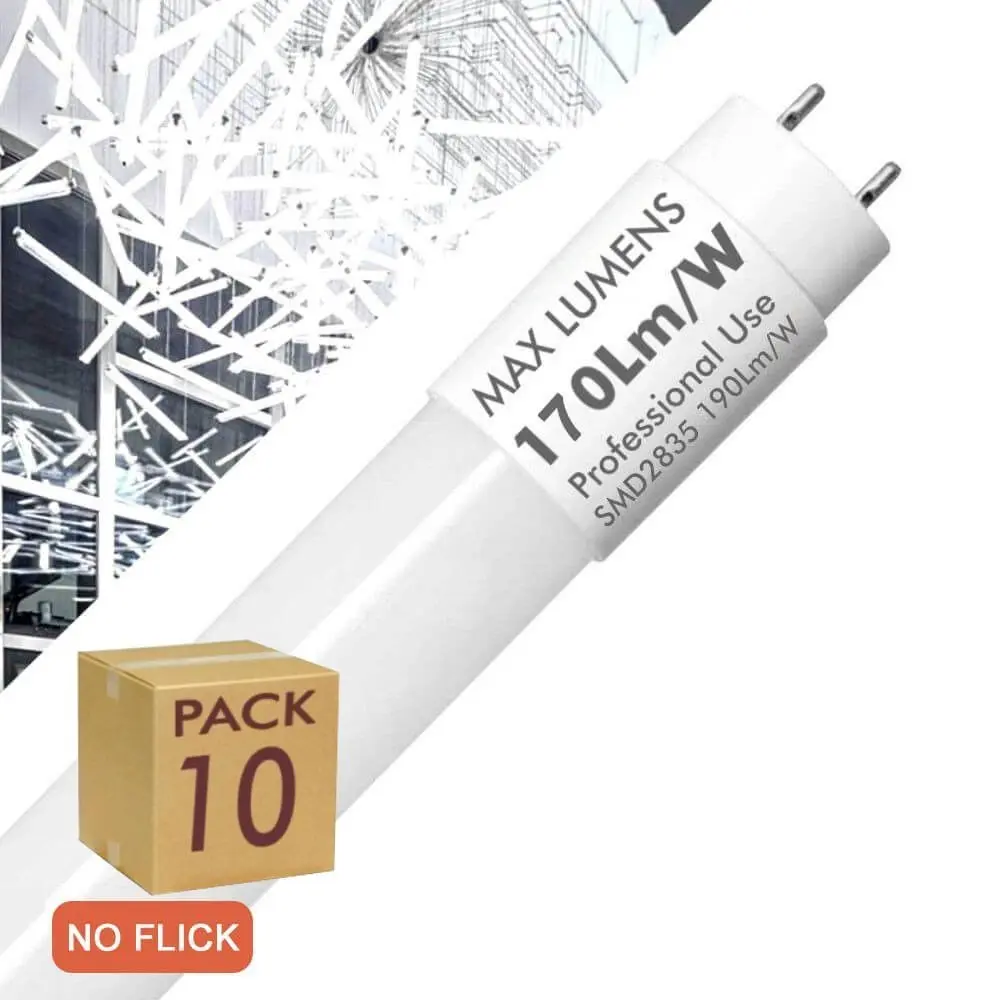
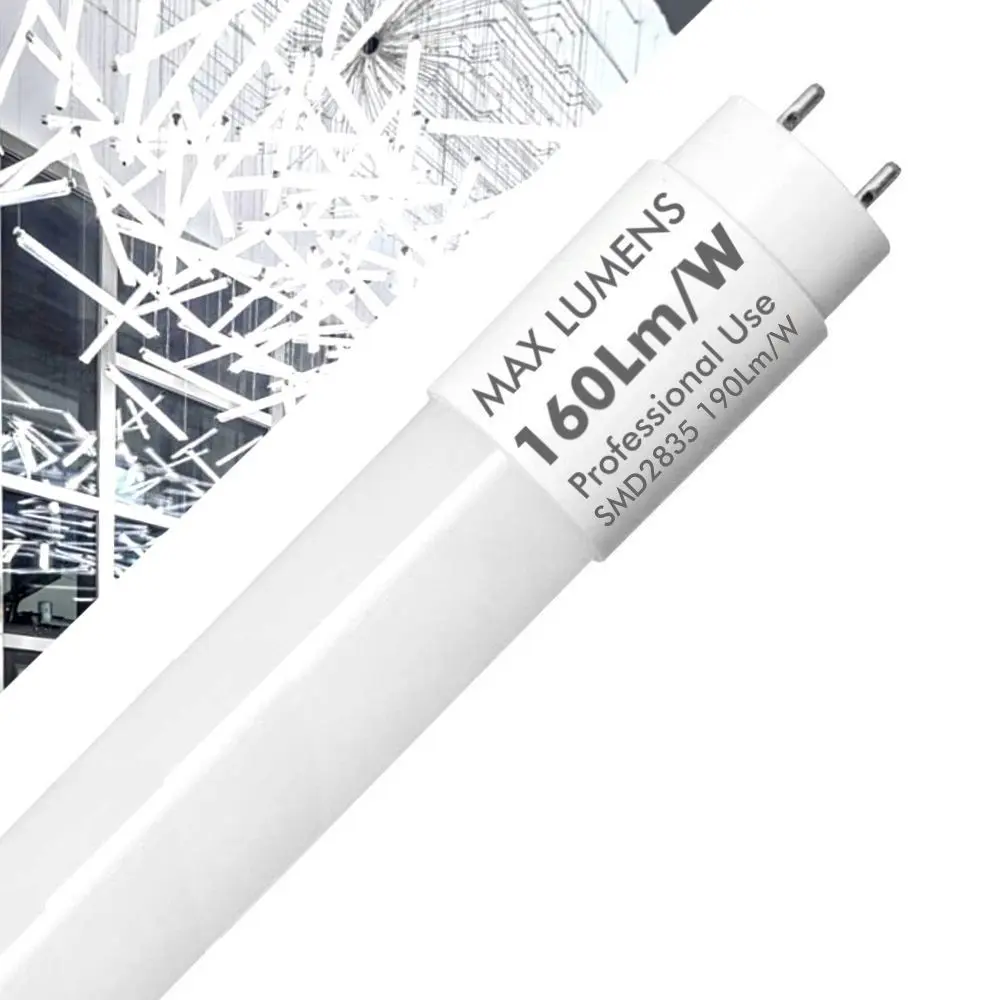
PACK 10 - LED Tube Glass - 25W - 150cm T8 - 170 Lm/W - PRO MAX LUMENS - 4250Lm - NO FLICK
94,16 €
VAT included
Ref: TBGHB25W
PACK 10 - LED Tube Glass - 20W PRO - 120cm T8 - 170 Lm/W - PRO MAX LUMENS - 3400Lm - NO FLICK
78,89 €
VAT included
Ref: TBGHB20W
PACK 10 - LED Tube Glass - 10W - 60cm T8 - 170 Lm/W - PRO MAX LUMENS - 1700Lm - NO FLICK
49,85 €
VAT included
Ref: TBGHB10W
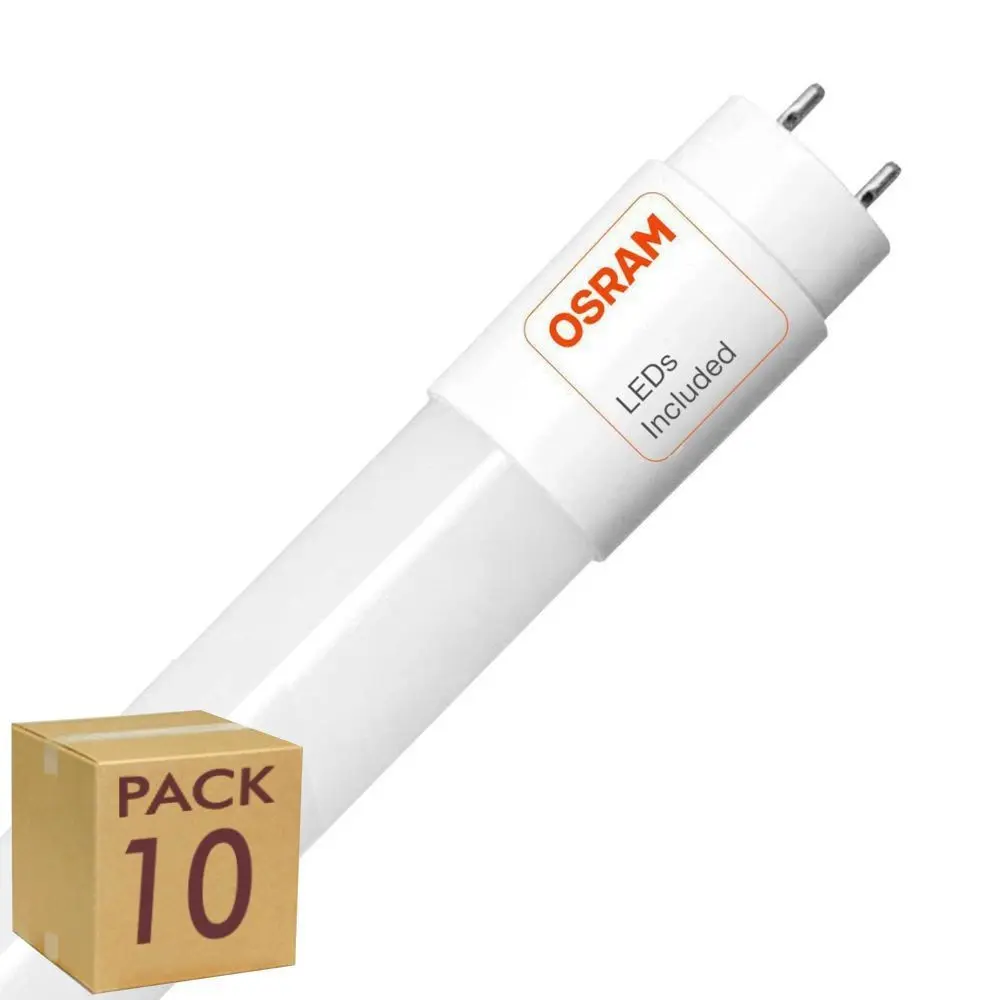
LED Tube Glass 20W 150cm 300º - HIGH LUMINOSITY - OSRAM CHIP
66,72 €
VAT included
Ref: TBGOSR20W
LED Tube Glass 18W 120cm 300º - HIGH LUMINOSITY - OSRAM CHIP
61,50 €
VAT included
Ref: TBGOSR18W
LED Tube Glass 9W 60cm 300º - HIGH LUMINOSITY - OSRAM CHIP
34,68 €
VAT included
Ref: TBGOSR9W
LED MAX Tube 13W Glass 300º 90cm - HIGH LUMINOSITY
2,38 €
VAT included
Ref: TB90MAX
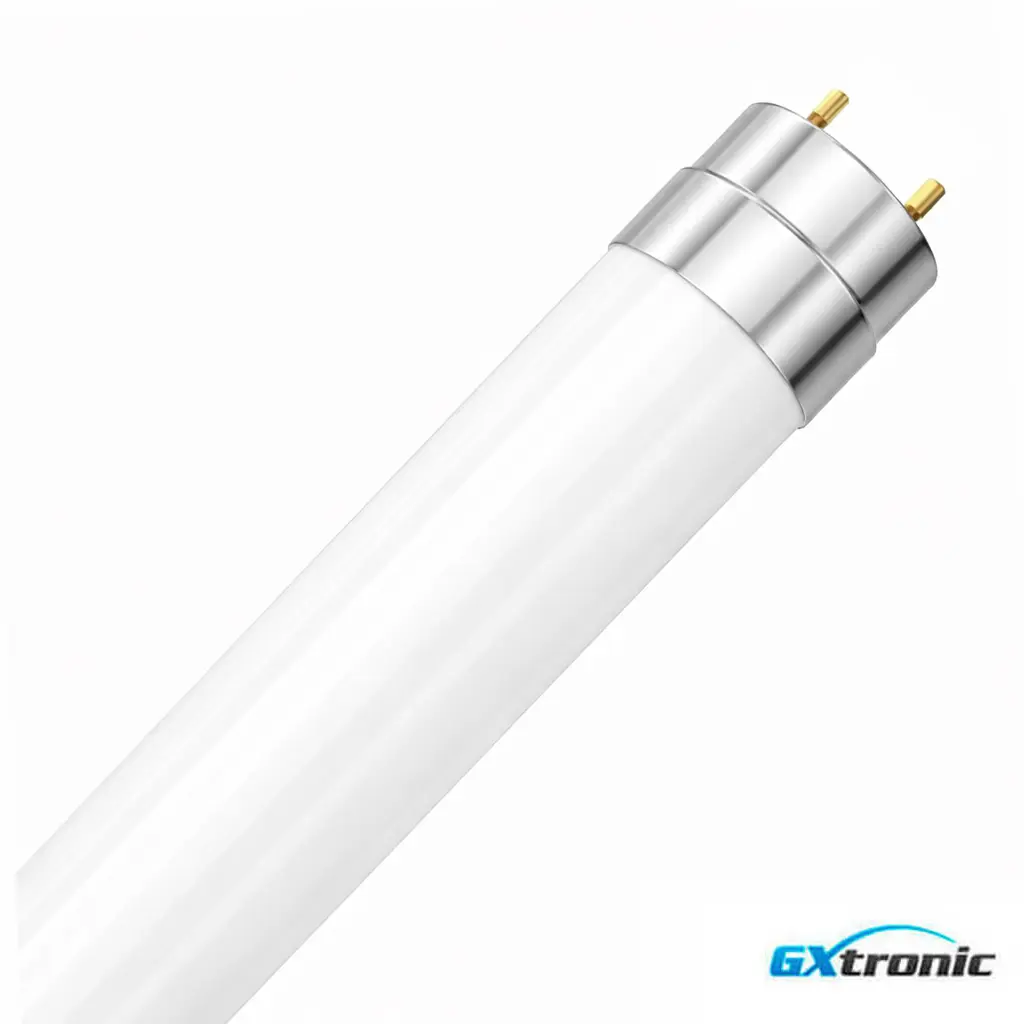
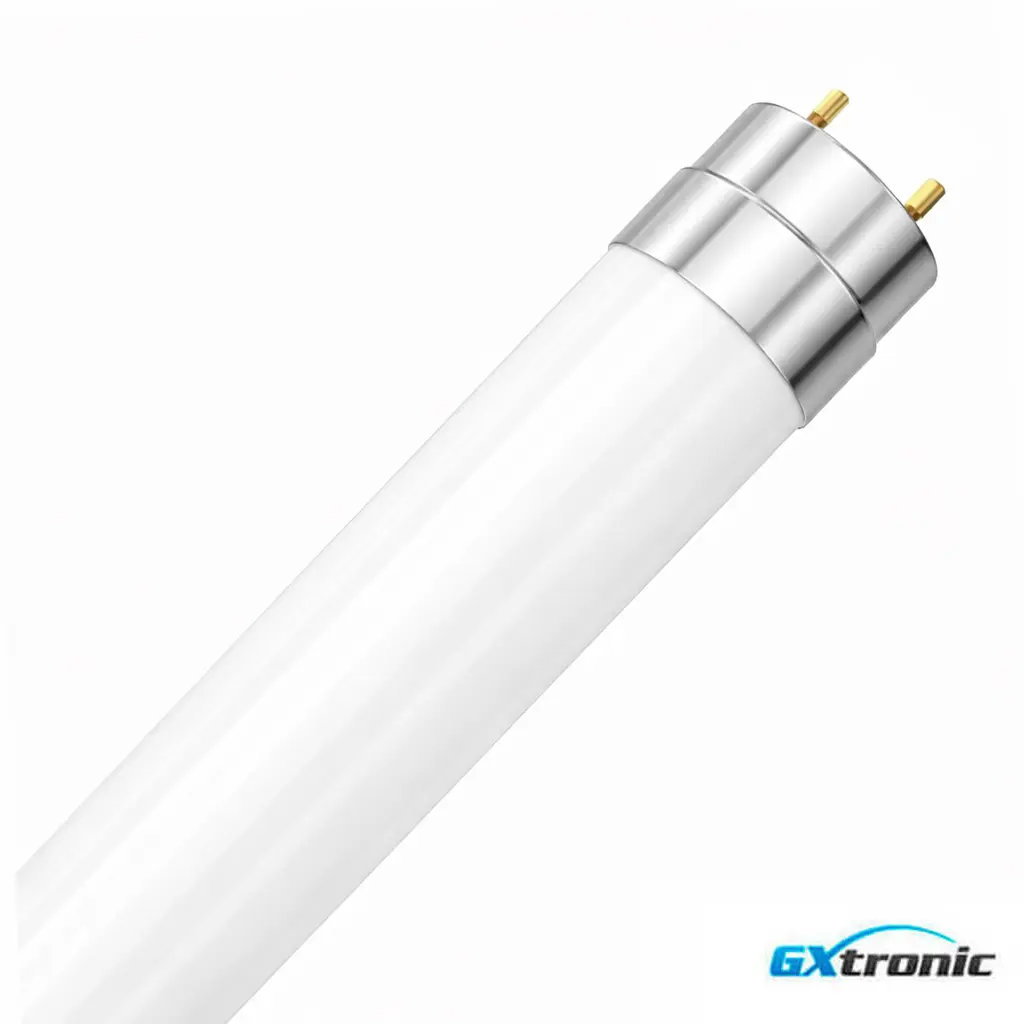
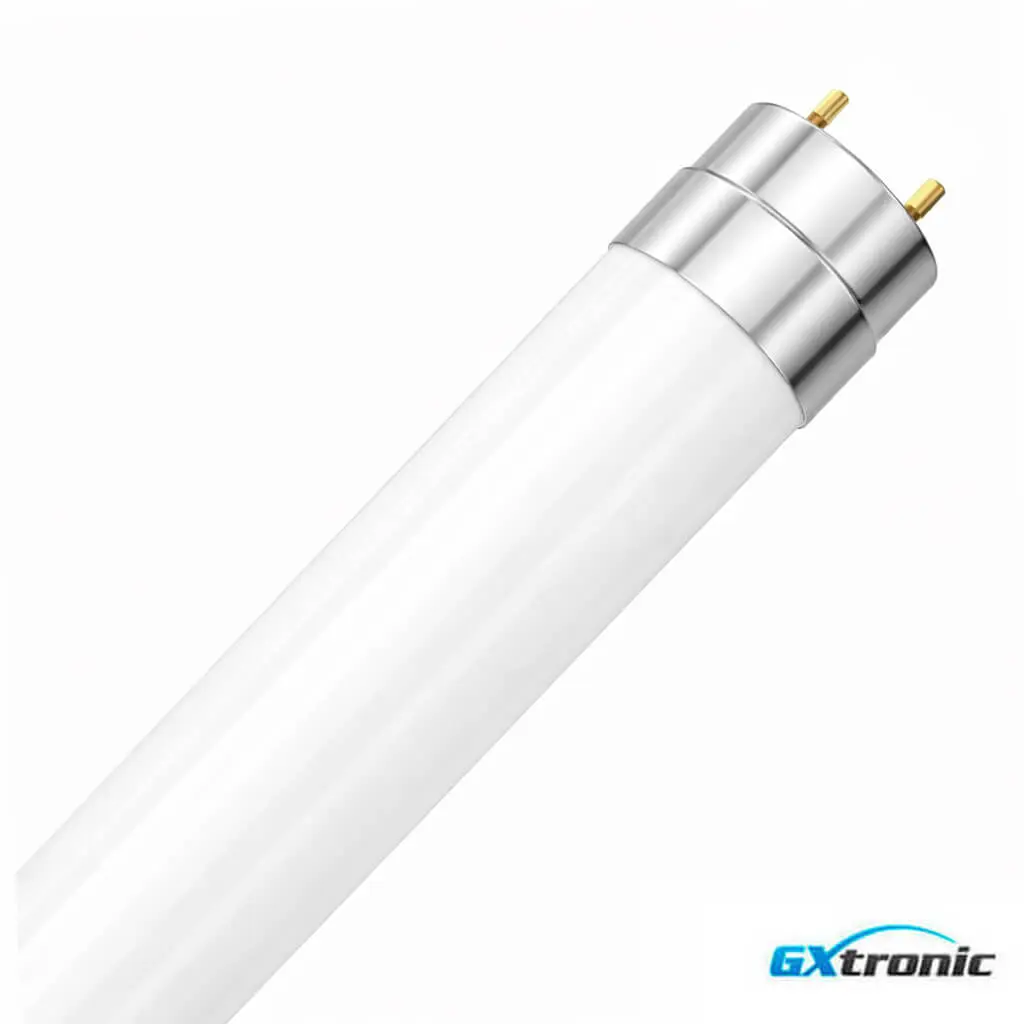
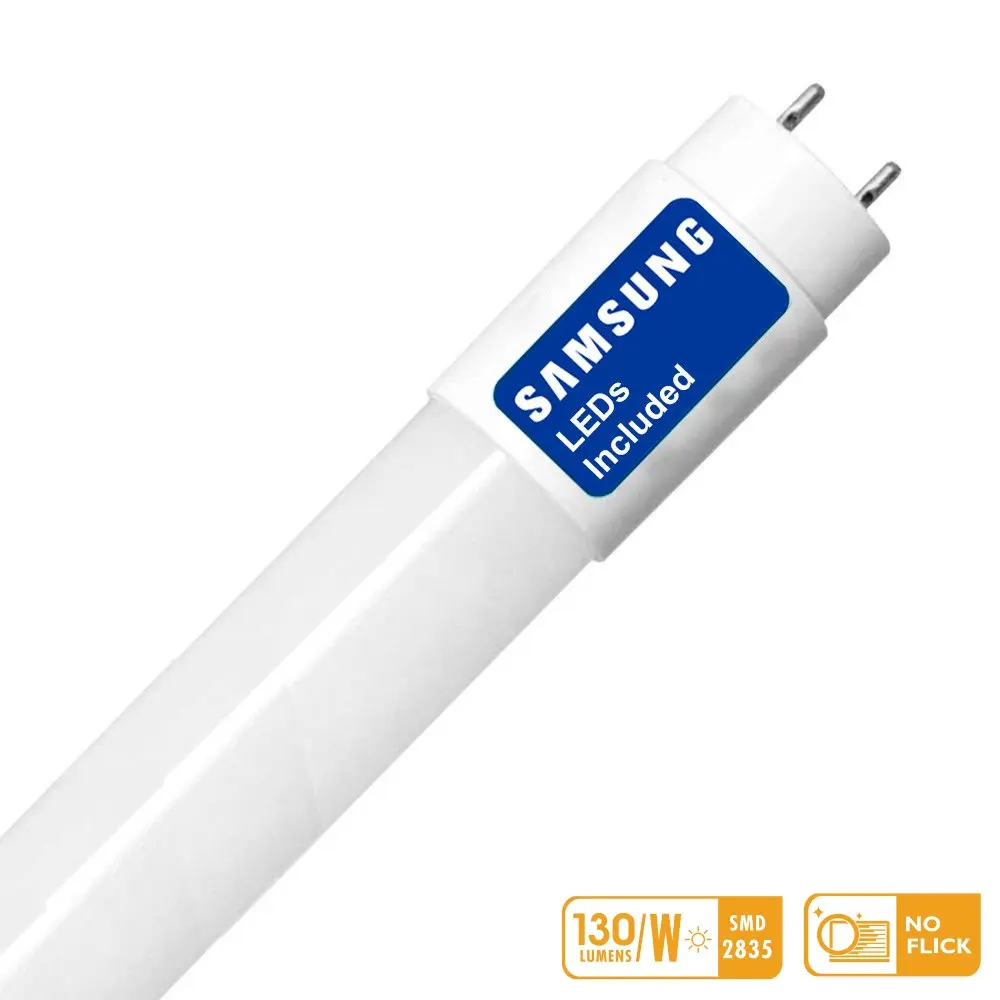
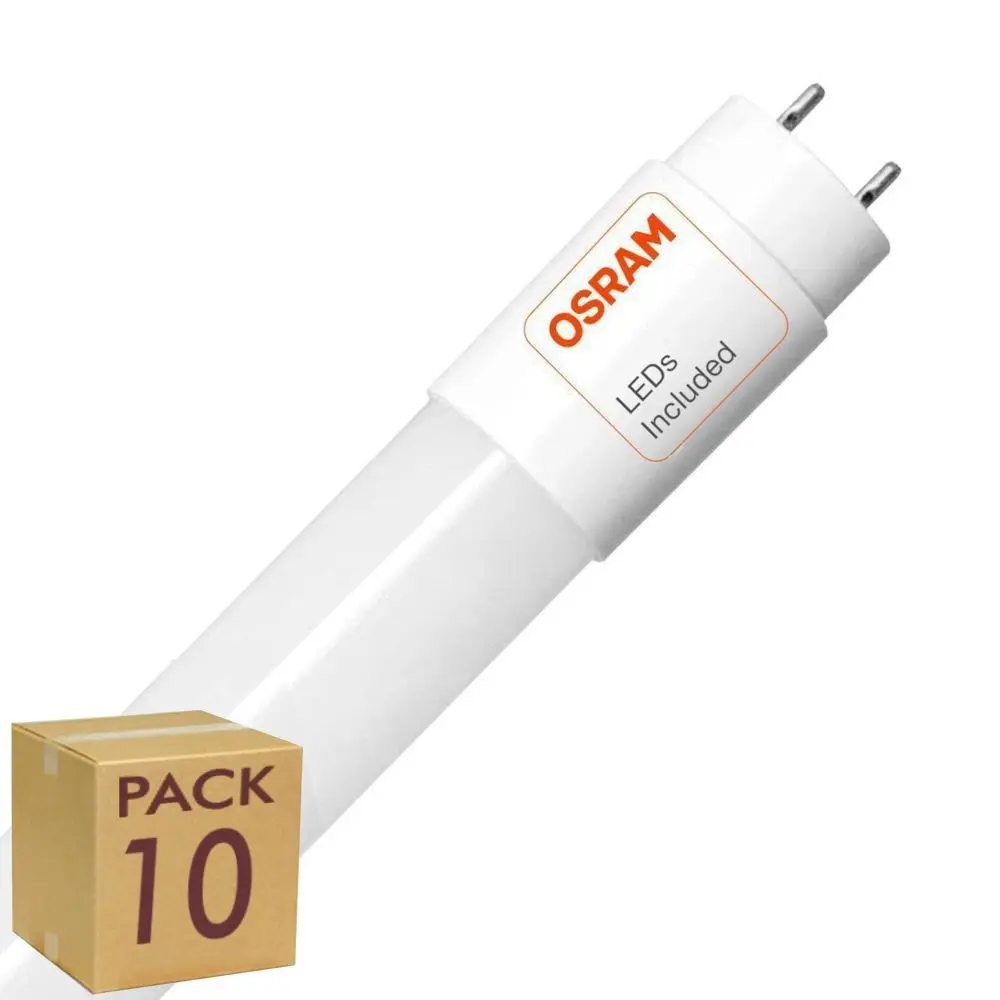
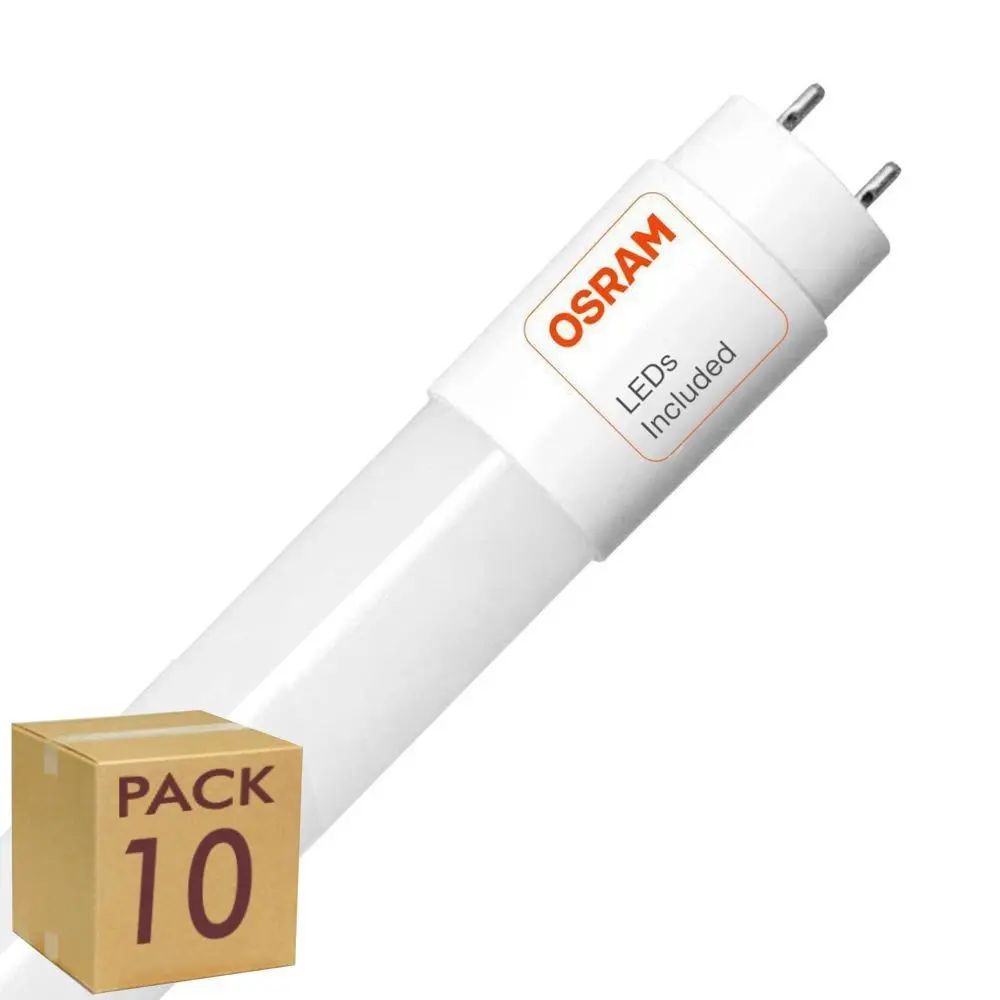
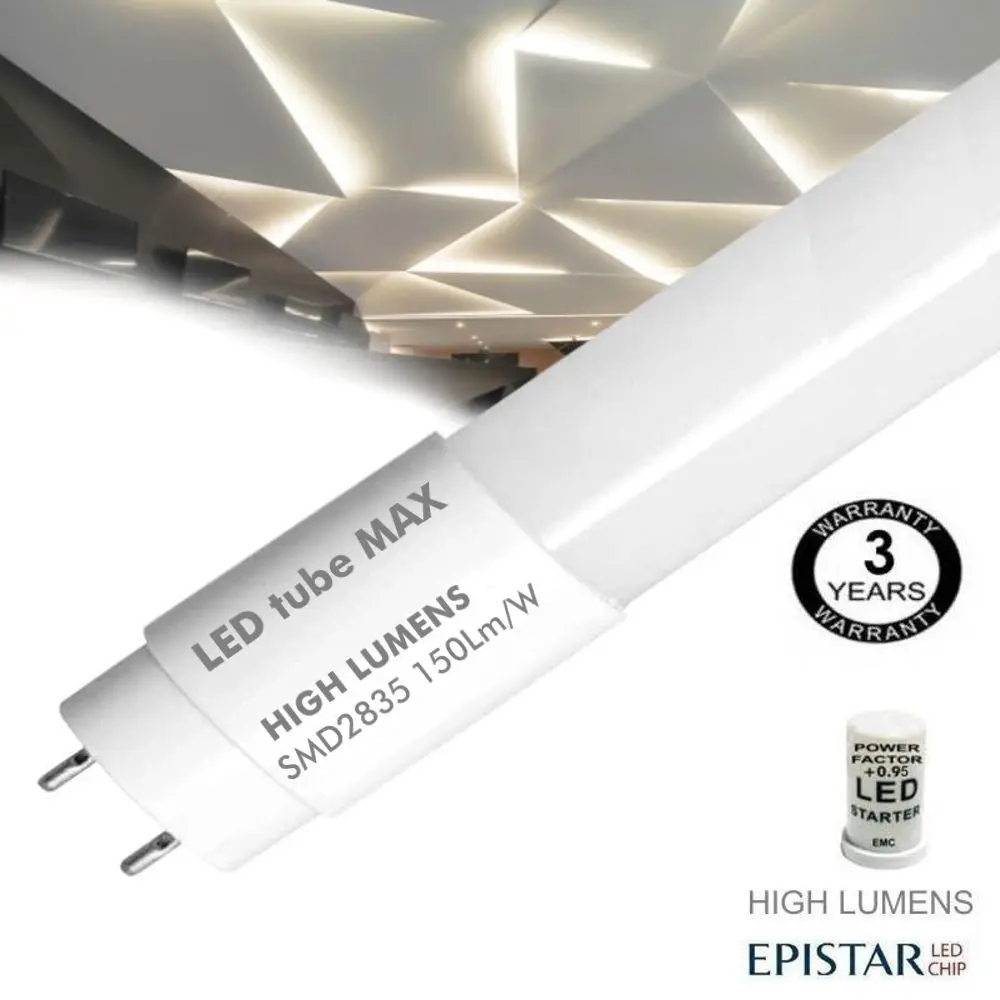
Industrial fluorescent lamp
The industrial fluorescent lamp still hangs in thousands of industrial buildings, workshops and warehouses across the country, and in almost every case it can be replaced without touching the wiring. This page explains the two routes available, replacing just the tube or replacing the whole light fitting, what has to come out of the old fitting and what light you get afterwards. The full range is in LED Tubes, Battens and Waterproof Fittings, and all the industrial lighting for the shop floor is in Industrial LED Lighting. If you have a whole building to refit, ask for the DIALux calculation and trade pricing via Contact. Any industrial fluorescent fitting on the market now has an LED light equivalent of the same size.
Fluorescent light and fluorescent lighting: what it is and why it is being replaced
It is worth understanding what was there before so you know what you are changing, because it shapes the whole job.
That light is produced by passing an electrical discharge through a gas containing low-pressure mercury. The discharge emits ultraviolet radiation, which the coating on the inside of the tube converts into visible light. This type of lamp works, has worked for decades, and has three problems: it needs control gear to start, it loses output over the hours and it contains a hazardous substance that means the waste has to be managed.
The fourth problem is financial. A fluorescent uses more energy than an equivalent LED and has to be replaced more often, and in a building running long shifts that difference ends up showing on the electricity bill and in electricians' hours.
The fittings hanging up today are also usually at the end of their life: humming ballasts, tubes that flicker on start-up and light levels far below what they gave on the day they were installed.
That is why the change is not a cosmetic upgrade: it is a maintenance job with a measurable return, and the starting point for almost every industrial fluorescent lamp replacement.
T8 fluorescent tube: the direct replacement without touching the lampholder
The quick route, and the one that solves most cases when the housing is in good condition.
The classic industrial format, the T8 fluorescent, is the twenty-six millimetre diameter tube with a two-pin cap at each end. T8 fluorescent tubes have been the standard in industrial buildings for decades. The LED equivalent keeps that size, so it fits the same lampholder without any adaptation. The LED fluorescent tube that replaces it is in T8 Glass LED Tubes and, with a metal body, in T8 Aluminium LED Tubes. That LED T8 is the tried-and-tested direct replacement.
The standard lengths on the market are 120 cm and 150 cm, with the short format for small battens. They are measured from end to end of the caps, not the glass tube.
What does change is the inside of the fitting. An LED tube needs neither a starter nor a ballast, so those components are removed and the circuit is bypassed to take the 230 volts straight to the ends. For an installer it is a few minutes' work per point, but it has to be done: leaving the electronic ballast in place with an LED tube inside is the most common cause of premature failure.
And a practical warning: if the housing is rusty, the reflector pitted or the lampholder burnt, replacing just the tube is throwing money away. That calls for the other route.
IP65 weatherproof fitting: replacing the whole LED fitting
When the housing will not last another season, it pays to replace the whole unit.
The complete fitting arrives with the integrated module, its driver and its designed optics, with no lampholders or loose parts to age. That LED luminaire, as it appears on some datasheets, replaces the entire unit. It performs better than a tube inside an old housing, because it does not lose light to a dirty reflector or a yellowed diffuser.
For industrial environments the benchmark is the weatherproof fitting. Rated IP65, it withstands dust and water jets without letting anything into the driver compartment, and that detail is what makes the difference in a building that is cleaned regularly, which is what you find in a building with forklifts, a workshop with swarf or a wash-down area. You will find them in Weatherproof Fittings and Battens.
In terms of format, 120cm LED Batten Lights and 150cm LED Batten Lights cover what the twin fitting used to do. That twin-tube 2x G13 arrangement was the industrial standard for decades, and today a single LED batten delivers the same output with half the parts that can fail. Many are linkable, so you can run a continuous line along an aisle with a single supply and a single connection point, which is exactly what saves installation hours in a long building.
The cost difference between the two routes is recovered in maintenance. An industrial light fitting with heavy-duty LED designed for the shop floor will not need touching for years; an old housing with a new tube still has the same weak points. What used to be ordered as a heavy-duty fluorescent lamp is now handled this way.
Ballast, starter and wiring: what has to come out of the old fitting
The electrical part, which is where the expensive mistakes are made.
The first step is to isolate the supply and check it is dead. Then the starter, if there is one, is removed and the ballast disconnected. If the fitting has an electronic ballast, it must be taken out of the circuit completely, not just disconnected at one end.
The wiring is redone so that mains voltage reaches both ends of the lampholder directly, following the polarity stated on the tube's datasheet: some are single-ended and some are double-ended, and wiring them the wrong way round means they either do not light or the fitting blows.
The circuit's switch does not change, although the protection is worth reviewing: the load drops considerably when moving to LED, so a circuit sized for fluorescent becomes oversized, which is not a problem, but it is worth documenting.
One point often forgotten in older buildings: emergency lighting is a separate circuit and is not touched in this job. That emergency light has its own range in LED Emergency Lights.
And the waste: the removed fluorescent tube contains mercury and goes to a recycling centre or an authorised waste contractor. It does not go in the building's skip.
Lumens, 4000K and colour: what light you get after the change
This is where it is decided whether the industrial fluorescent lamp replacement is noticed for the better or generates complaints on the shop floor.
The luminous flux of the new fitting is measured in lumens, and that is the figure to compare, not the wattage. An LED tube drawing half the power can give roughly the same output: the only way to know is to check the datasheet.
Colour temperature is the other half of how light is perceived. Neutral four thousand kelvin is the reference tone on the shop floor: it lasts a whole shift without causing fatigue and shows the true colour of products and signage. The cooler 6000K is kept for inspection and quality-control areas where maximum contrast is needed.
If you are coming from fluorescent, bear in mind that the old tube probably gave a white light in cool white. Switching straight to a neutral tone is perceived as "more yellow" for the first few days, even though the measured level is higher. It is a matter of adjustment, and it is worth warning the shop-floor supervisor.
That cool end has its place, although mixing it with neutral under the same roof stands out a mile. Whatever type of lighting you choose, keep the same tone across the whole area. This applies equally to a suspended ceiling lamp and a recessed ceiling light.
And colour rendering matters where there is visual quality control: there, light level alone is not enough; you need a high CRI.
Dimming and sensors: the control an industrial fluorescent lamp never had
This is the advantage of replacing an industrial fluorescent lamp that hardly anyone takes advantage of, and it is where the big savings are.
A dimmable version lets you adjust the level by zone or by time slot. In a warehouse with peaks of activity, dropping to fifty per cent during quiet hours goes unnoticed and cuts costs directly. For high ceilings the benchmark is no longer this range but the industrial LED high bay, and for continuous indoor ceilings, the LED ceiling light. It is ordered with the fitting, because it is built into the driver.
An LED with sensor goes one step further: it switches on when it detects presence and switches itself off after a set time. In aisles between racking, in circulation areas and in low-turnover warehouses, an LED fluorescent with sensor can be off for most of the shift. Standalone detectors are in Presence and Light Detectors.
That LED ceiling with controls is in a different league from what came before: the fluorescent supported none of this. It came on at full power and stayed there, and frequent switching shortened its life. With LED the opposite is true: switching cycles do not penalise it.
Combining dimming and detection in the same installation is what turns a replacement into a genuine efficiency project.
Low energy and service life: the numbers behind the replacement
We finish with the figures that decide whether the job gets approved or not.
Low energy consumption is the headline argument, and it is real: for the same output, an LED fitting needs considerably less power than the fluorescent it replaces. In a building with many points and many hours a day, the annual difference is what pays for the change.
Service life is the second half. A fluorescent is replaced every few years and loses output long before it fails; a well-cooled LED holds its level for much longer. What you save there is not the price of the tube, it is the ladder, the electrician and the downtime.
There is a third, less obvious effect: start-up. It applies to the tube as well as to any odd bulb left somewhere, and to any replacement LED fluorescent lamp. The energy-saving lamp and the fluorescent take time to reach full output and flicker on start-up; LED delivers one hundred per cent instantly. In areas with presence detection that is not a detail, it is what makes the system viable.
For commercial and industrial premises alike, and with all the lighting accessories you need, we handle volume through a trade account: tiered pricing by quantity, a catalogue with your details, a credit line subject to approval and blind shipping with no sender shown if you resell. The lighting study is included in the proposal. Send the floor plan, how many points there are now and at what height to uk@factorled.com; you can also call us on 91 805 67 67.
Frequently asked questions about the industrial fluorescent lamp
Can I fit an LED tube without changing anything?
It is not recommended, even if it lights up in some cases. The starter and the ballast have to be removed and the circuit must take the 230 V straight to the ends. Leaving the control gear in place causes premature failure and, depending on the type of ballast, it will not even start.
Can the old housing be reused?
If it is intact, yes: it is the cheapest and quickest option. If the reflector is pitted, the diffuser yellowed or the lampholders burnt, the output is lost inside and it is worth replacing the whole unit with a new industrial fluorescent fitting in an LED version.
Which length should I order if I do not know which one is fitted?
Measure from tip to tip, including the caps. The standard sizes are the ones you will see in the catalogue, and yours will be one of them unless it is a very old or imported fitting. If in doubt, send us a photo of the tube with the tape measure on it.
What do I do with the removed tubes?
They go to an authorised waste contractor or a recycling centre, because they contain mercury. They cannot be thrown away with the building's general waste. If the replacement is large, it is worth arranging collection before you start.
Does the reflector need replacing too?
If the fitting has one and it is in good condition, no. The reflector of an old fitting can keep doing its job if it is not pitted or covered in caked-on dust. What is worth doing is cleaning it before fitting the new tube: years of built-up dirt eat up a noticeable share of the output, and it is the cheapest step in the whole changeover.
How much does consumption drop?
It depends on what was there and what is being fitted, which is why we do not give a figure blind. With the number of existing points, their wattage and the operating hours, the calculation is immediate and we send it to you with the proposal. It is the figure that usually decides whether an industrial fluorescent lamp refit gets approved.
Can you supply the whole building in one go?
Yes, and also in phases if operations cannot stop. With an active trade account, supply is split while keeping the same product reference in every delivery, which is what avoids ending up with two different tones under the same roof.
Más en Industrial LED Lighting