

Office Spotlights
106 productos
New
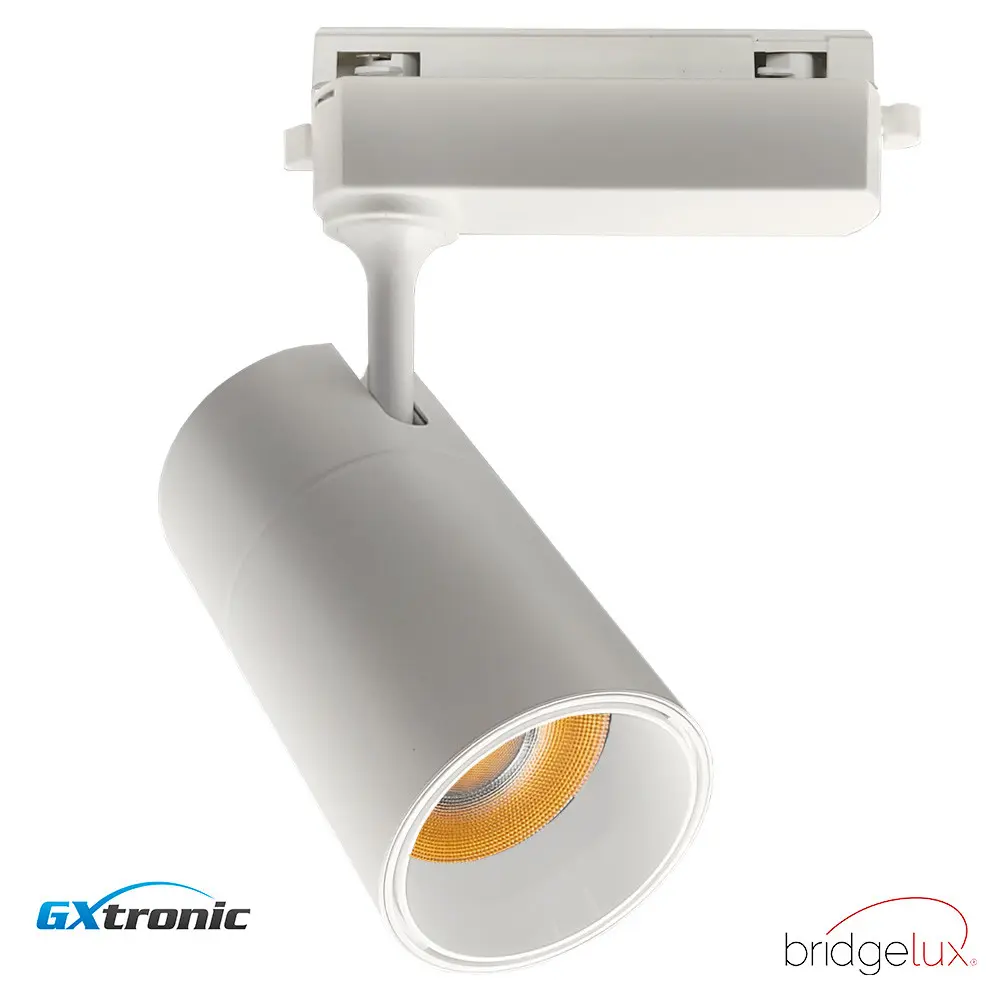
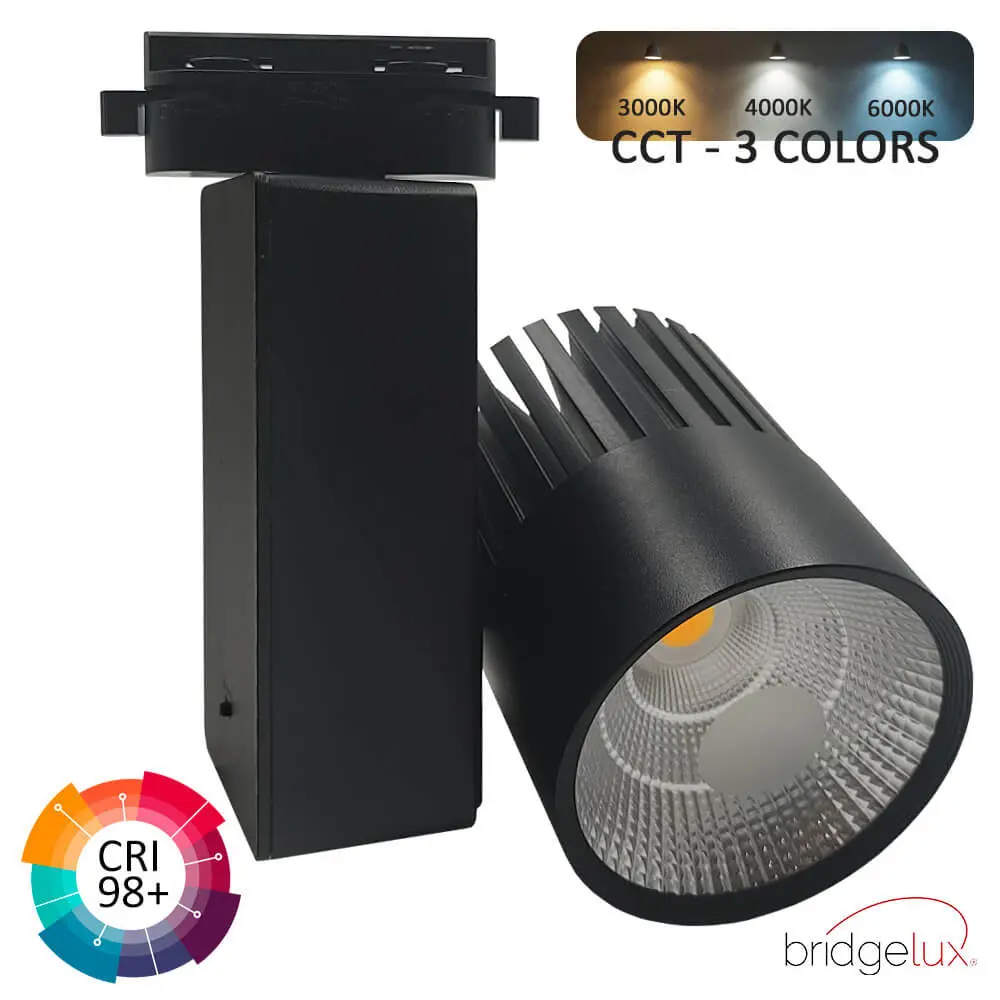
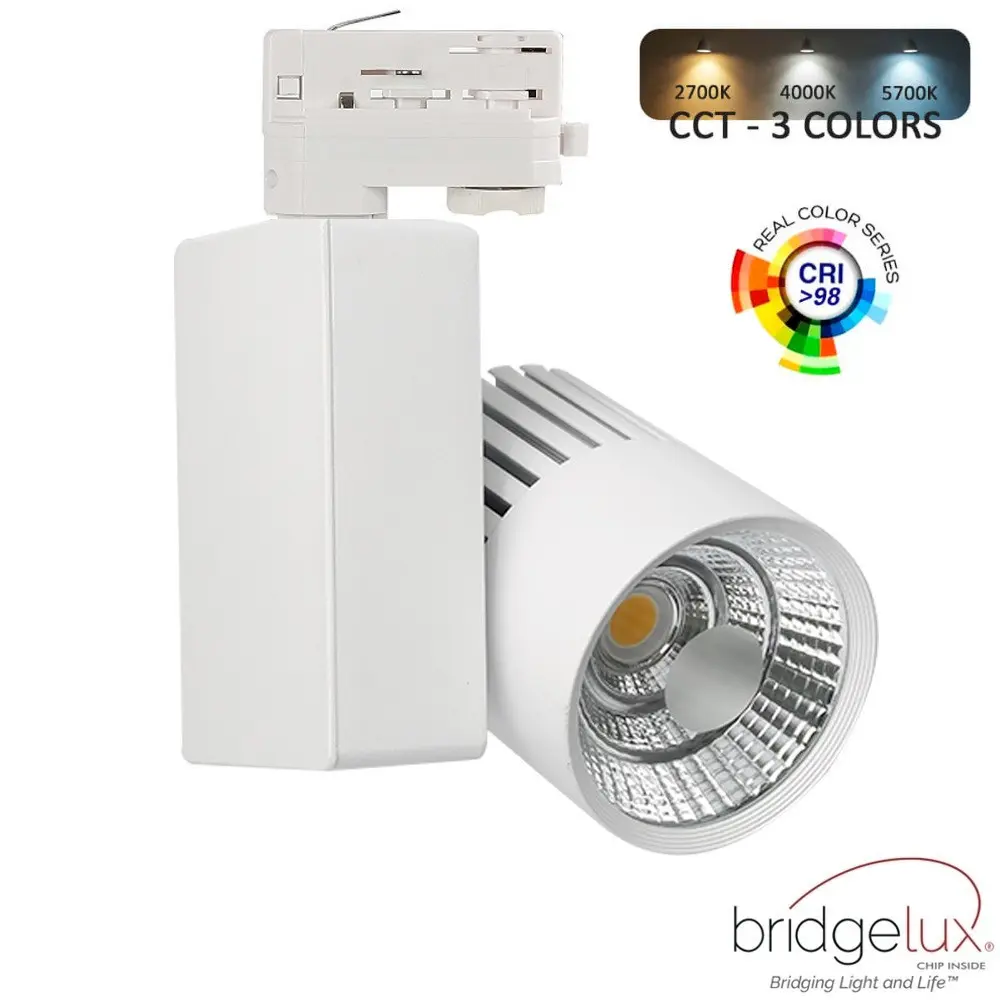
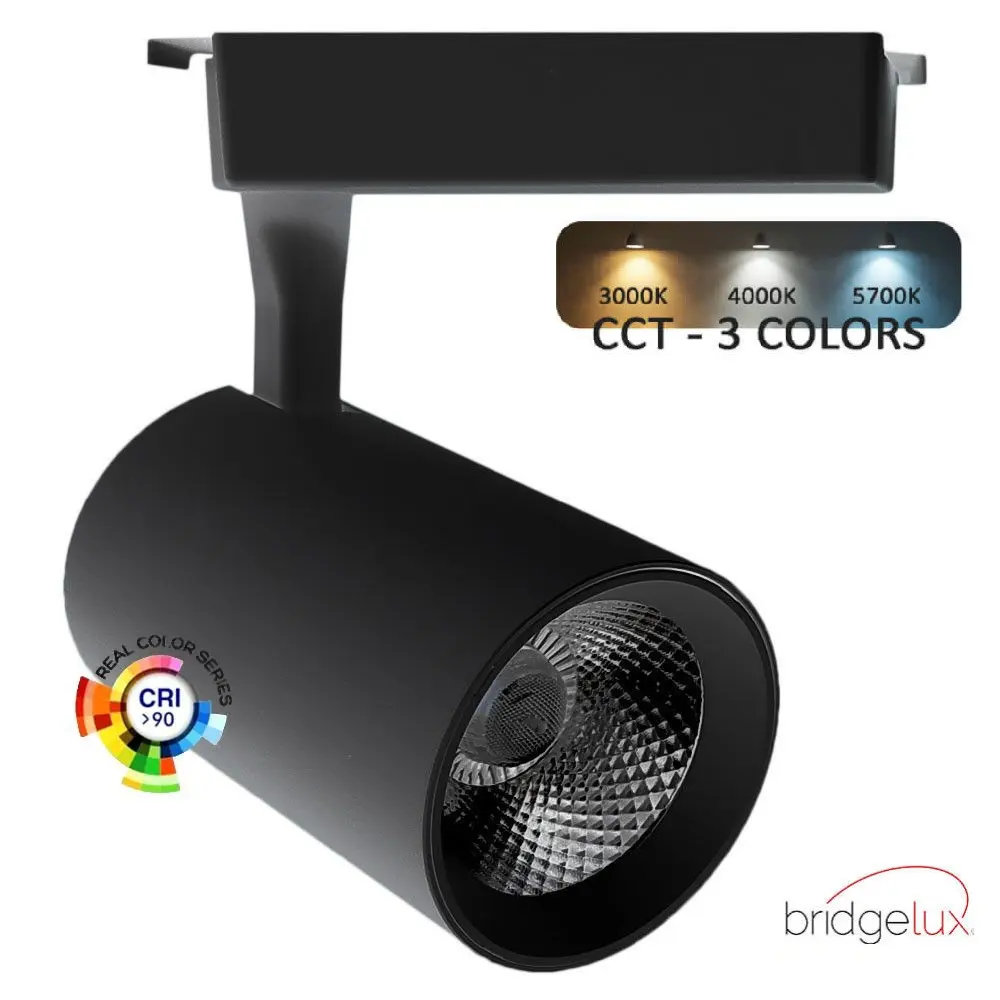
LED Track Light Three-Phase 30W-40W NEW MAYA CRI+92 Bridgelux | No Flicker | Bakery & Butcher Shop | White
36,95 €
VAT included
Ref: TLBMBT40W-CCT-91609
New
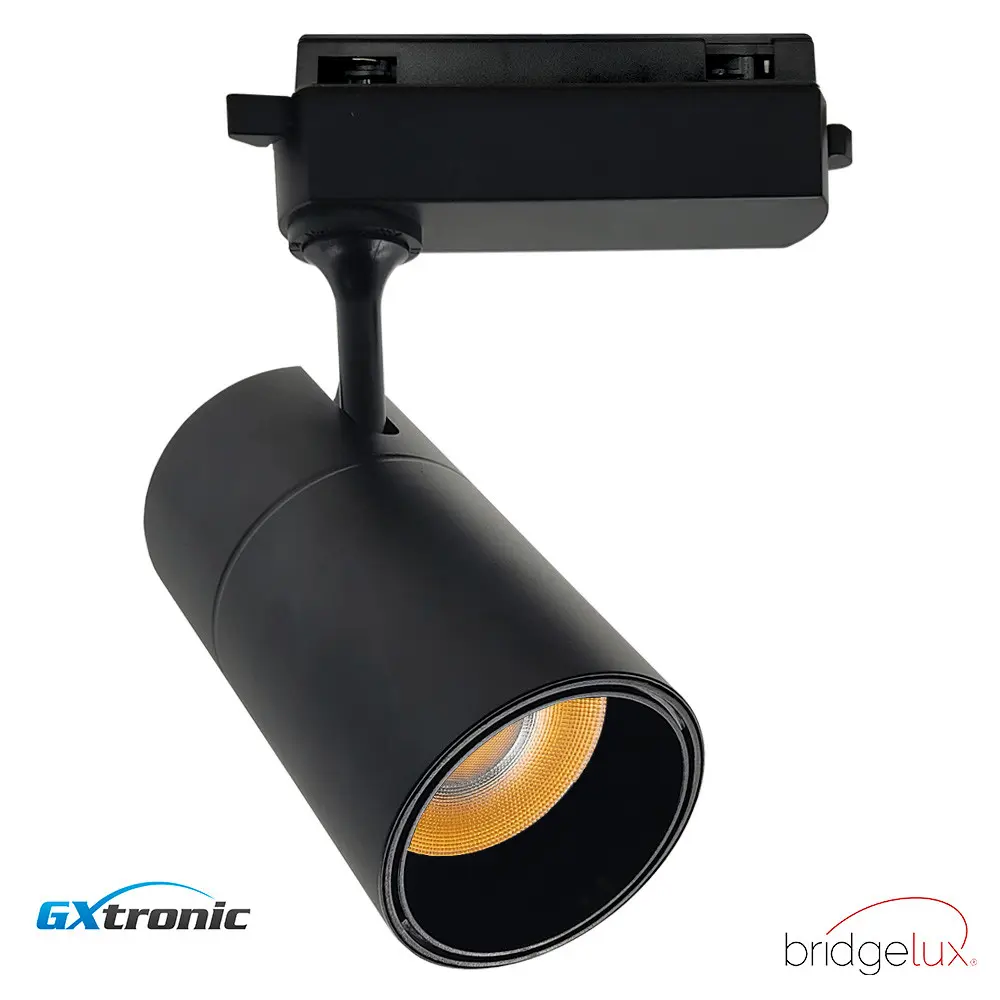
LED Track Light Three-Phase 30W-40W NEW MAYA CRI+92 Bridgelux | No Flicker | Bakery & Butcher Shop | Black
36,95 €
VAT included
Ref: TLBMBT40W-CCT-91606
Adjustable Linear LED Projector GX RAY for 3-Phase Track 120cm | 40W-55W | 3CCT | UGR19 | 90° Optic
54,83 €
VAT included
Ref: TLLT55W-CCT-91552
Adjustable Linear LED Projector GX RAY for 3-Phase Track 150cm | 51W-66W | 3CCT | UGR19 | 90° Optic
64,36 €
VAT included
Ref: TLLT66W-CCT-91553
LED Track Spotlight 8W 3-Phase GANDÍA WHITE | SMD1A1A 165Lm/W | UGR13 | 24º
12,83 €
VAT included
Ref: TLW8W
LED Track Spotlight 8W 3-Phase GANDÍA BLACK | SMD1A1A 165Lm/W | UGR13 | 24º
12,83 €
VAT included
Ref: TLB8W
Track Spotlight for GU10 Lamp | GANDÍA 3-Phase White | UGR13
10,13 €
VAT included
Ref: TLWGU10-91500
Track Spotlight for GU10 Lamp | GANDÍA 3-Phase Black | UGR13
10,13 €
VAT included
Ref: TLBGU10-91501
Ceiling or Wall Light for GU10 Lamps | NIZA White | UGR13
9,29 €
VAT included
Ref: SWGU10-91502
Ceiling or Wall Light for GU10 Lamps | NIZA Black | UGR13
9,29 €
VAT included
Ref: SBGU10-91503
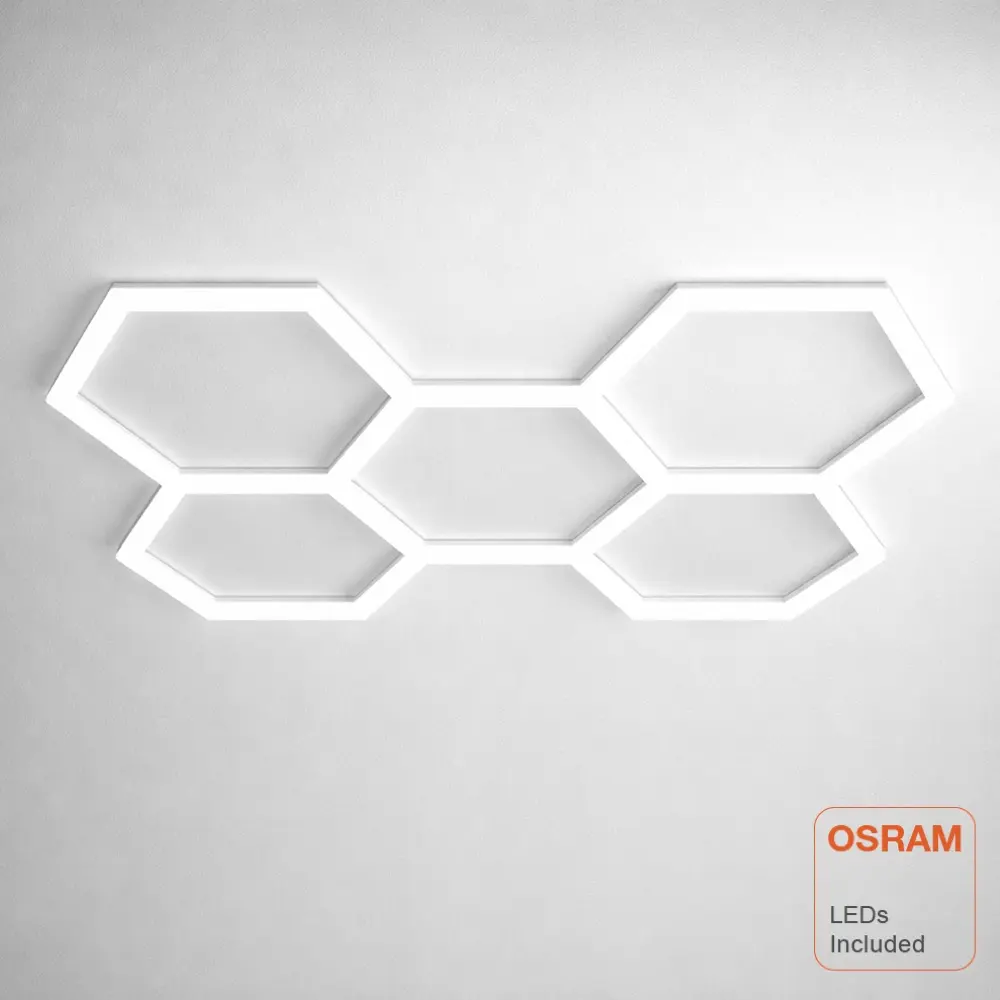
Hexagonal Honeycomb LED Panel Lamp | ARTISTIC SMD2835 OSRAM CHIP | L120CM
550,90 €
VAT included
Ref: HEXOSR5
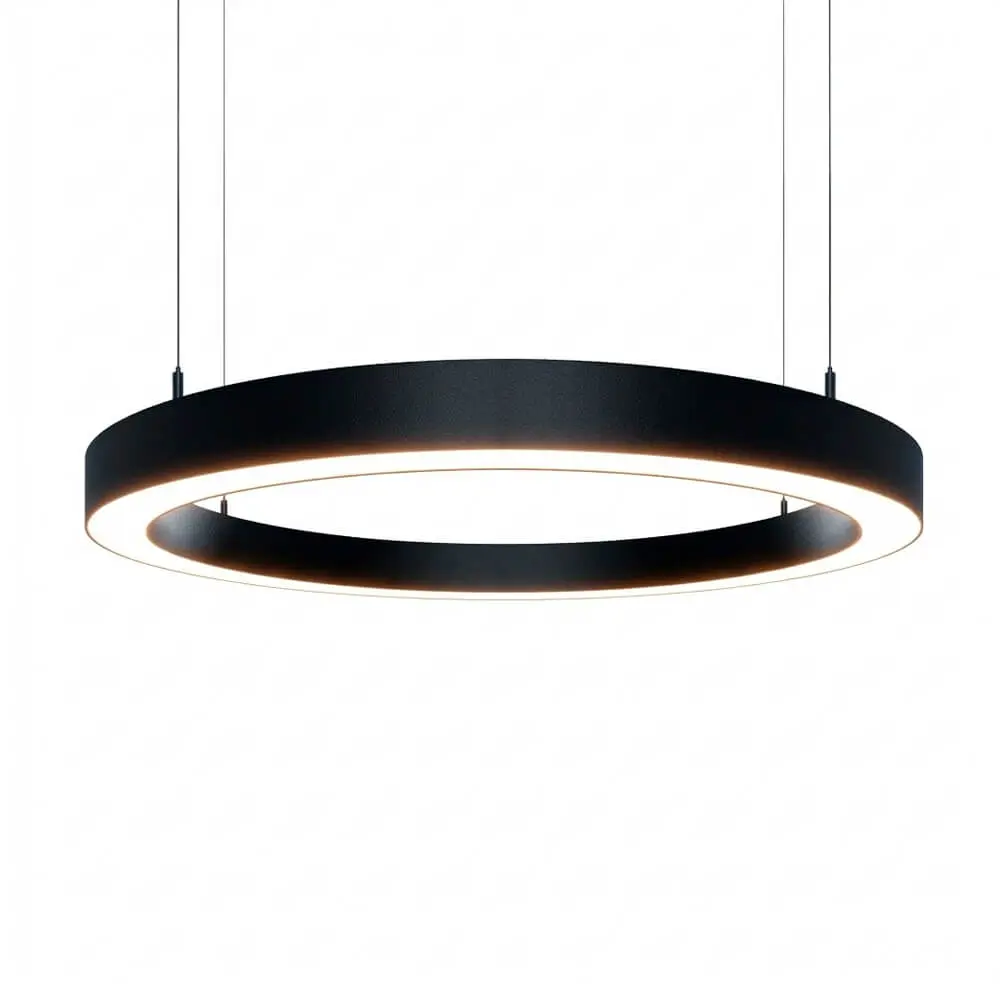
Circular LED Pendant Light SOLARIS | 60CM 28W | ON/OFF | DALI
276,51 €
VAT included
Ref: LCB28W
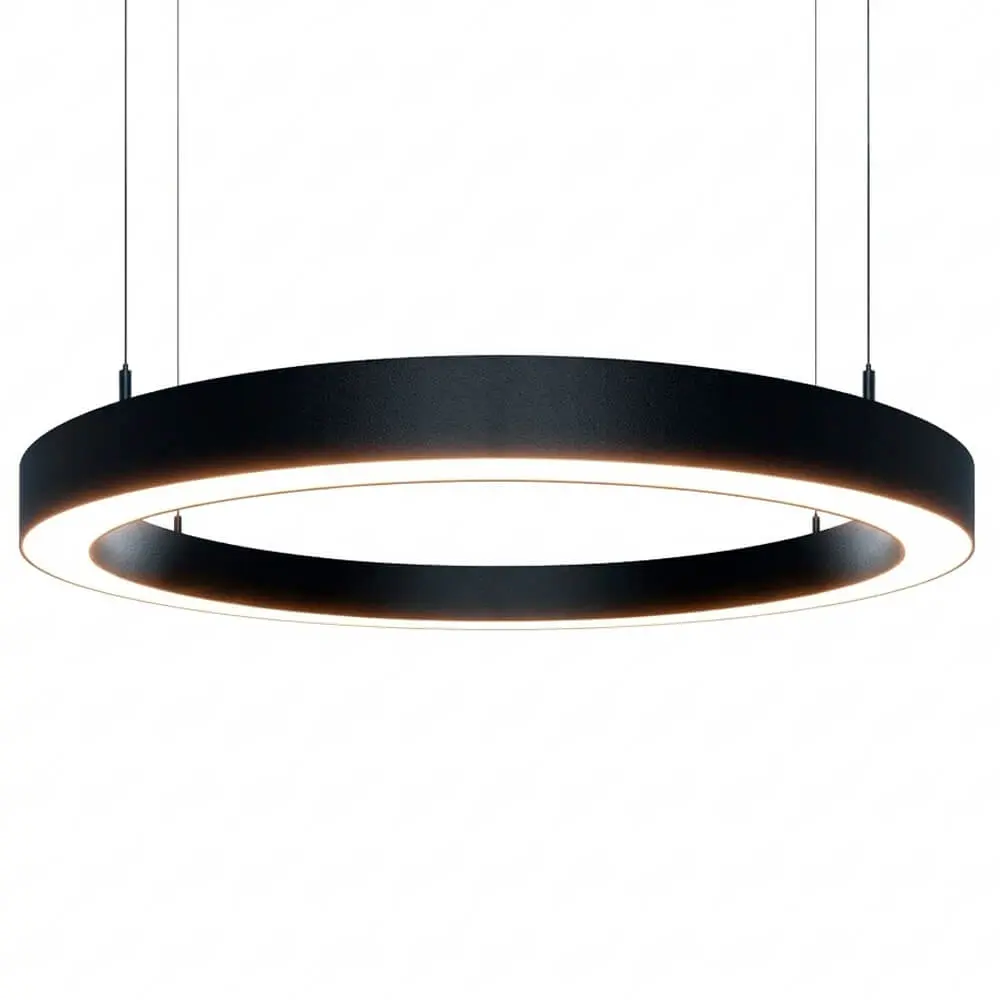
Circular LED Pendant Light SOLARIS | 120CM 56W | ON/OFF | DALI
495,81 €
VAT included
Ref: LCB56W
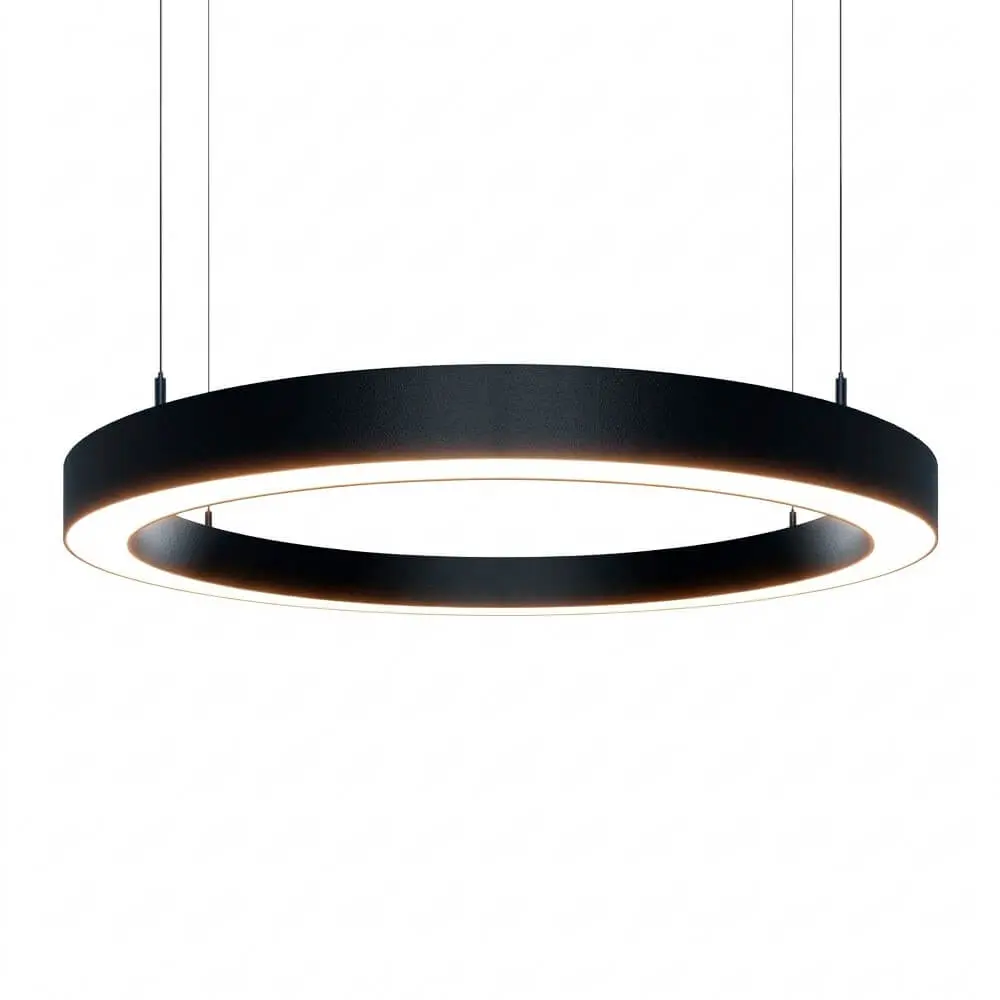
Circular LED Pendant Light SOLARIS | 90CM 38W | ON/OFF | DALI
376,62 €
VAT included
Ref: LCB38W
LED Track light 30W-40W PARMA White Single-Phase Track | 4CCT | 24º
23,37 €
VAT included
Ref: TLW40W-4CCT-90778
LED Track Spotlight 40W NEW MAYA 3CCT | Philips Xitanium Driver | 3-Phase Track | UGR13 | 24º - 60º | Black
42,91 €
VAT included
Ref: TLB40WPHL-3CCT
LED Track Spotlight 40W NEW MAYA 3CCT | Philips Xitanium Driver | 3-Phase Track | UGR13 | 24º - 60º | White
42,91 €
VAT included
Ref: TLW40WPHL-3CCT-90847
LED Pendant or Surface Lamp 40W - 44W - 48W | MOON LIGHT | CCT
52,44 €
VAT included
Ref: FL-2403
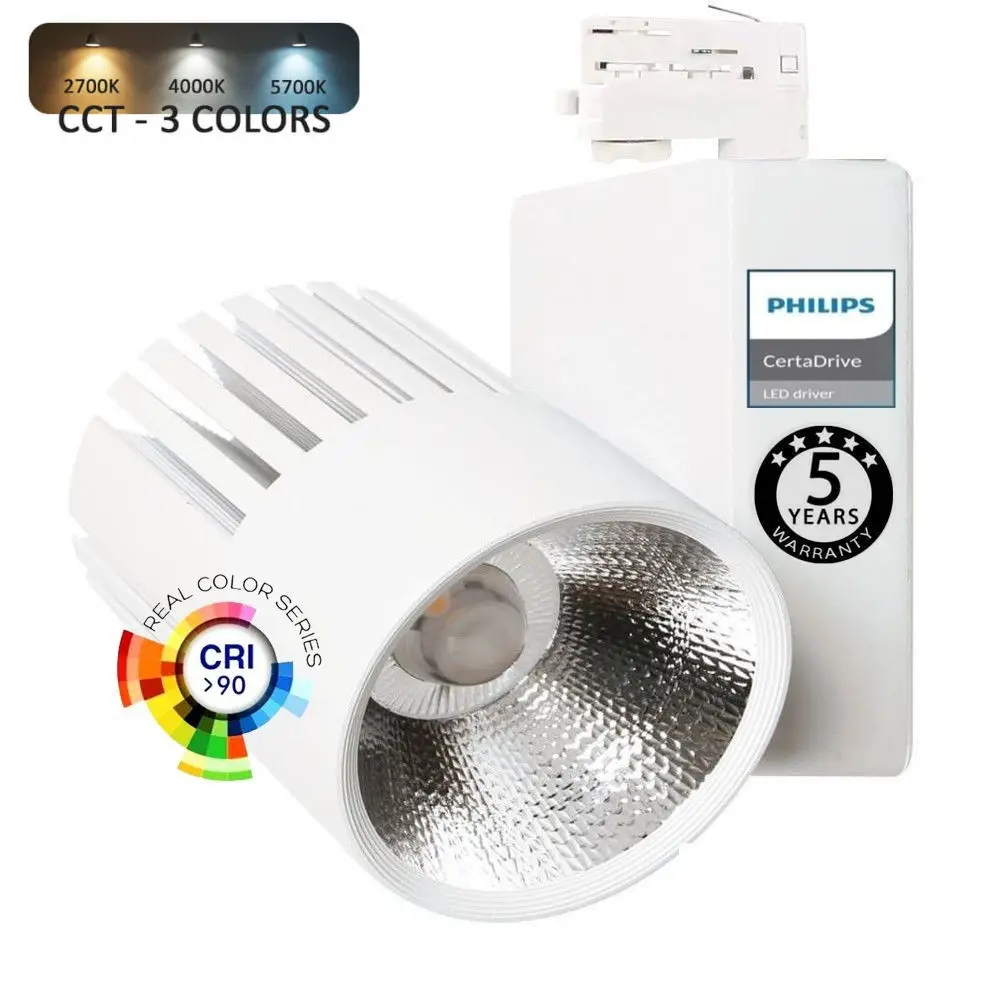
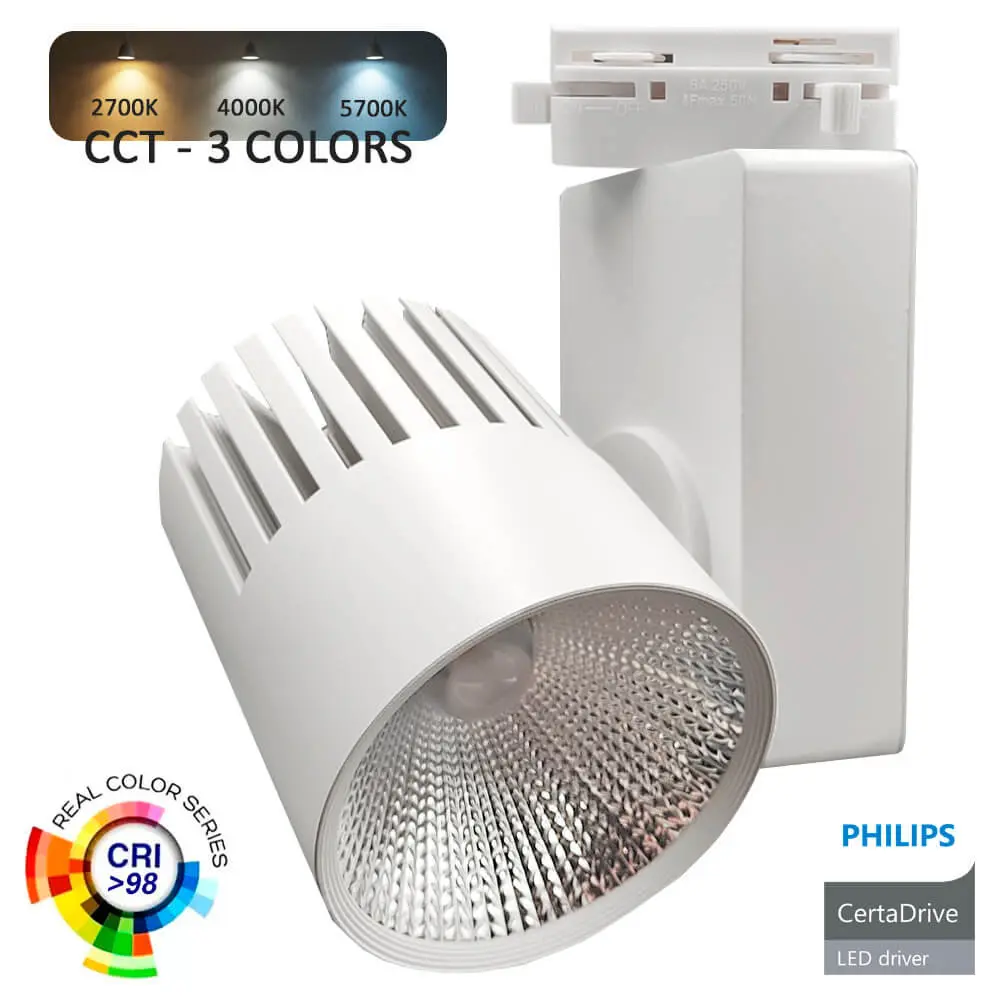
LED Track Spotlight 40W UPPSALA White - Philips Certa Drive - 3CCT - 3-Phase Track - CRI+98 - 5-year Warranty
40,28 €
VAT included
Ref: TLTPHL40W-CCT-90360
LED Track Spotlight 30W PARIS Black Single-Phase Track | Bridgelux Chip | UGR11 | 24º
13,90 €
VAT included
Ref: TLBM30W
LED Track Spotlight 30W PARIS White Single-Phase Track | Bridgelux Chip | UGR11 | 24º
13,90 €
VAT included
Ref: TLWM30W
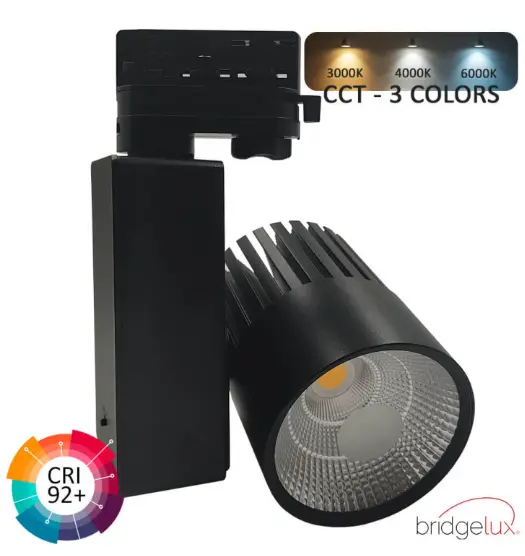
LED Spotlight 40W GRAZ Black BRIDGELUX Chip 3-Phase Track CRI+92 - 3CCT
34,87 €
VAT included
Ref: TRTB40W-CCT-92082
LED Spotlight 40W GRAZ Black BRIDGELUX Chip Single-Phase Track CRI +98 - CCT
33,03 €
VAT included
Ref: TRB40W-3CCT-92017
LED Spotlight 40W GRAZ White Bridgelux Chip 3CCT - 3-Phase Track - 4400Lm - CRI +98
35,90 €
VAT included
Ref: TRTW40W-CCT-92079
LED Track Spotlight 10W Single-Phase - EMMEN BLACK - OSRAM CHIP DURIS E 2835
5,90 €
VAT included
Ref: TKMB10W
LED Track Spotlight 10W Single-Phase - EMMEN WHITE - OSRAM CHIP DURIS E 2835
5,90 €
VAT included
Ref: TKMW10W
Adjustable Ceiling Light - LEIDEN WHITE - for 1 GU10 Lamp
6,90 €
VAT included
Ref: SPW-91342
Adjustable Ceiling Light - LEIDEN BLACK - for 1 GU10 Lamp
6,90 €
VAT included
Ref: SPB-91341
Adjustable Ceiling Light - AMSTERDAM WHITE - Aluminum - for 3 GU10 Lamps
15,90 €
VAT included
Ref: SPW3-91346
Adjustable Ceiling Light - AMSTERDAM BLACK - Aluminum - for 3 GU10 Lamps
15,90 €
VAT included
Ref: SPB3-91345
Adjustable Ceiling Light - ROTERDAM WHITE - Aluminum - for 2 GU10 Lamps
12,90 €
VAT included
Ref: SPW2-91344
Adjustable Ceiling Light - ROTERDAM BLACK - Aluminum - for 2 GU10 Lamps
12,90 €
VAT included
Ref: SPB2-91343
Adjustable Ceiling Light - HOORN WHITE - for 1 GU10 Lamp
3,90 €
VAT included
Ref: SPW-91340
LED Track Spotlight 40W UPPSALA White - Philips Certa Drive - 3CCT - Single-Phase Track - CRI+98 - 5-year Warranty
39,91 €
VAT included
Ref: TLMPHL40W-CCT-90358
LED Track Spotlight 40W GRAZ White Bridgelux Chip 3CCT - Single-Phase Track - 4400Lm - CRI +98
29,08 €
VAT included
Ref: TRW40W-3CCT-92014
Tilting Double Ceiling Light - Oculus Series - GU10-MR16 - White Exterior
12,95 €
VAT included
Ref: SHSSW2
Tilting Ceiling Light - Oculus Series - GU10-MR16 - Black Exterior
5,97 €
VAT included
Ref: SHSRB1
Tilting Ceiling Light - Oculus Series - GU10-MR16 - White Exterior
5,97 €
VAT included
Ref: SHSRW1
LED Track Spotlight 30W PARMA Black Single-Phase Track - CCT - CRI+92 - 48º
23,37 €
VAT included
Ref: 90781-CCT
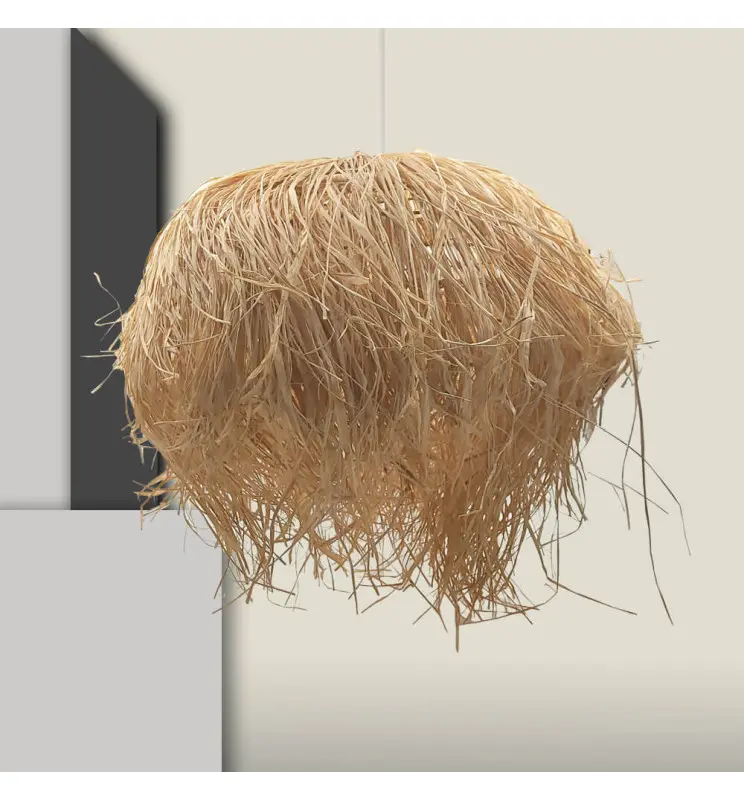
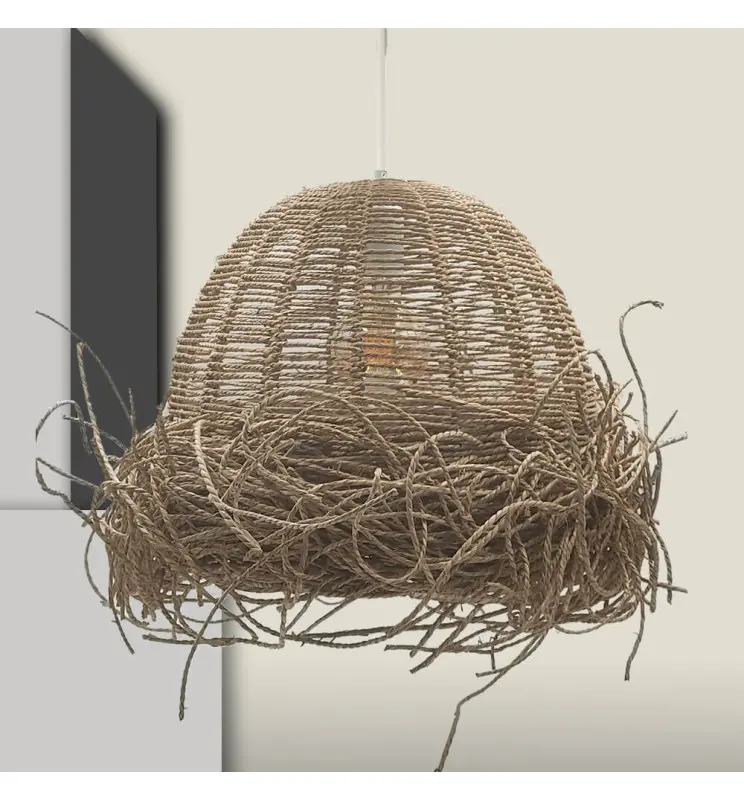
Pendant Lamp - RAFFIA UROA - for LED E27
30,44 €
VAT included
Ref: RPD92107
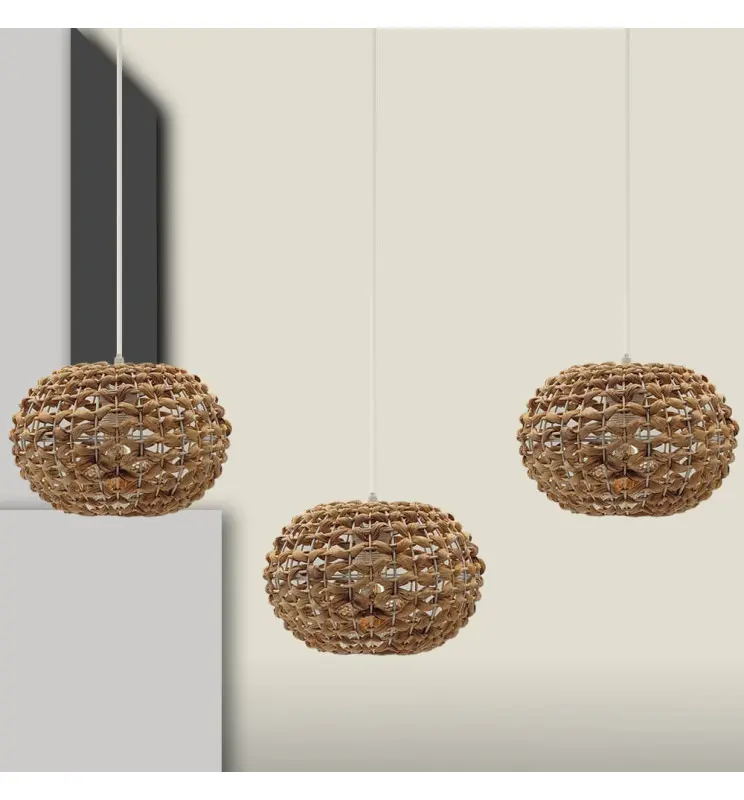
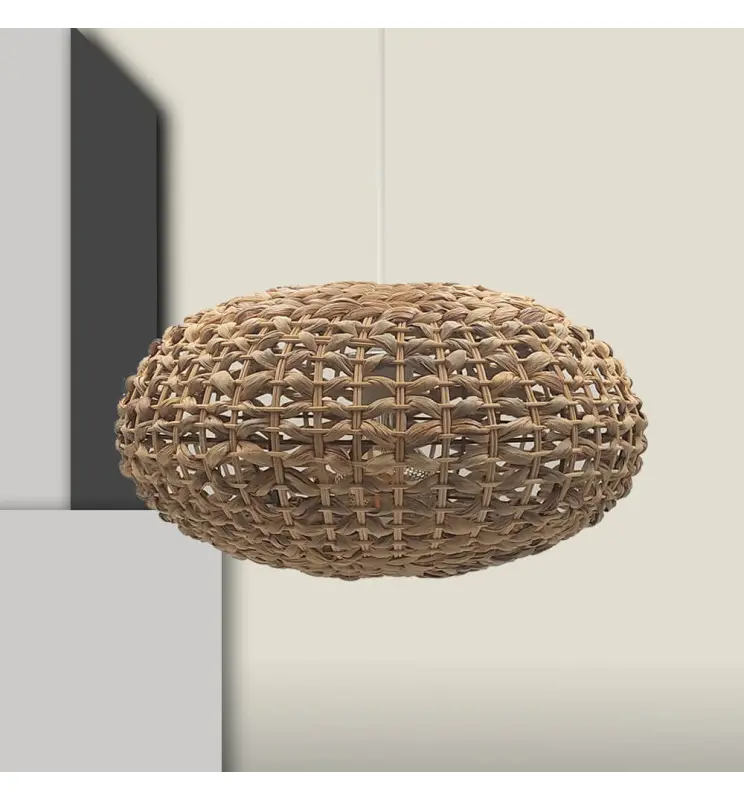
Pendant Lamp | RATTAN KAWASSI | for LED E27
54,40 €
VAT included
Ref: RPD92106
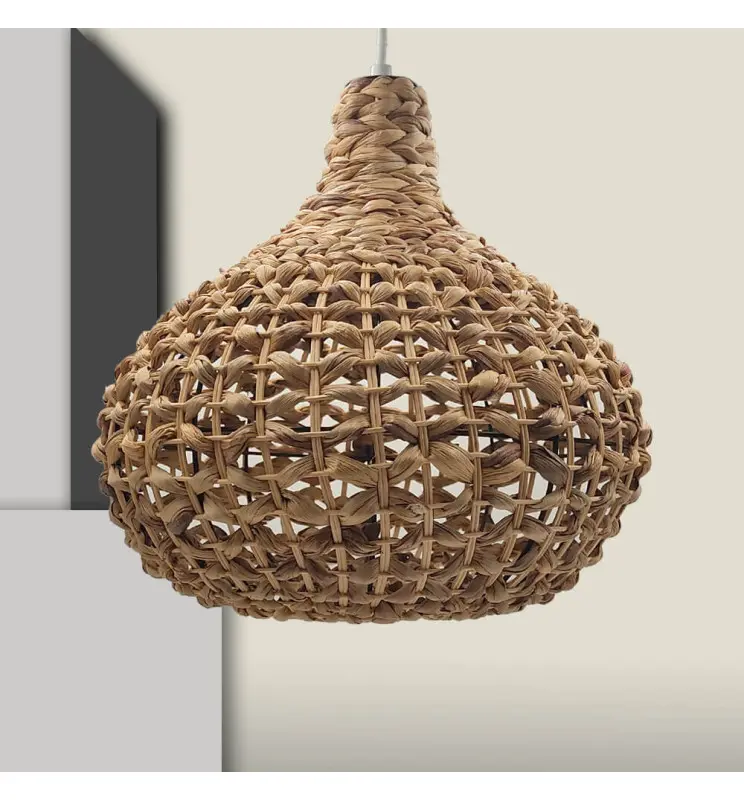
Pendant Lamp | RATTAN MALAY | for LED E27
52,02 €
VAT included
Ref: RPD92108
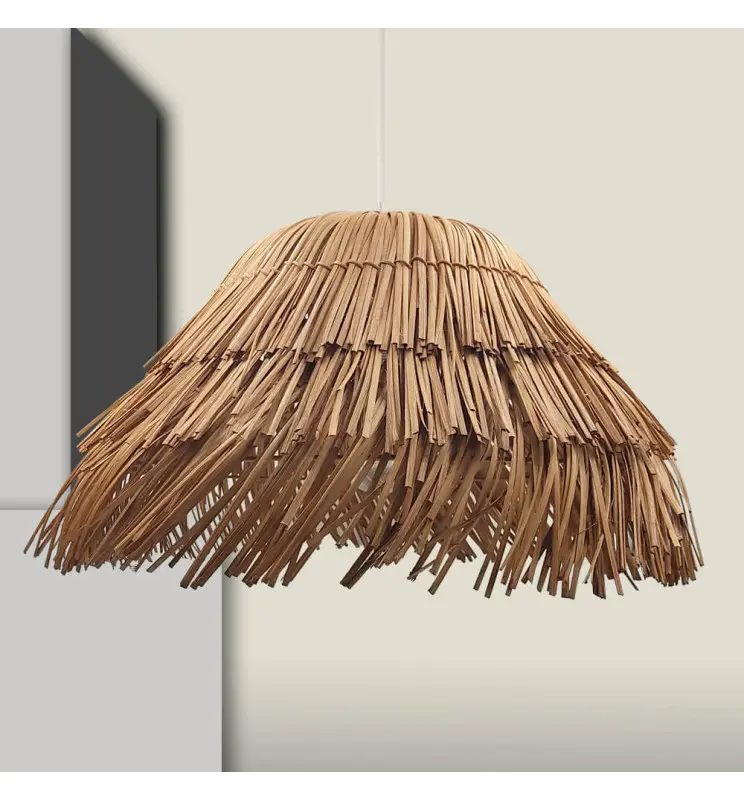
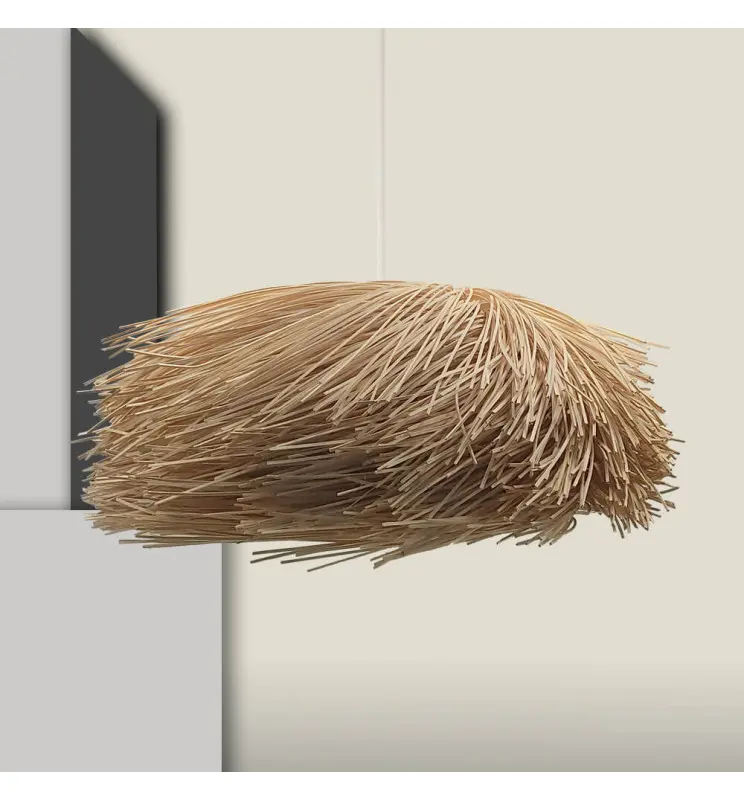
Pendant Lamp - SEAGRASS - for LED E27
38,33 €
VAT included
Ref: SPD92105
Pendant Lamp | RATTAN MEDAN | for LED E27
38,19 €
VAT included
Ref: RPD92104
Pendant Lamp | RATTAN BATAM | for LED E27
43,52 €
VAT included
Ref: RPD92103
Pendant Lamp | RATTAN PERAK | for LED E27
33,99 €
VAT included
Ref: RPD92097
Pendant Lamp | RATTAN LAOS | for LED E27
43,38 €
VAT included
Ref: RPD92096
LED Track Spotlight 40W - 28W ODENSE White Single-Phase Track - CCT - CRI+92 - UGR13 - 24º
39,89 €
VAT included
Ref: 92085-CCT
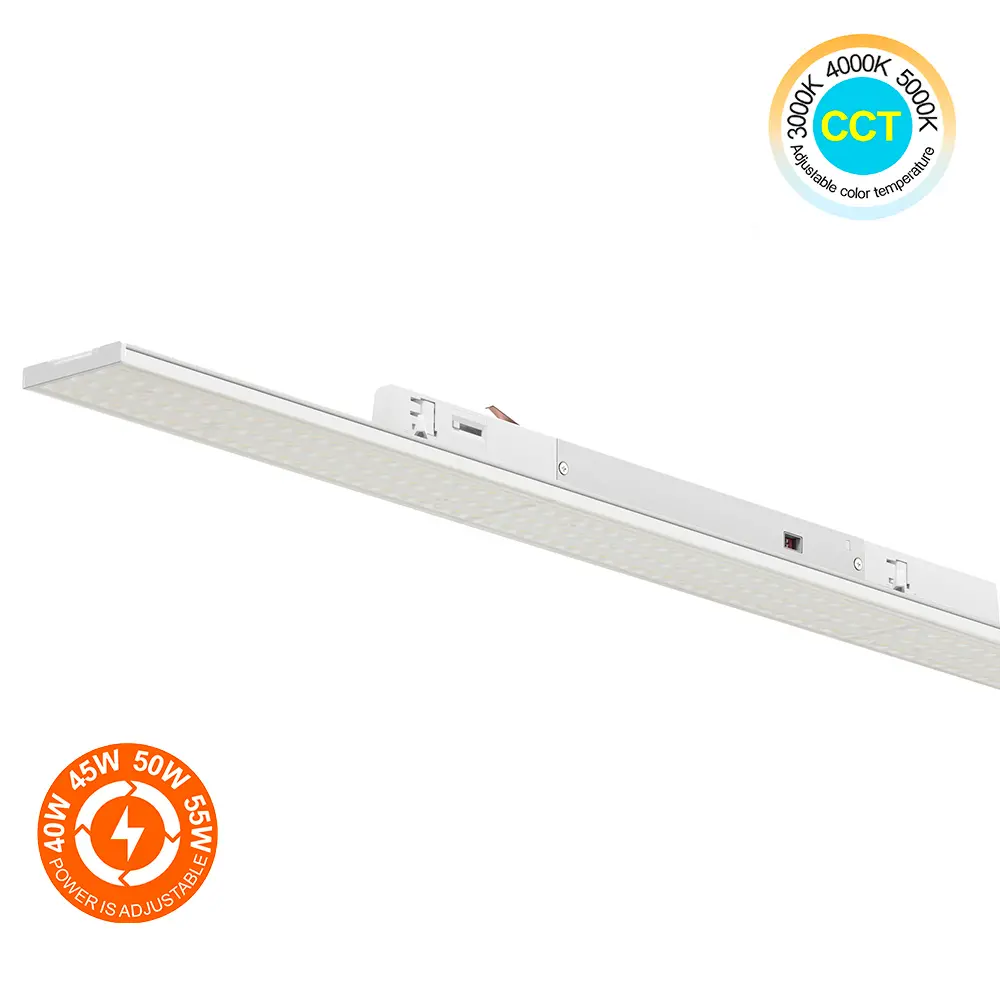
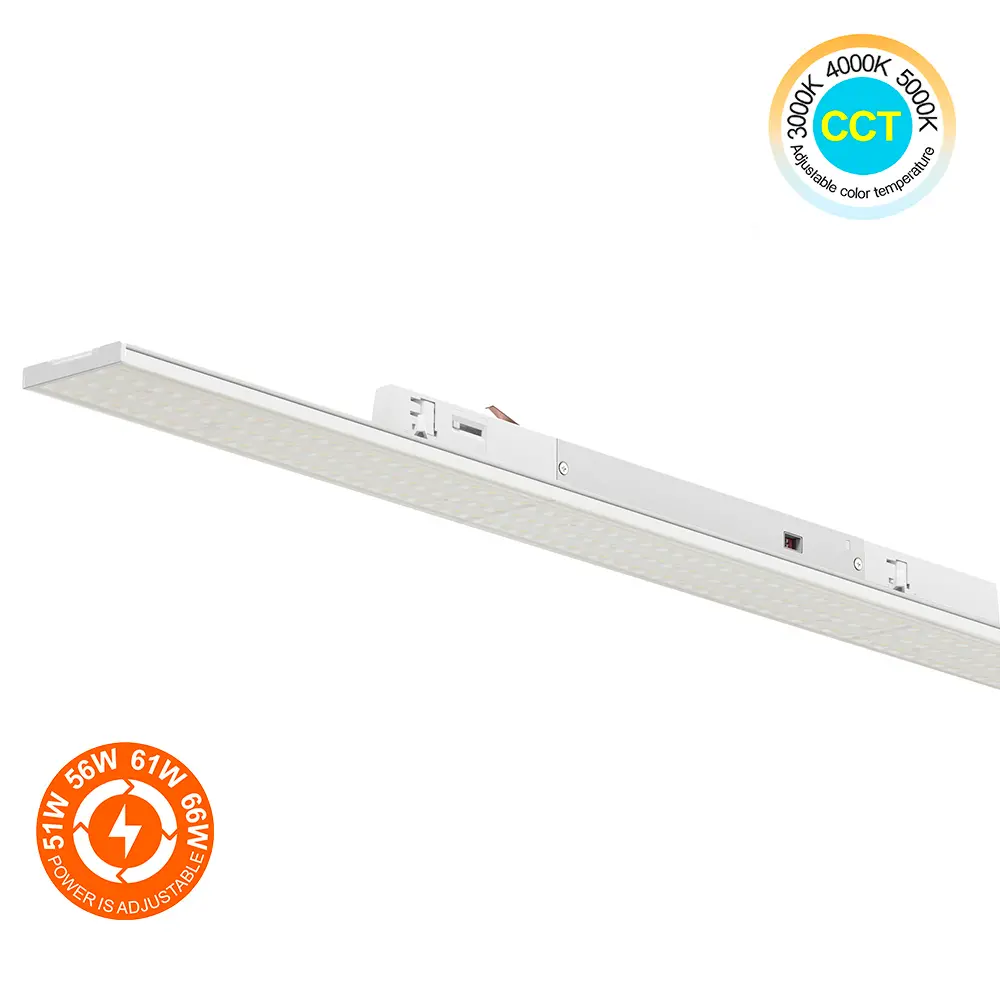
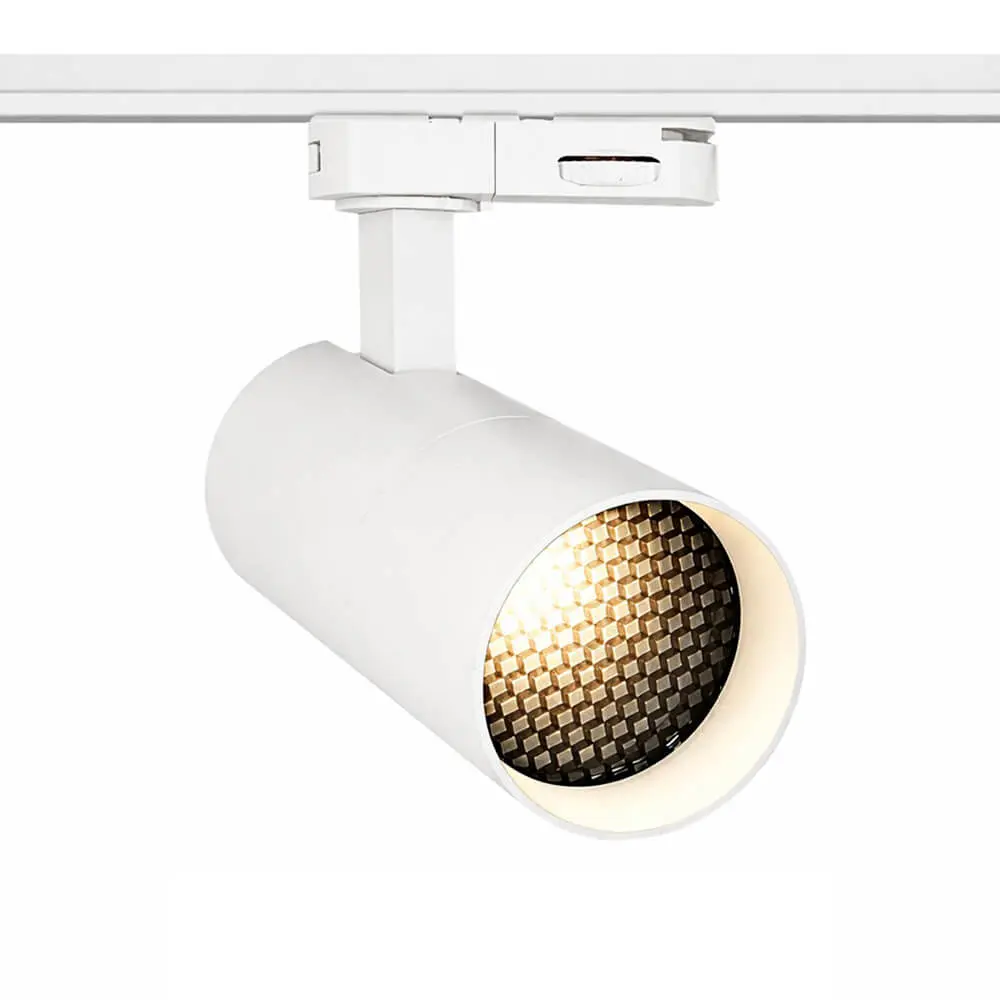
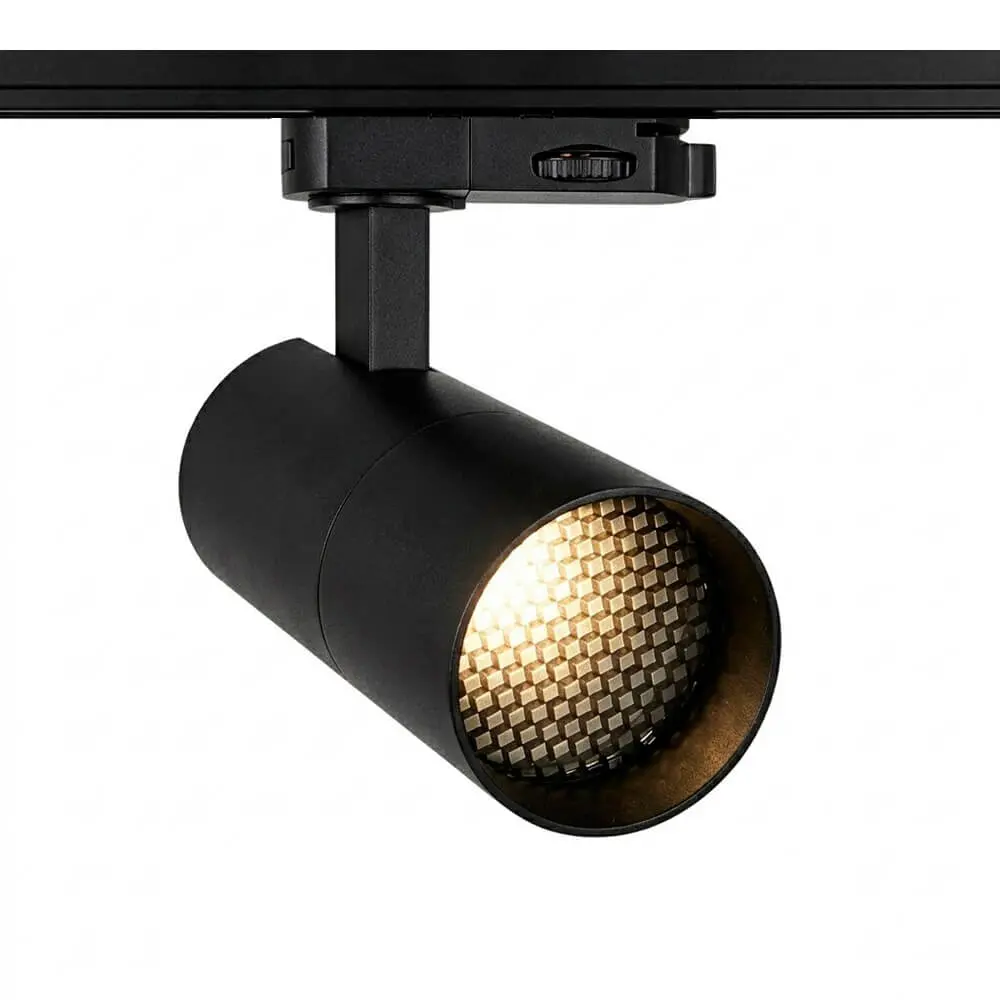
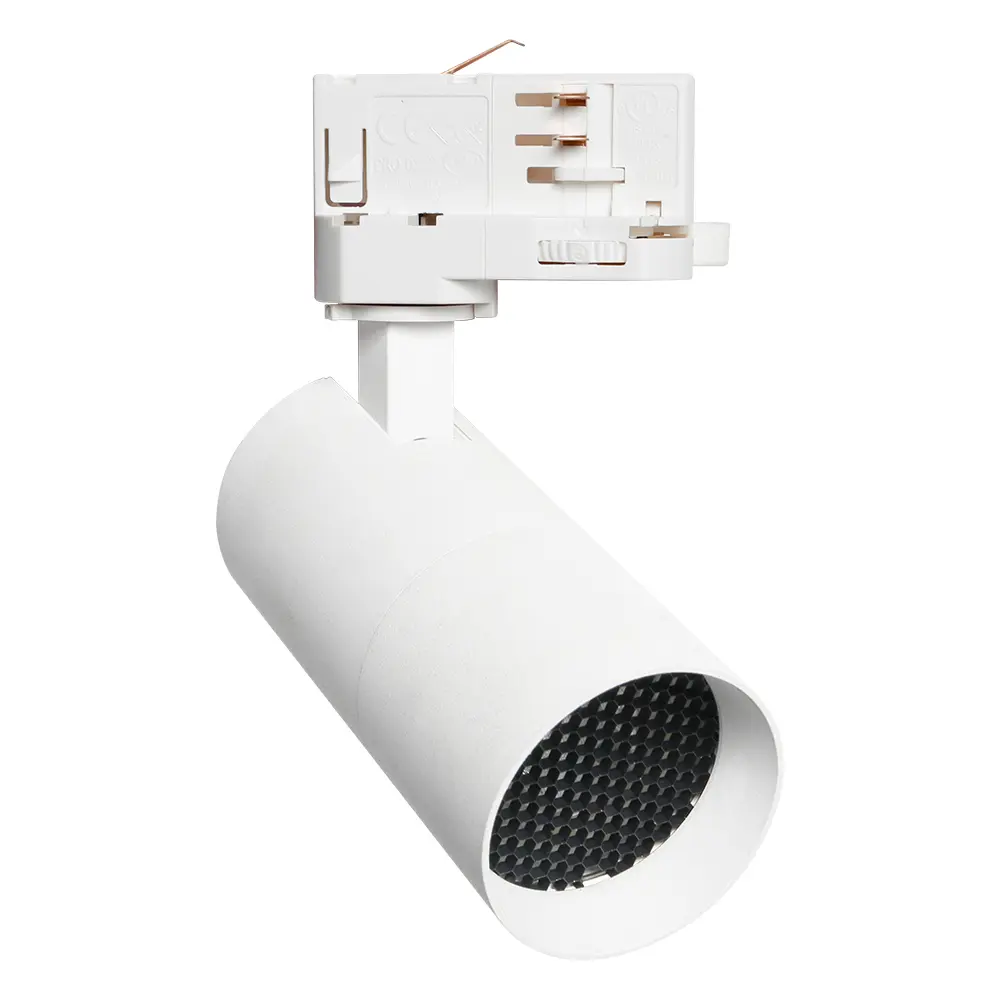
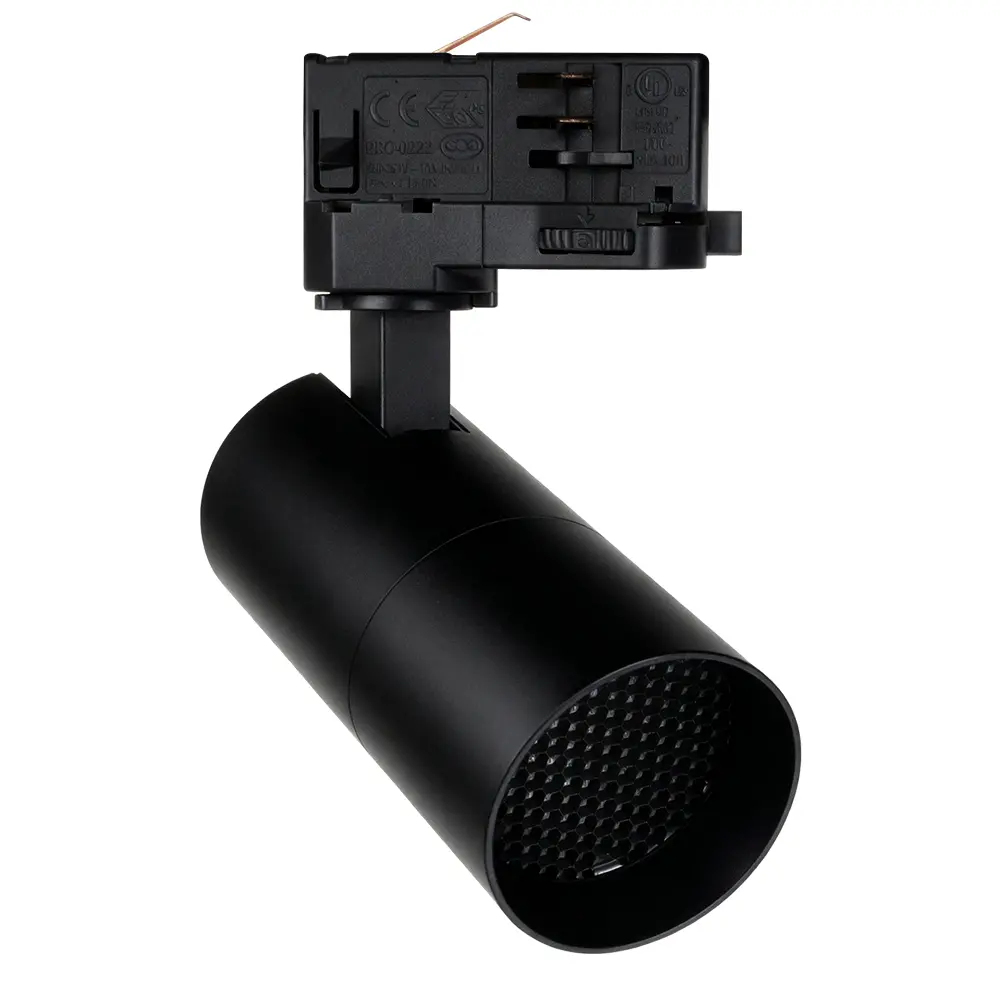
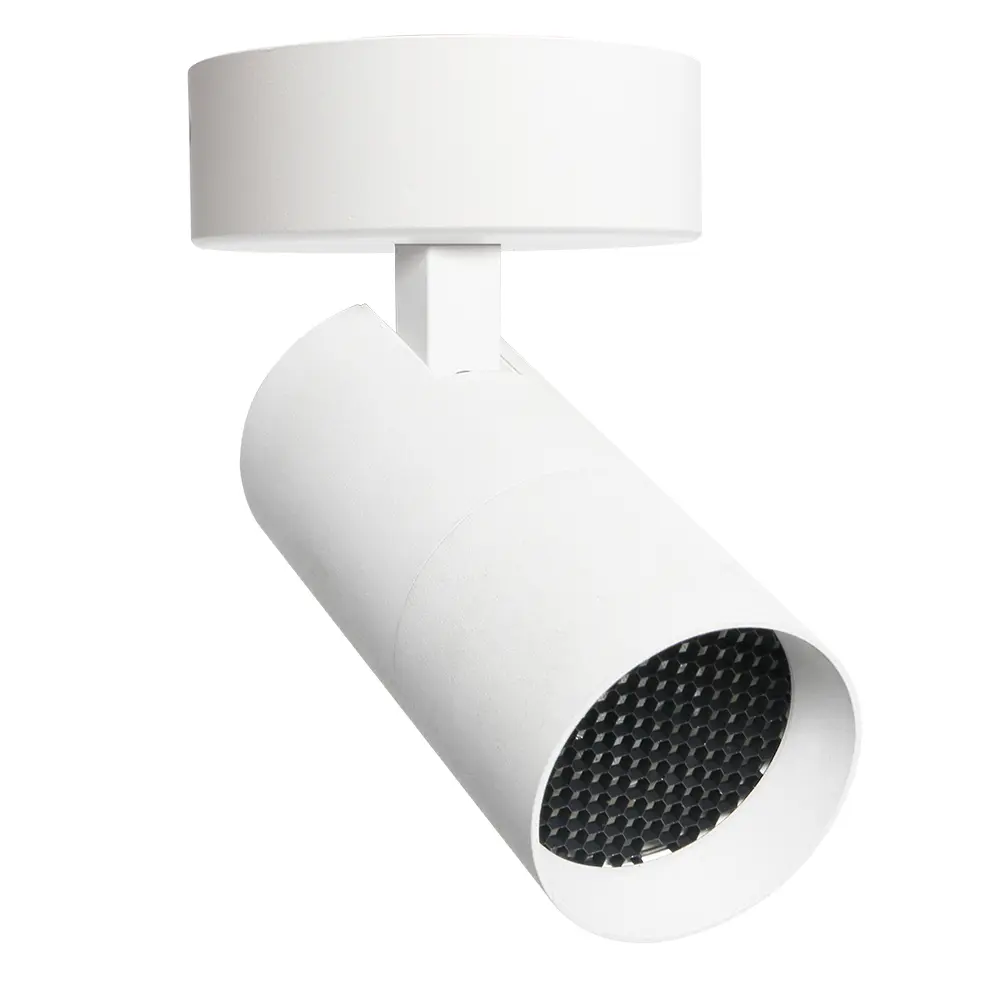
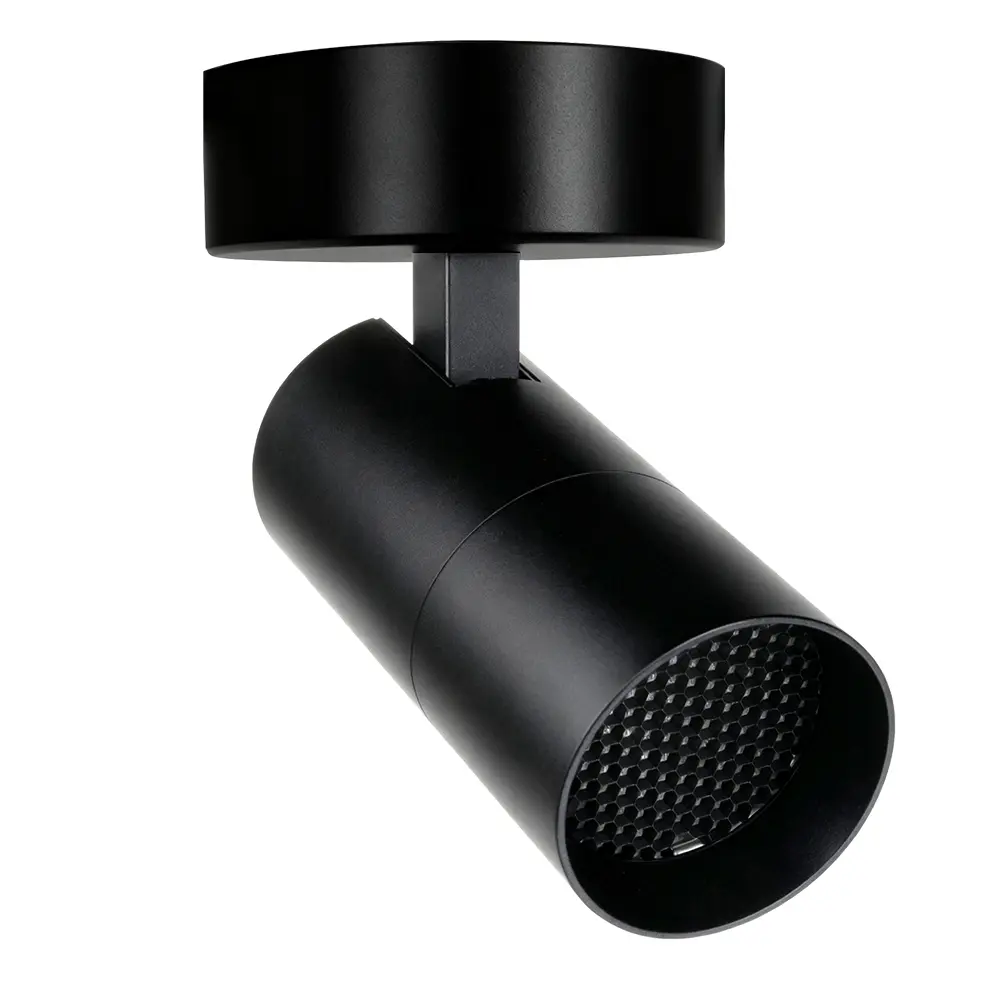
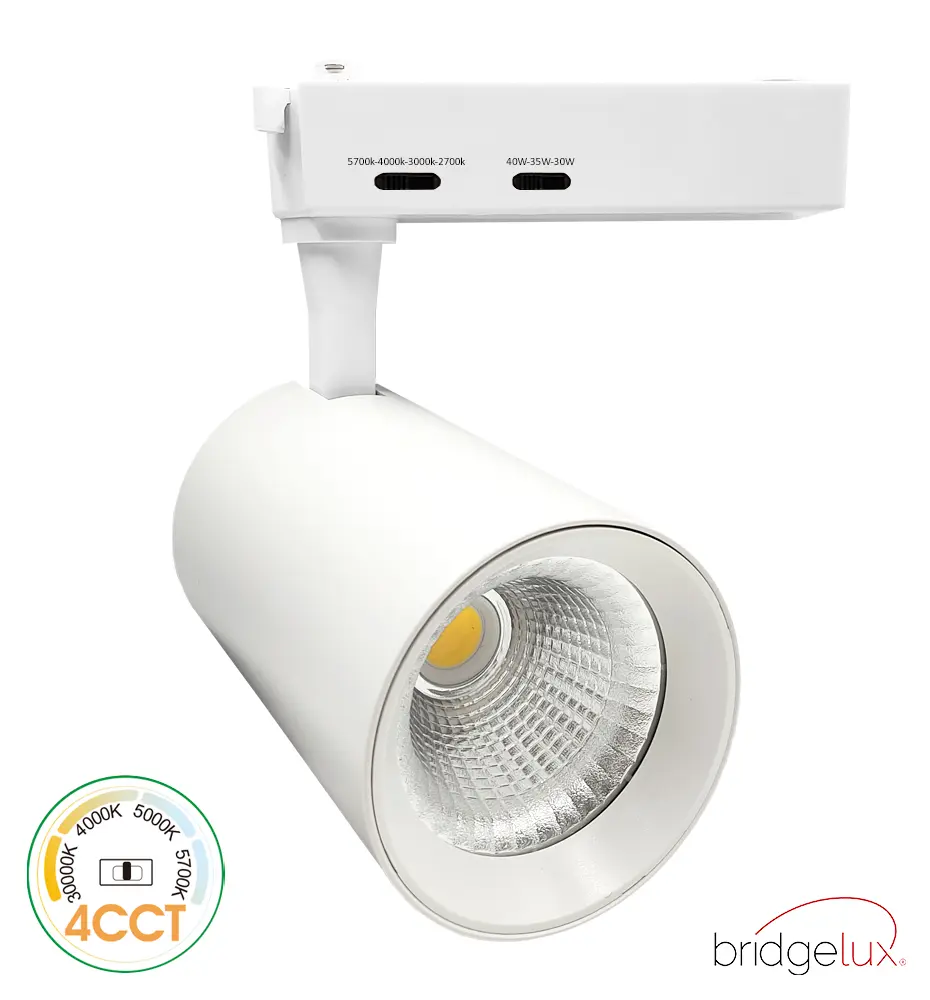
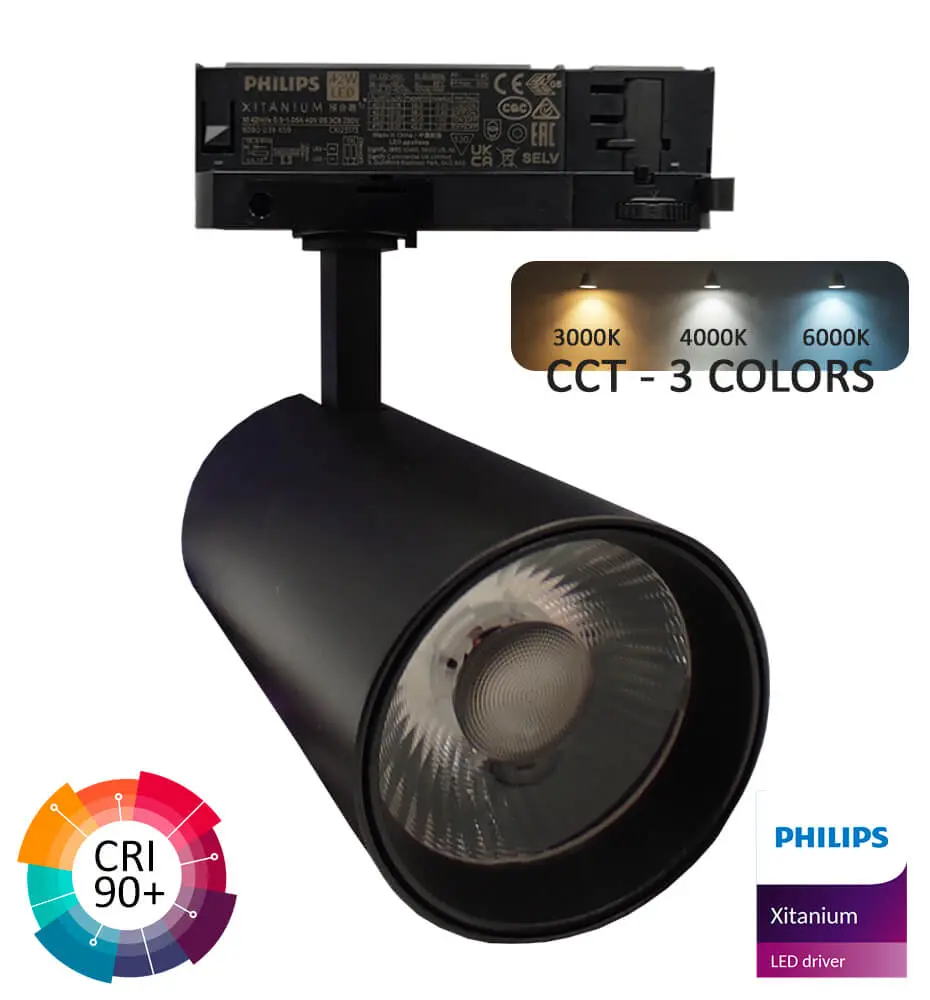
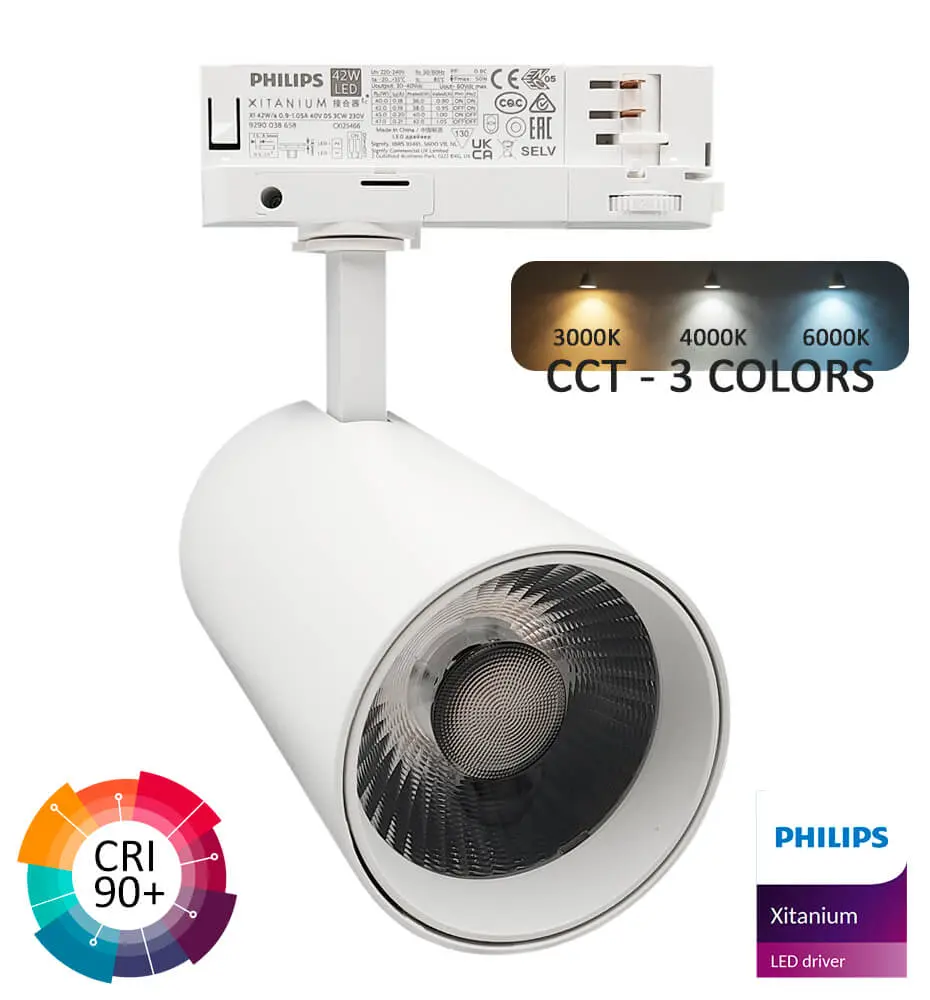
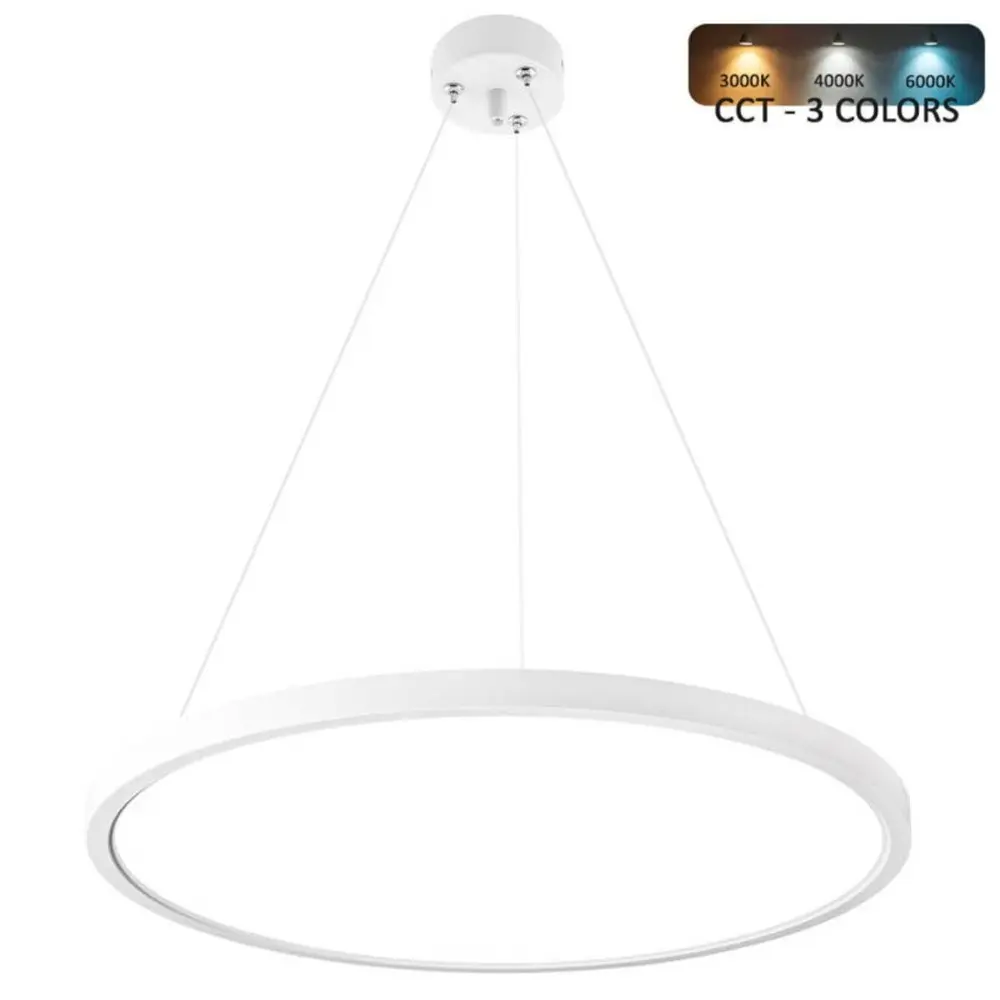
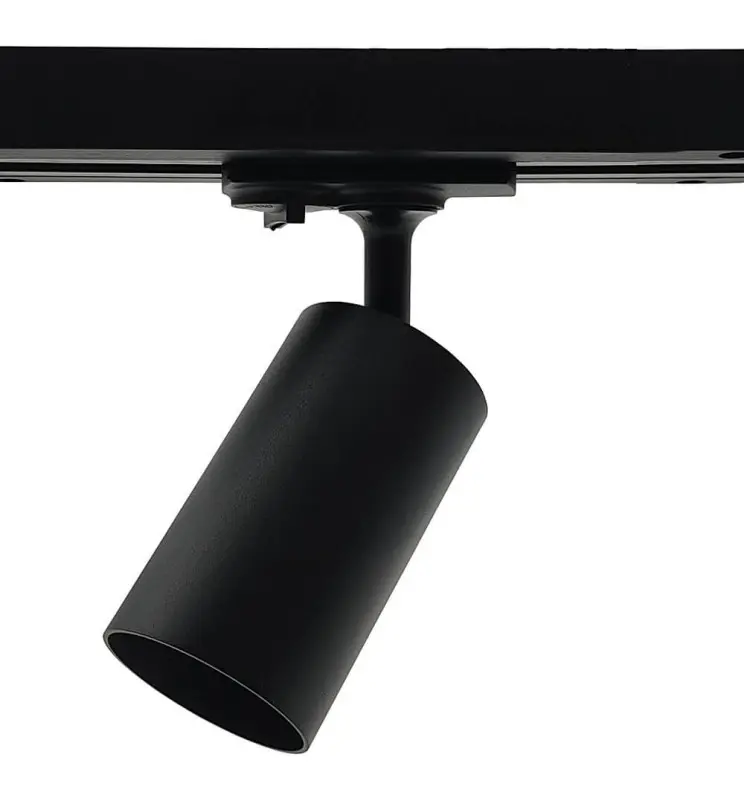
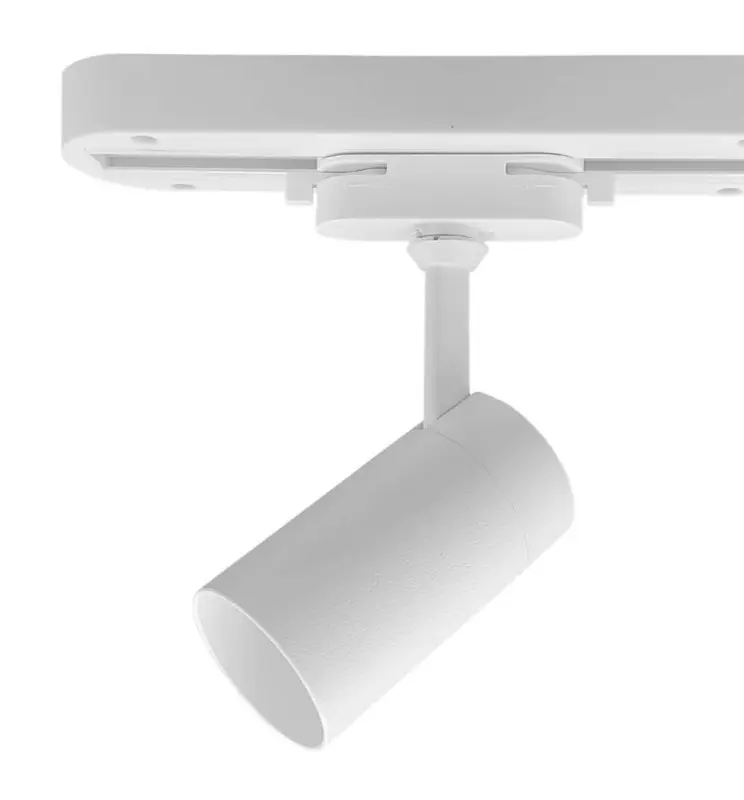
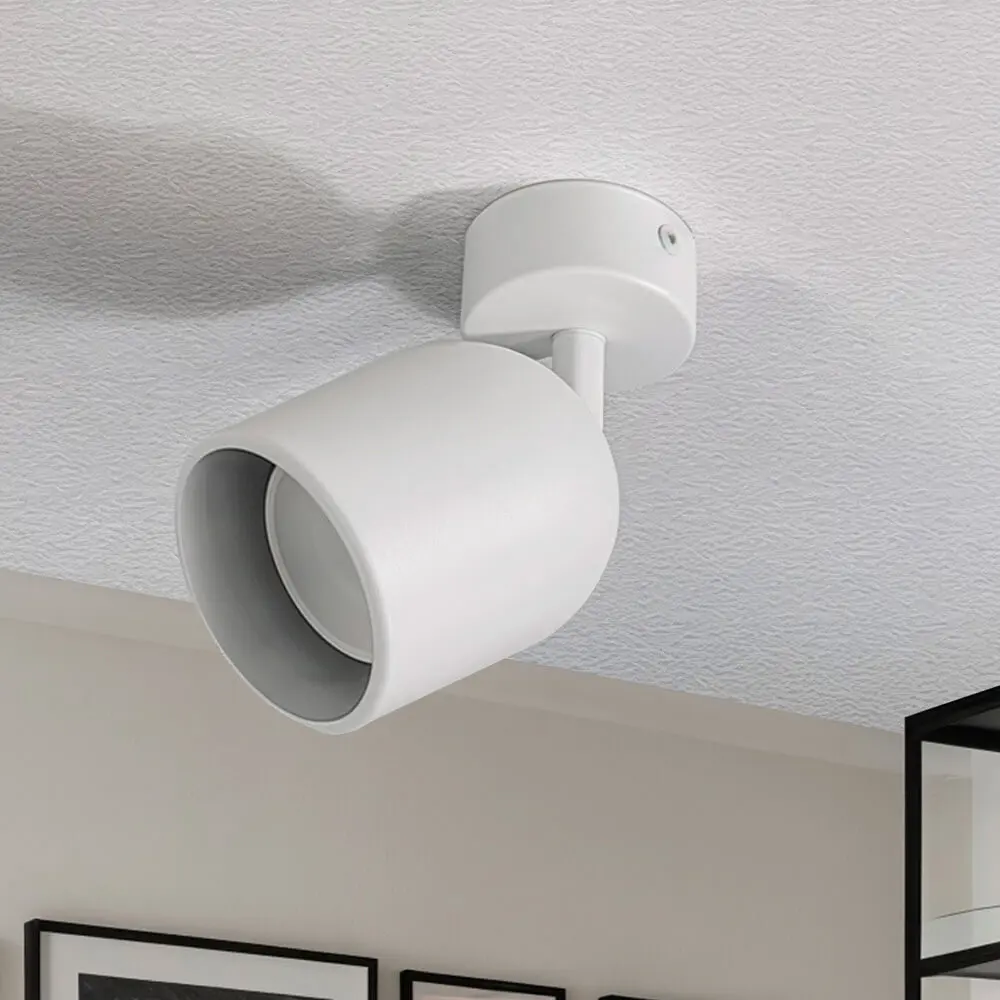
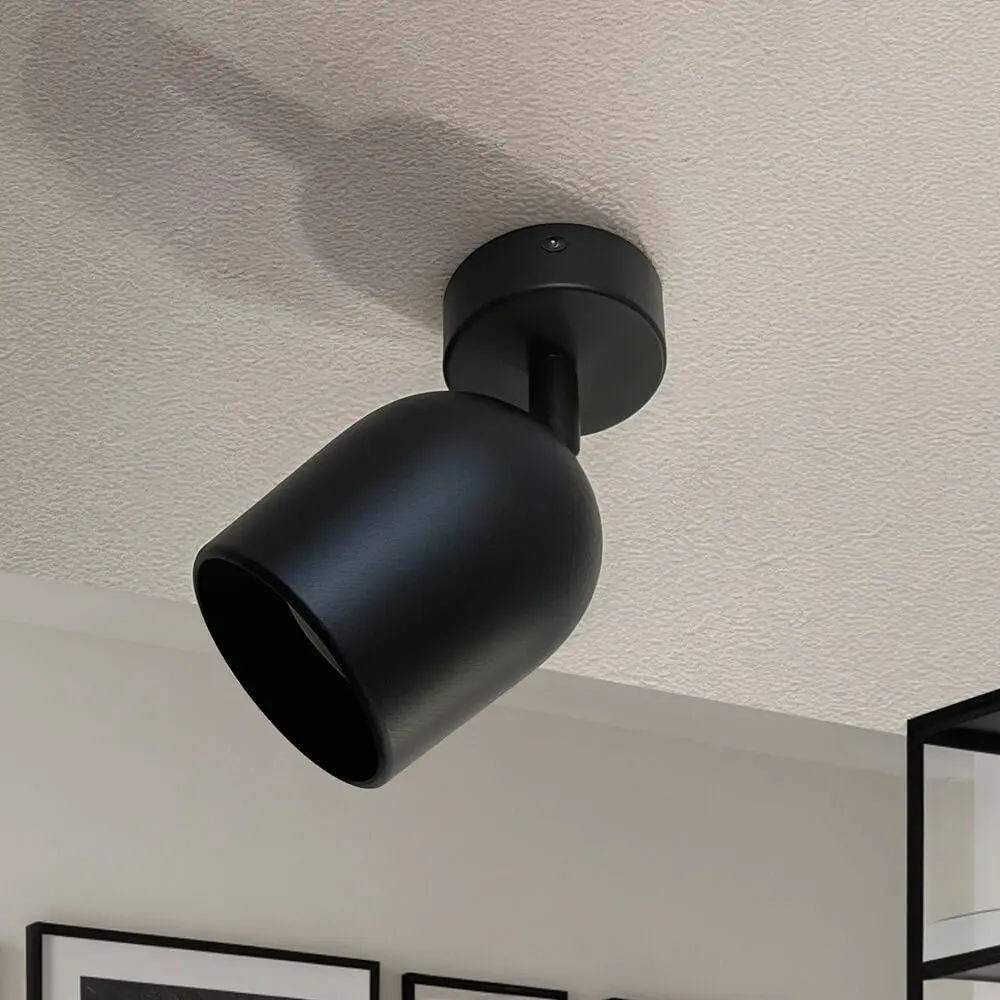
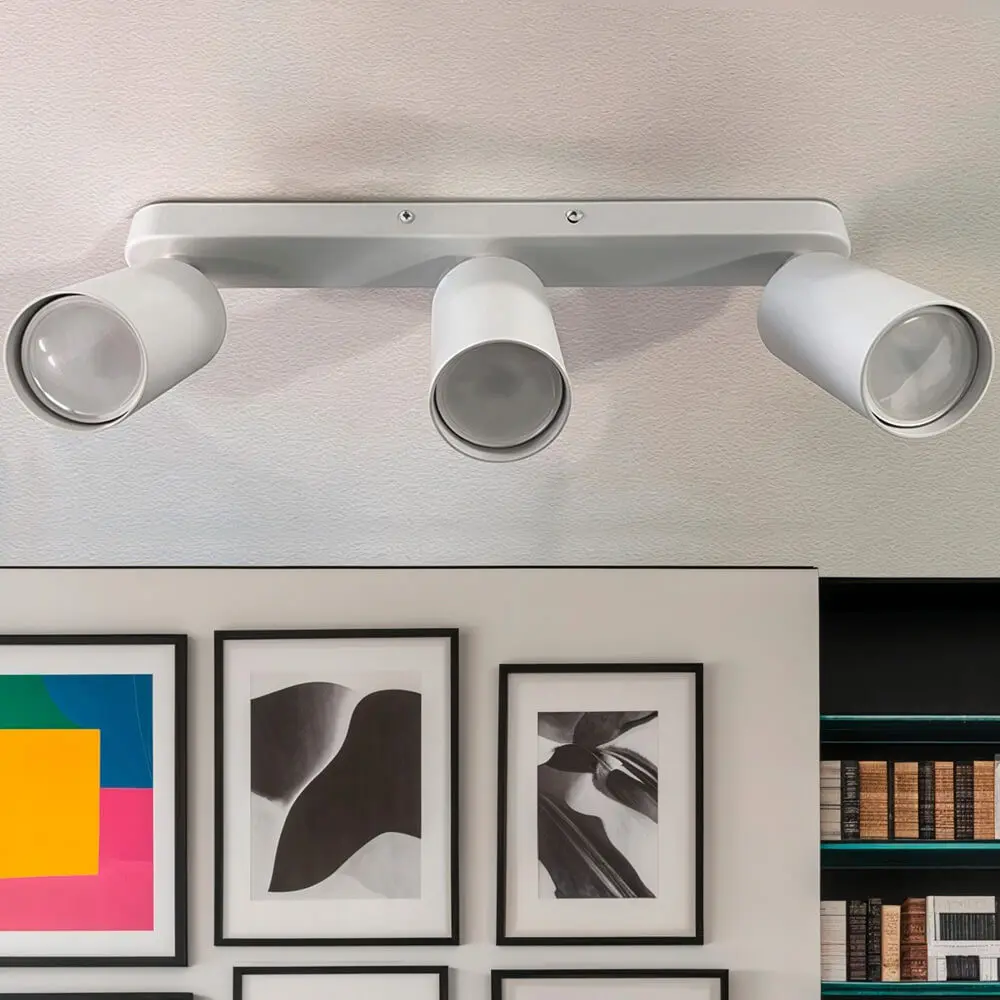
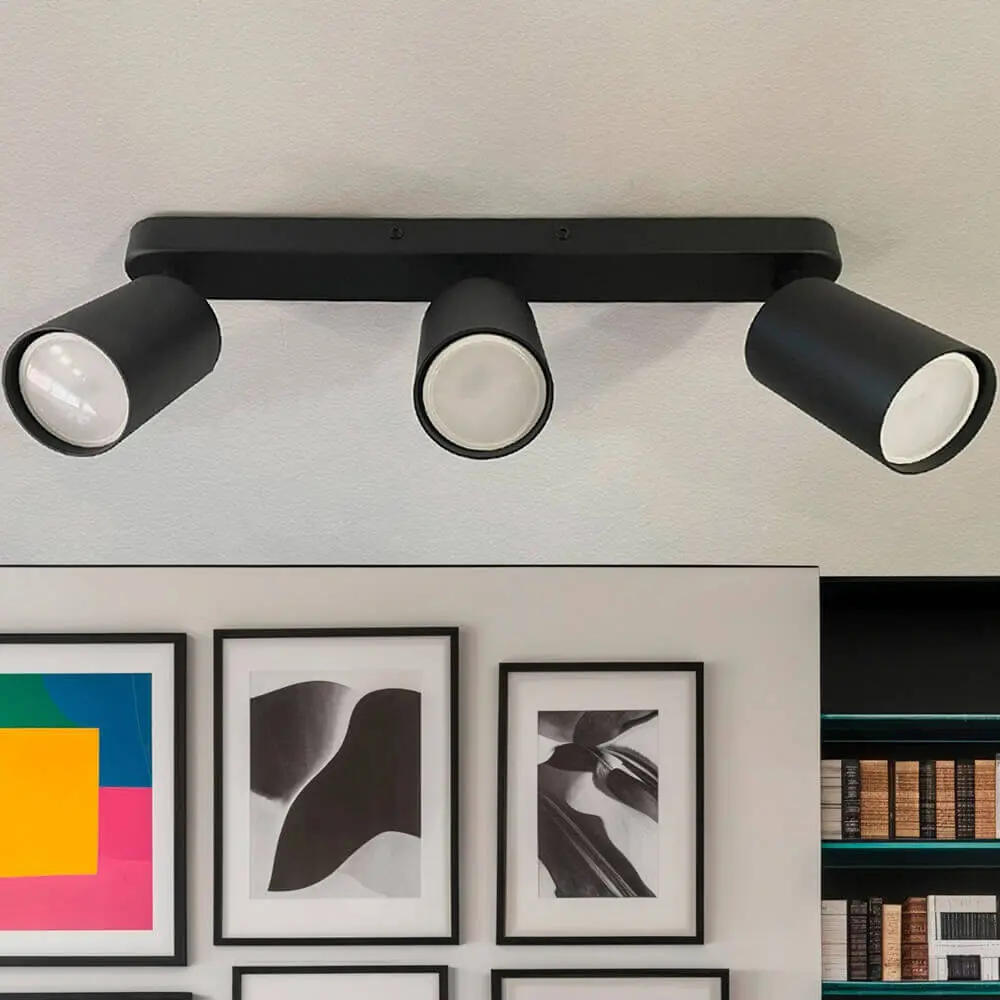
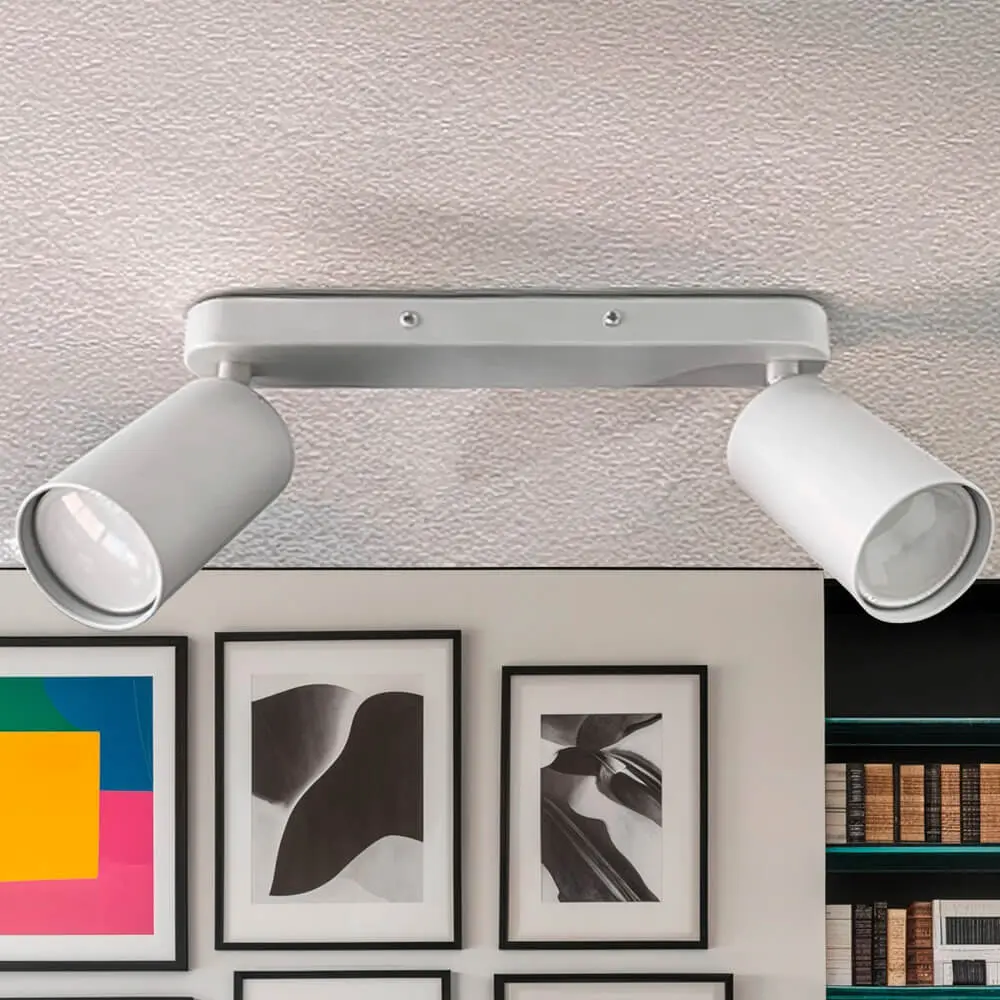
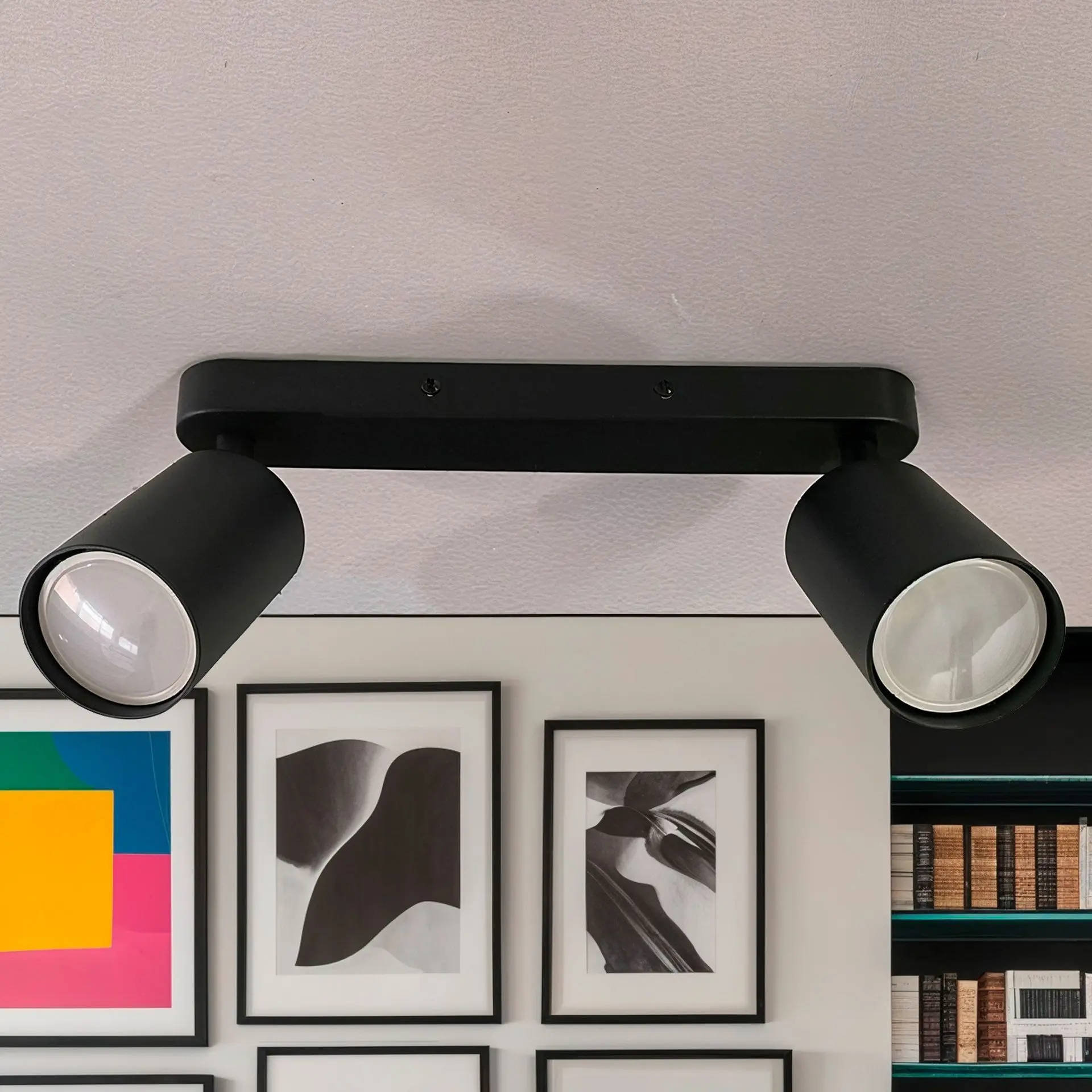
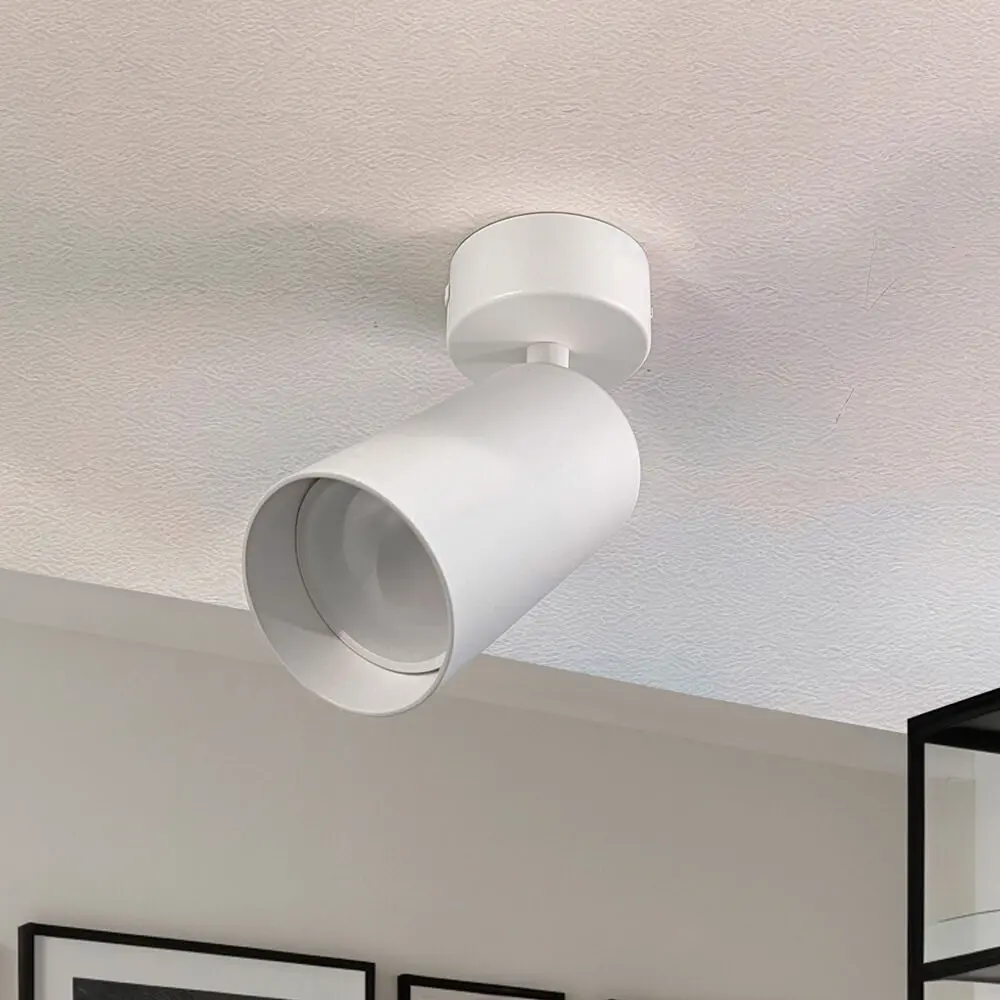
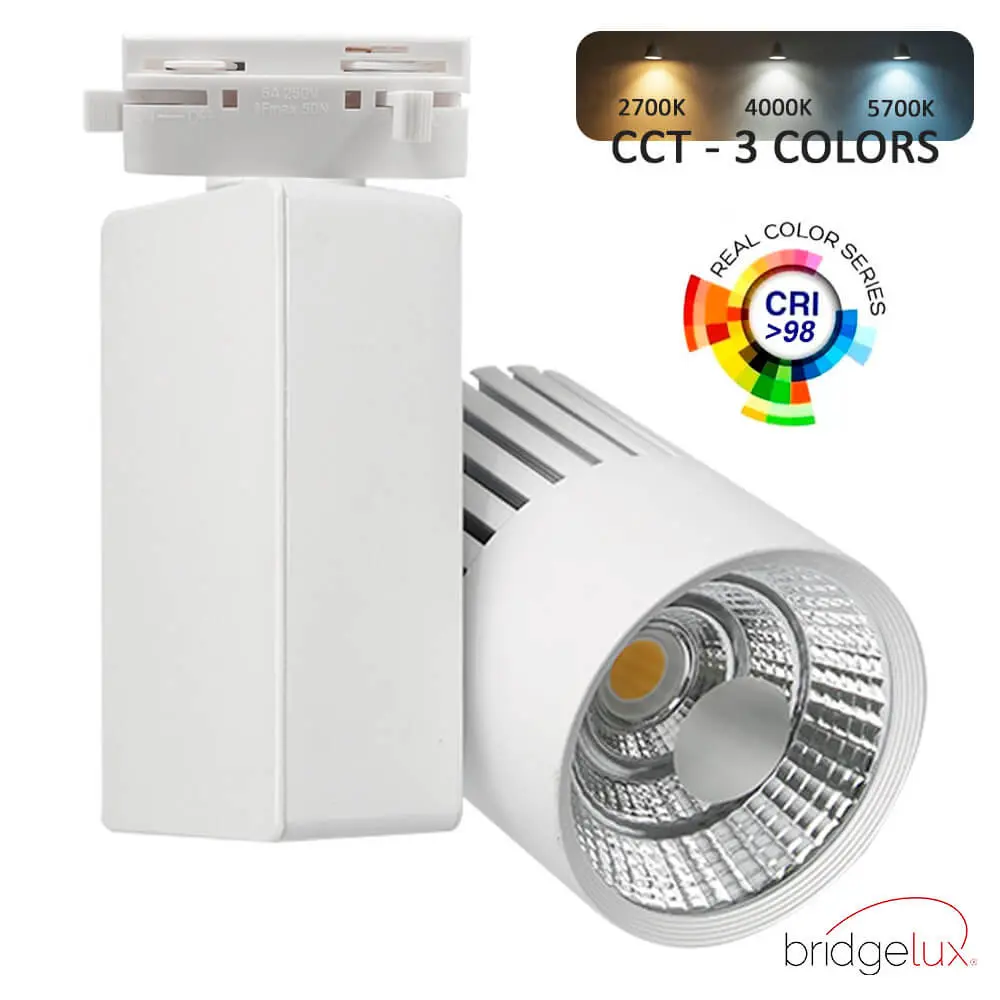
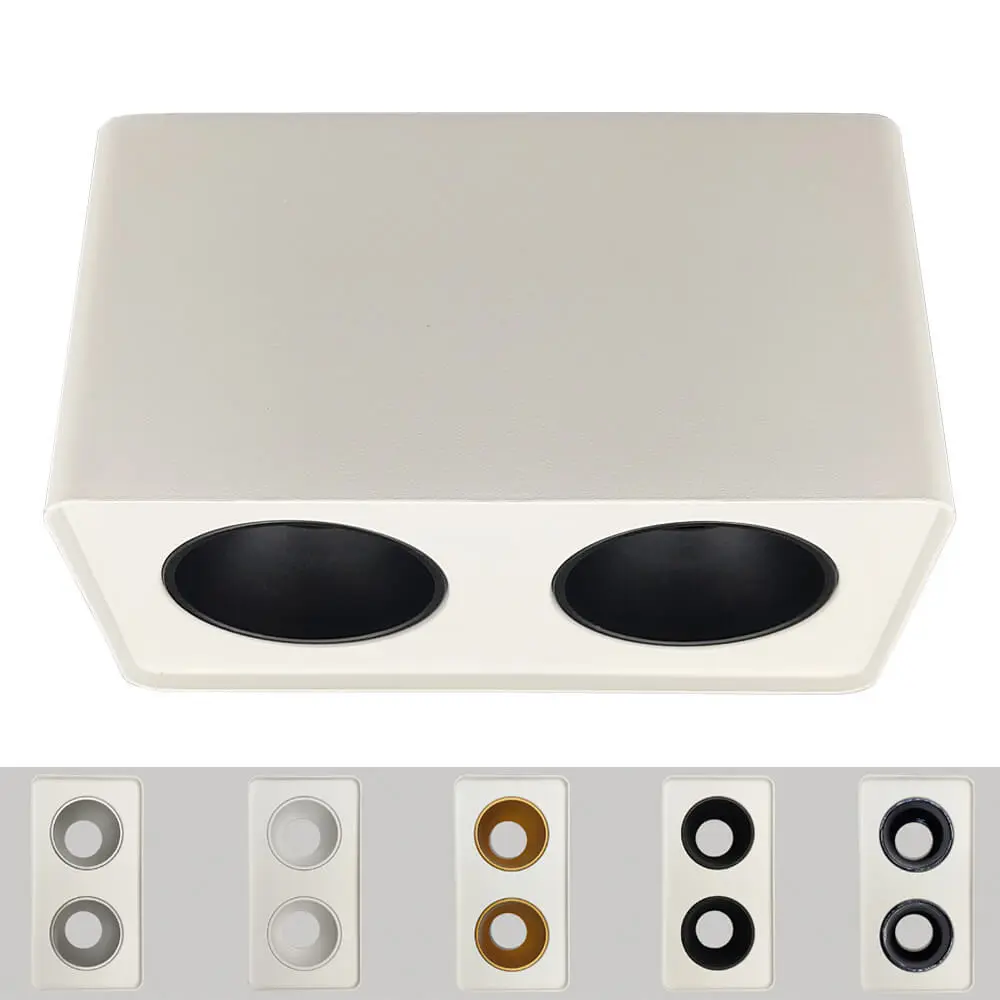
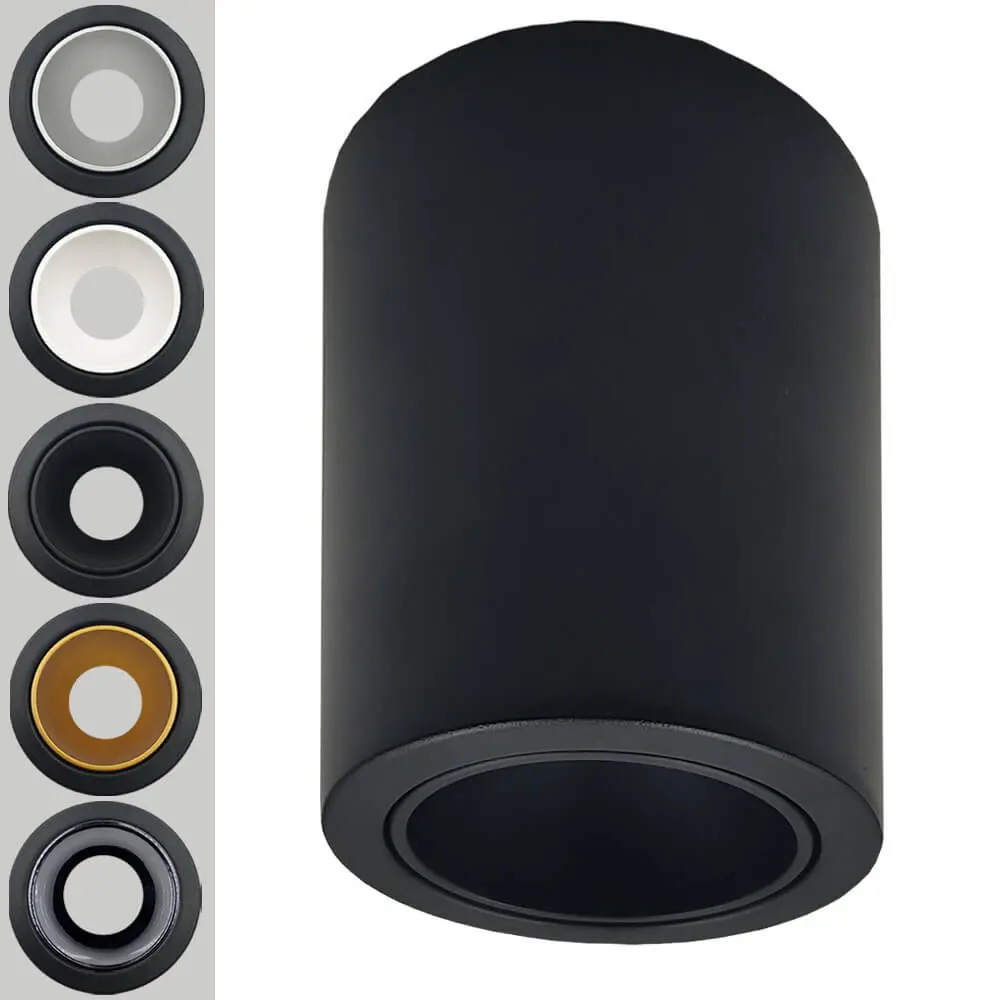
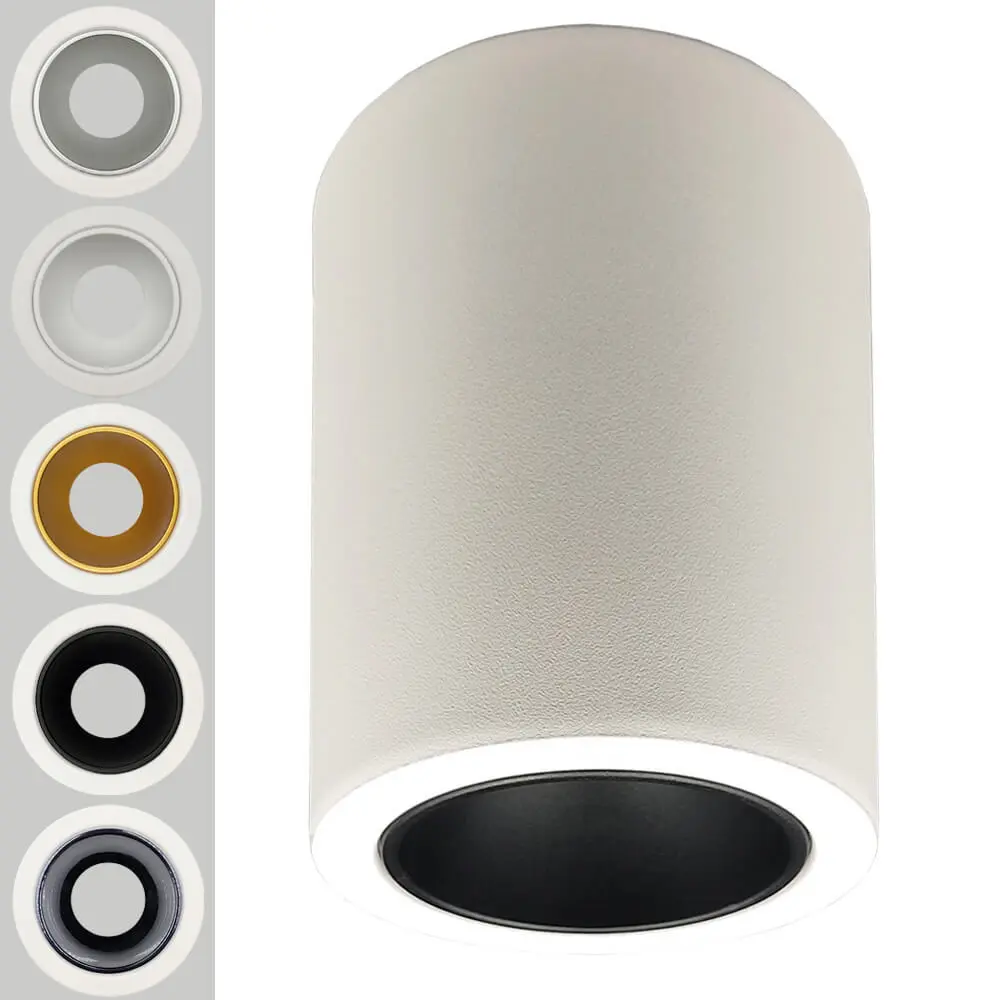
Office spotlights
The spotlight is the fitting that best handles what panels and ceiling lights cannot: concentrating light. Wherever you need to mark out an area, light a vertical surface or raise the level at one specific point without raising it across the whole floor, the answer is office spotlights.
We write for the people who buy the equipment: installers, refurbishment contractors, design practices and purchasing managers. We work with trade accounts, volume discounts and a personalised catalogue, and we prepare the DIALux calculation before you order. The range sits under Downlight and Ceiling Lights LED, and you can open an account through Contact.
What office spotlights solve that general lighting cannot
General lighting spreads an even level across the whole area. That covers administrative work, but it leaves three situations unresolved.
The first is accent: a reception desk, a wall with the company logo, a product shelf. What is needed there is a directed light beam, direct light on the object, not more ambient light. The second is reinforcement at a specific point that needs more than the rest, usually because of what the task demands: a screen-based workspace is not the same as a paper-based one. And the third is circulation areas and the corners the ceiling grid does not reach.
In all three cases, a recessed fitting does the job with fewer watts than raising the general level. That is the economic case for the spotlight: it delivers the amount of light where it is needed and not where it is not, and that energy efficiency shows up on the bill.
The practical difference lies in the beam angle. A narrow beam picks out the object; a wide one covers surface area and behaves more like a conventional downlight. Choosing the angle before ordering is what separates an accent installation from a ceiling full of points placed without any logic.
LED office spotlights: recessed, surface-mounted and track
The recessed version is the most common in offices: it disappears into the ceiling and leaves only the trim visible, or not even that in the trimless series. It goes into a suspended ceiling or perforated board, and if the old point had a capped light bulb, the same housing can be reused; it comes in fixed or adjustable versions so the beam can be aimed once installed.
The surface-mounted version covers ceilings that cannot be opened up, and in that case the luminaire stays on view, so the finish matters. And the track spotlight is the solution when the floor layout is going to change: it slides along the track without touching the installation, which is a real advantage in retail spaces and display areas.
The version with a built-in sensor makes sense in circulation areas: the fitting switches on when someone walks in and switches off by itself, with no separate detection wiring.
The LED office spotlights we supply use LED technology with branded drivers and integrated-module LED lamps in several series, and that is what keeps the luminous flux stable over time. In practice they are chosen on three datasheet figures, not on price: flux, beam angle and glare control.
CRI, UGR and ceiling: the datasheet figures of an office luminaire
The UGR is the unified glare rating, and in a space with screens it carries as much weight as the flux. Our fittings declare very low values, which means they can be used in work areas and not just in corridors.
The CRI determines how colours look under that light. In an accent spotlight on corporate material, that colour rendering matters more than in general lighting: it is exactly where people will look.
The light colour is chosen by zone. Neutral white, around 4000 kelvin, is the standard for work areas; cooler white light is for technical areas and warm white for reception and break areas. Many series let you set the light on the fitting itself between several temperatures, and some add an RGB mode for display, so colour temperature stops being a purchasing decision and becomes an installation decision.
The fourth figure is the real lumen output of the light source. Two spotlights with the same wattage can differ considerably in flux depending on the chip, and that is the difference between needing six or nine points for the same result. That efficiency shows on the bill and, above all, in the number of units on the order.
On levels: an administrative area is handled with a steady reference value, and only precision tasks call for up to 750 lux at the specific point. Lighting the whole floor to that level is throwing money away.
Lighting for offices and private offices: what goes in each zone
A serious project combines product families, and the spotlight is one of them. The light for an entire floor never comes from a single type of fitting, so it pays to know what each one does.
Office lighting starts in the desk area, which is handled with panels or continuous linear lighting. Surface-mounted fittings cover rooms without a ceiling void: they are under LED Ceiling and Surface Lights.
Pendant lamps define reception and the boardroom, bringing the light down to the work surface; that pendant family is under LED Pendant Lamps. Table lamps and desk lamps cover the task at the workstation itself, and you will find them under LED Table Lamps; that is also where floor lamps come in, for reading corners and informal areas.
Wall lights handle narrow corridors and courtesy lighting next to entrances; that mix of lamps and lights is what covers a complete office or private office. And the spotlight, as we said, is reserved for accent and reinforcement.
That combined selection of lamps is what distinguishes a well-thought-out project from an order picked out of a catalogue, and it applies to any floor size. In an open-plan office, the usual approach is panels or linear fittings for the bulk, spotlights for vertical surfaces and accents, pendants in meeting rooms and desk lamps wherever someone asks for them.
The best lighting for every workplace and workstation
There is one argument that convinces the person signing off the budget, and it is not the price of the fittings.
Proper lighting reduces visual strain, which translates into fewer complaints mid-afternoon and better visibility of documents and screens. Employee wellbeing is not a slogan: it is the difference between a floor where people work comfortably and one where everybody ends up with tired eyes.
Badly placed brightness is the main enemy, and it almost always comes from two sources: a bright source in the field of view or a reflection on the screen. A badly aimed spotlight produces both at once, which is why it should be aimed once the room is furnished, not before.
The best lighting conditions combine natural light from the façade with an installation that adapts: a dimmable fitting lowers the output when daylight comes in and raises it as evening falls. That adjustment, according to the daylight hours of each time of year, is what makes the room always look the same.
And yes, a good installation boosts productivity, but without exaggerating: it does not make anyone work better; what it does is stop getting in the way. Poor light costs far more performance than good light gains.
Type of light and placement: how many spotlights you need
Where a spotlight goes is not decided on an empty floor plan: it is decided with the furniture in place and, if possible, with someone sitting there.
Over a counter, the point goes forward of the edge so that the light falls on the service surface and not on the head of the person serving. On a wall you want to wash with light, the spotlight is set back from it by a distance proportional to the clear ceiling height: too close and it draws a hard arc at the top, too far and it stops washing the wall and becomes just another point.
On shelving or a display unit, the functional approach is to repeat points at regular intervals rather than placing one powerful fitting in the middle. The eye perceives the lit whole, not each unit, and the sense of order depends more on rhythm than on total flux.
And in circulation areas, the practical rule is to mark the route, not flood it. A series of points at a constant spacing guides people without raising the general level of the corridor, which is also where it is least needed.
When the project allows, we hand over the calculation with these spacings already worked out, so the installer sets out with measurements rather than by eye.
Buy office spotlights with Philips drivers
What we are asked for most is not a single spotlight: it is the complete installation for a floor, with its mix of product families.
Opening a trade account requires the registration form and company or self-employed documentation sent to the sales email address. With an active account you get trade prices, discounts that grow with volume, a personalised catalogue with your details and the option of a credit line with deferred payment, subject to approval. For resellers there is blind shipping and dropshipping with the catalogue connected to their shop.
Our technician prepares the DIALux calculation from your drawings: it returns the layout of points, the average level and the distribution by zone. With that data, the quote stops being an estimate. Lighting that really works comes from the calculation, not the catalogue, and well-distributed LED lighting covers work areas without excess.
Shipping costs are calculated in the basket according to weight, volume and zone, and appear before you confirm; the Canary Islands, Ceuta and Melilla require DUA customs processing and prior contact. The warranty runs up to 6 years depending on the product, with three years as standard, and returns are processed by RMA from the customer area, with return carriage paid by the customer.
There is also a detail that only shows up on site: coordination with the other trades. Recessed spotlights need their cut-out before the suspended ceiling is closed, so the setting-out should reach the installer in good time. When that is forgotten, the alternative is to cut in afterwards, and the result is never as clean.
Send us the plan and we will tell you how many spotlights you need and with which optics. It is the difference between lighting your office with well-aimed LED light and a ceiling with points spread by eye, which is what ends up happening when the setting-out is left until the last day on site.
Frequently asked questions about office lighting
Can I use spotlights as the general lighting for a floor?
You can, but it rarely pays off: you would need many more points than with panels or continuous linear lighting, and the distribution would be less even. The spotlight performs best as reinforcement and accent, not as the base.
Which beam angle should I order?
Narrow to accent an object or a wall, wide to cover surface area. If you are lighting a long counter, several medium beams spread the light better than one very wide beam.
Are recessed spotlights suitable for ceilings with a shallow void?
There are low-profile series designed for exactly that. Check the recess depth on the datasheet before ordering, because that is the figure that decides whether it fits or not.
Can they be aimed after installation?
Models with an adjustable head can, and they are the recommended choice when the furniture layout has not yet been finalised. Fixed models have to be left pointing where they should from the start.
Are they suitable for a meeting room with video conferencing?
With care: a direct beam over the table casts shadows on faces. There it is better to combine them with indirect light or a wide-distribution fitting and keep the spotlight for the back of the room.
How many watts does an accent spotlight need?
Fewer than people usually think. What decides the result in an accent is not the wattage but the contrast with the surrounding level: on a wall in semi-darkness, a modest fitting with the right beam stands out more than a powerful one that is badly aimed. Tell us what you want to light and from what distance, and we will tell you the combination.
Can I mix spotlights of different colour temperatures in the same room?
It is not recommended. The eye notices the difference in temperature as soon as two fittings light adjacent surfaces, and what people perceive is that one of them is faulty. If zones need to be differentiated, it is better to do it by level than by colour temperature.
Do you supply quantities for an entire building?
Yes, and it is worth telling us the full scope. With the product reference confirmed, we reserve stock for every phase and avoid the last floor being supplied with a different series.
Más en Office Lighting