

Fluorescent Lights for Offices
11 productos
PACK10 LED Tube T8 18W 120CM | GXtronic Glass 300º | SMD2835 110Lm/W
29,90 €
VAT included
Ref: TB18W
PACK10 LED Tube T8 24W 150CM | GXtronic Glass 300º | SMD2835 110Lm/W
34,90 €
VAT included
Ref: TB24W
PACK10 LED Tube T8 9W 60CM | GXtronic Glass 300º | SMD2835 110Lm/W
19,90 €
VAT included
Ref: TB9W
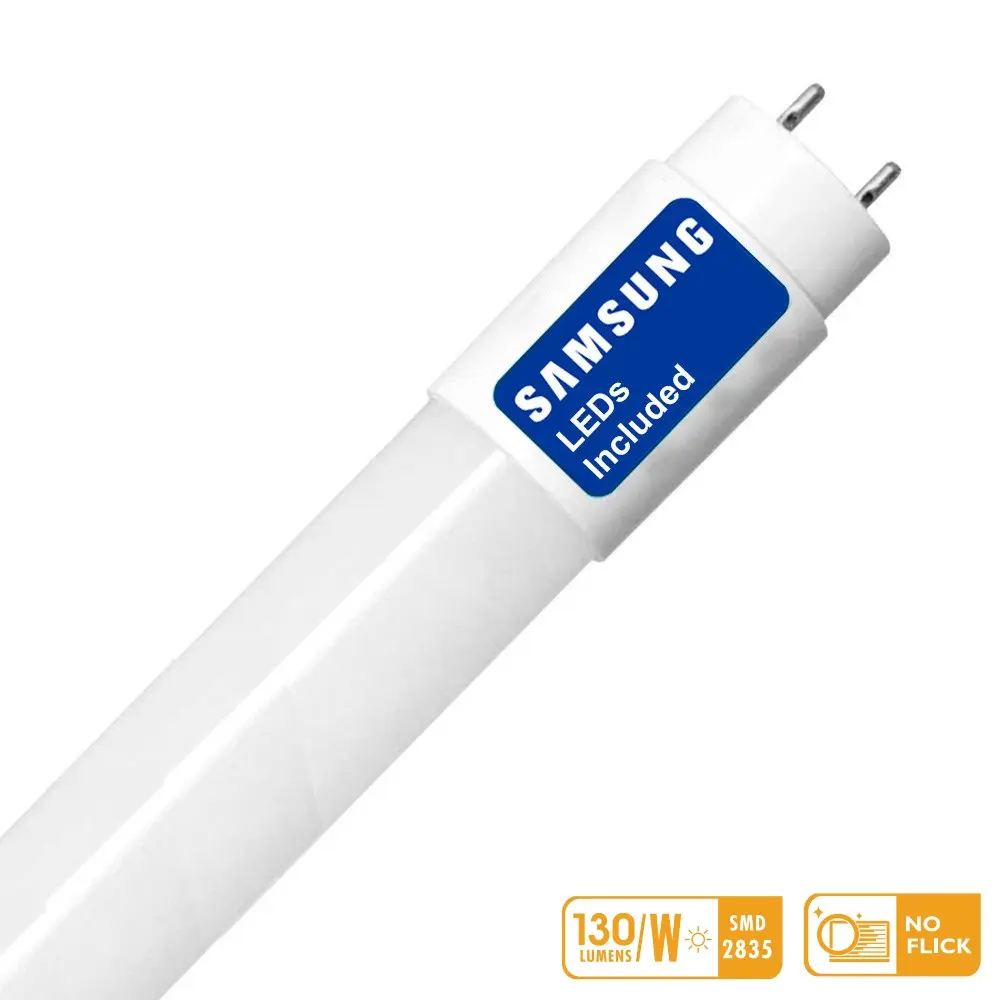
PACK10 - LED Tube 9W Glass 60cm 300º - SMD2835 SAMSUNG - High Brightness 130Lm/W
35,09 €
VAT included
Ref: TB9WSS
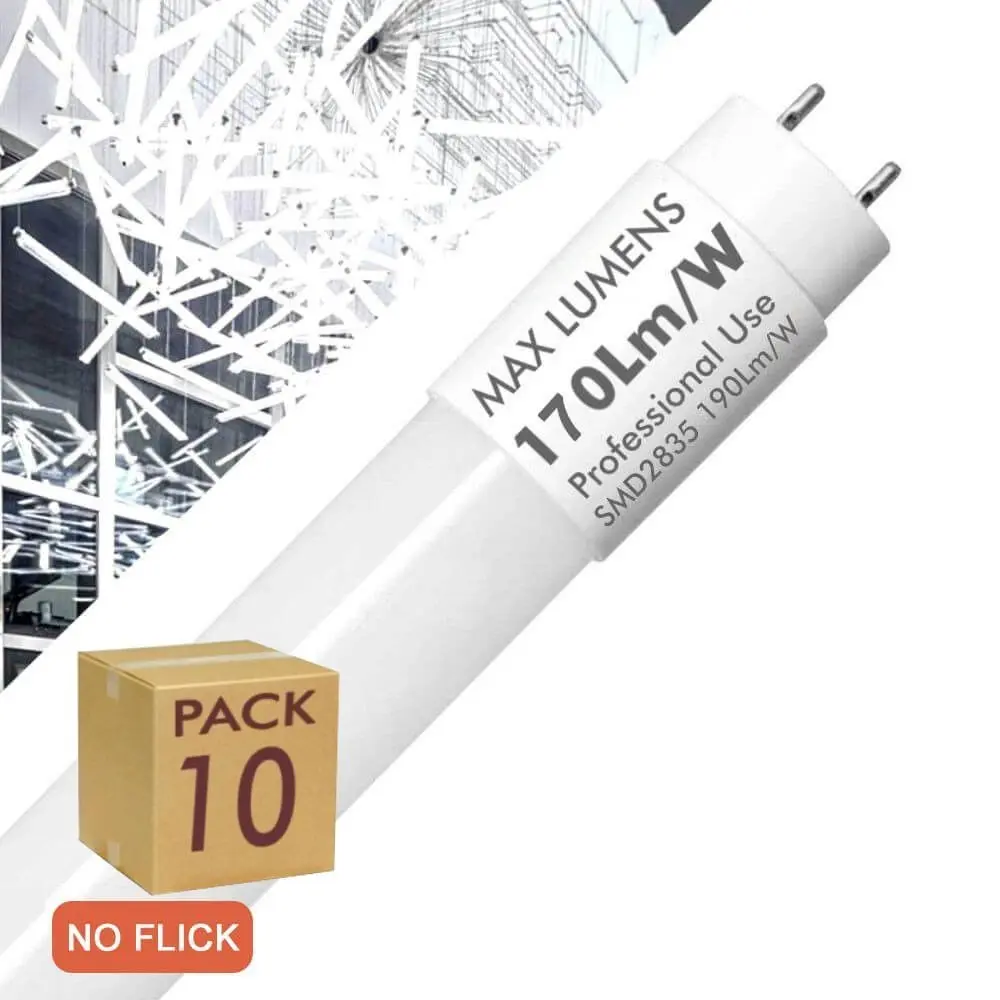
PACK 10 - LED Tube Glass - 25W - 150cm T8 - 170 Lm/W - PRO MAX LUMENS - 4250Lm - NO FLICK
94,16 €
VAT included
Ref: TBGHB25W
PACK 10 - LED Tube Glass - 20W PRO - 120cm T8 - 170 Lm/W - PRO MAX LUMENS - 3400Lm - NO FLICK
78,89 €
VAT included
Ref: TBGHB20W
PACK 10 - LED Tube Glass - 10W - 60cm T8 - 170 Lm/W - PRO MAX LUMENS - 1700Lm - NO FLICK
49,85 €
VAT included
Ref: TBGHB10W
LED Tube Glass 20W 150cm 300º - HIGH LUMINOSITY - OSRAM CHIP
66,72 €
VAT included
Ref: TBGOSR20W
LED Tube Glass 18W 120cm 300º - HIGH LUMINOSITY - OSRAM CHIP
61,50 €
VAT included
Ref: TBGOSR18W
LED Tube Glass 9W 60cm 300º - HIGH LUMINOSITY - OSRAM CHIP
Price on request
VAT included
Ref: TBGOSR9W
LED MAX Tube 13W Glass 300º 90cm - HIGH LUMINOSITY
2,38 €
VAT included
Ref: TB90MAX
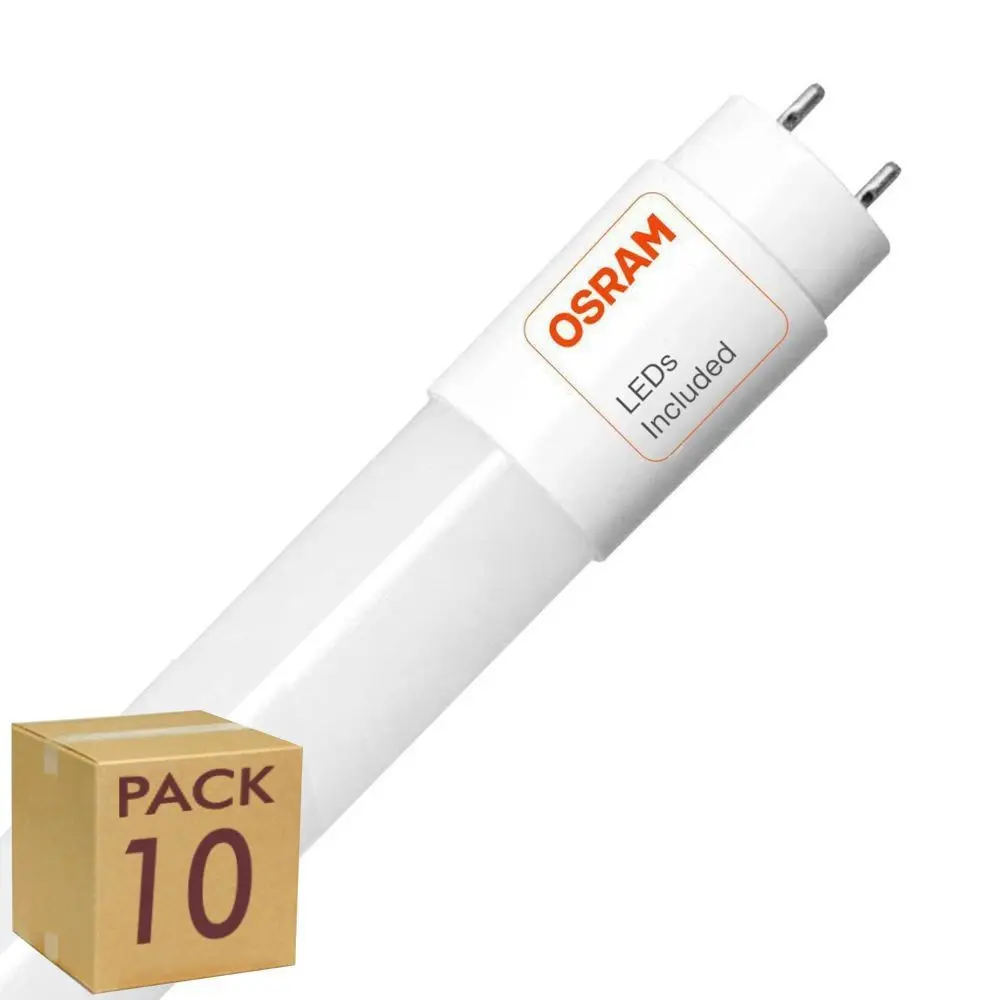
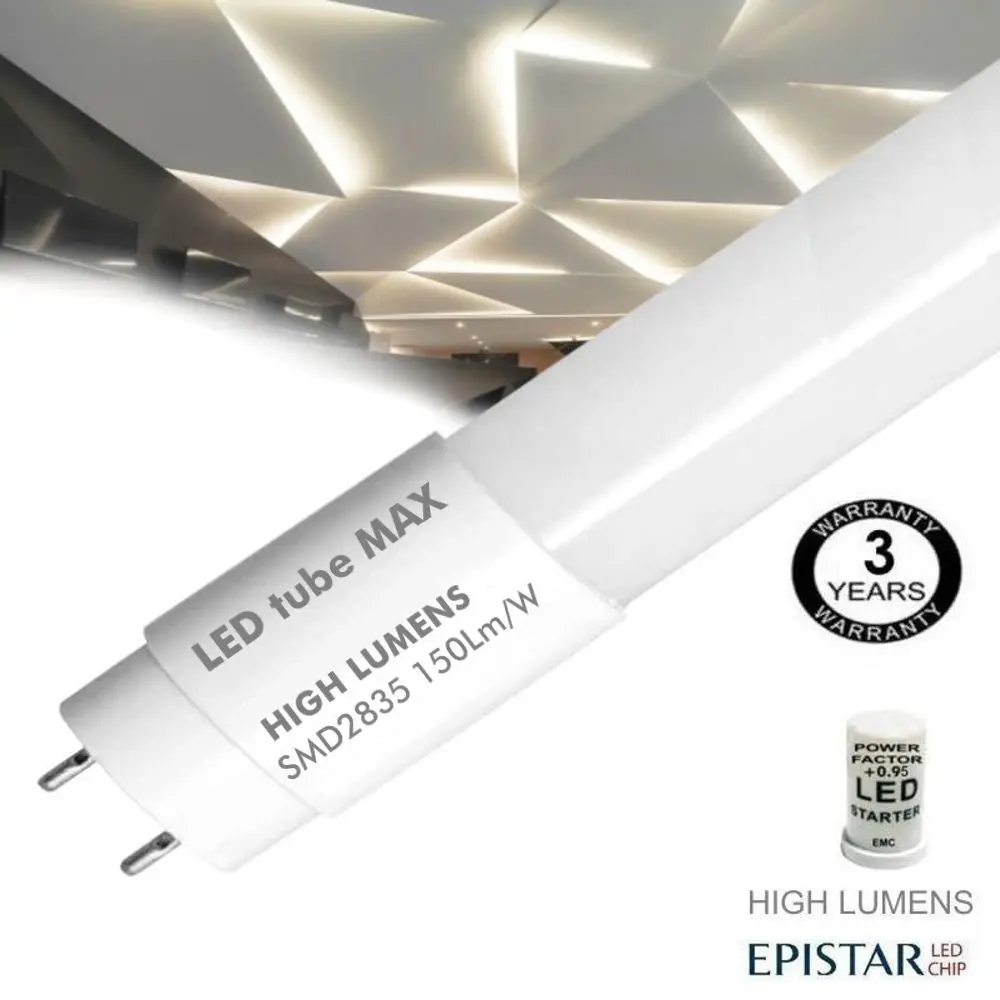
Fluorescent lighting for offices
Anyone searching for office fluorescent lights rarely wants another discharge tube: they want the same familiar format, in the same housing, without having to replace it every season. This page explains how that switch is made, which lengths are available and what changes in the installation.
We write for the people who buy the equipment: installers, maintenance companies, purchasing managers and resellers. We work with trade accounts, volume discounts and a personalised catalogue, and we prepare a DIALux lighting calculation when the retrofit is a large one.
From fluorescent tube to LED: what changes inside the housing
The classic fluorescent tube, which many people still call a neon tube or neon lamps even though there is no neon in them, is one of the discharge lamps: inside there is gas and a small amount of mercury which, when excited, emits ultraviolet light; the phosphor coating on the glass tube converts that UV radiation into visible light. That whole mechanism explains its three well-known drawbacks: slow start-up, flickering at the end of its life and the need to dispose of it as hazardous waste when it is removed.
The T8 LED equivalent has no gas and no UV: it uses diodes and its own electronics. In the catalogue you will see it listed as a T8 LED fluorescent replacement lamp, which is simply the long name for the same part. It fits the same two-pin lampholder and the same housing, so the existing fitting is not thrown away: only the light source is changed.
There is one mandatory step. You have to remove or bypass the starter and, in many cases, remove the ballast as well, because the LED tube is powered directly at 230 V. It takes minutes per light point, but it must be done: leaving the old ballast in the circuit shortens the life of the new equipment.
From then on, the result is completely different. LED lighting replaces the old fluorescent lighting: where there used to be a hesitant start-up there is now instant switch-on, with no flicker and a lifespan that does away with the seasonal trip up the ladder.
Office fluorescent tube lengths: which one each area uses
Replacement tubes repeat the lengths of the traditional fluorescent, which is why they fit without any building work.
The longest of all (150 cm) is the one fitted in large panel fittings and in corridors. The 120 cm tube is the most widespread, the one found in most old grid ceilings. T5 tubes, which are slimmer, belong to more modern fittings and use a different lampholder: check this before ordering. The 90 cm tube and the shorter ones cover circulation areas, toilets and technical cupboards, while the short formats, 60 cm, the 30 cm white batten and the 60 cm white module, work under shelving, in display cabinets and in plant rooms.
Some intermediate lengths can be misleading: the 127 cm and 115 cm tubes in some older fittings do not always match the current standard. And with twin fittings you need to check the lampholders, because 2x G13 fittings take two tubes, not one. It is worth measuring the length of the tube before you order, because a tube that does not fit means sending back the entire order.
In terms of wattage, an 18 W tube covers what a far more power-hungry fluorescent of the same length used to do, and that is the difference you see on the electricity bill.
On the product sheet, each reference is identified by that combination of protection rating, colour temperature and length. You will see a waterproof fitting described as IP65 4000K 120 cm or IP65 4000K 150 cm depending on its length, a batten as 4000K 30 cm, and the reinforced models for impact-prone areas as 4000K IK10 IP66 120 cm. It is dry nomenclature, but it is what stops you picking the wrong reference when ordering a hundred units.
For those who prefer not to reuse the old housing, a complete LED tubular luminaire solves the light point in one go: new body, optics and electronics, without carrying over a twenty-year-old fitting. It is the option we recommend when the diffuser has yellowed or the lampholder has become brittle.
Battens, waterproof fittings and technical luminaires: beyond the bare tube
The bare tube is not the only option. In practice, the modern office combines three types of fitting.
The batten is the most direct format: body and LED in a single piece, for surface mounting with no existing housing. A fluorescent-style LED technical luminaire of this kind replaces the whole assembly, not just the light source. It works well in internal storerooms, archives, cleaning cupboards and anywhere the finish matters less than the light level.
The waterproof technical luminaire covers car parks, plant rooms, industrial kitchens and damp areas. Here the protection rating is what counts: a sealed technical fluorescent luminaire withstands dust and splashes where an open fitting would fail. In areas exposed to knocks, a heavy-duty fluorescent lamp with a reinforced housing prevents impact damage. The waterproof fluorescent version is the one specified for car parks and for premises cleaned with a hose.
Then there is the LED industrial lamp for industrial buildings and high-ceiling spaces: this linear format lights racking aisles better than a concentrated point source, and it is what gets installed when the office shares a building with a warehouse.
All these families are available in versions with added features. A LED fluorescent with sensor switches on when it detects someone passing, which is what pays off in archives and car parks; the built-in motion sensor also saves running separate detection wiring. A fitting with an emergency module maintains a minimum light level if the power fails; and a dimmable LED luminaire lets you lower the output where daylight comes in through the façade. You will find them in the same branch of the catalogue, with waterproof fittings and battens split into their own subcategories.
Light colour: from neutral to daylight
The old tube's colour was what it was. With LED you choose it, and it is best to do so area by area.
Neutral white at 4000 kelvin is the standard for administrative work: neither cold nor warm, it supports concentration and respects the colours of paper. For technical areas, quality control and workshops, you go up to 6000K or 6500K, daylight tones that sharpen contrast; some product sheets list it as 6400K, which is practically the same to the eye.
Warm white at 3000K, the gentlest LED light, is kept for reception, staff canteens and break rooms, where the aim is to make the atmosphere more relaxed. That softer white light is what stops a staff kitchen looking like a hospital waiting room.
High colour temperature daylight has a clear effect on alertness, which is why it works for early morning shifts and in windowless spaces. Choosing the colour by area, rather than buying everything the same, is what separates a well-planned retrofit from one bought by the kilo.
It is also worth checking the lumen figure on the product sheet and not just the wattage: two tubes of the same wattage can differ considerably in output depending on the LEDs they use, and in a hundred-point retrofit that difference decides whether the room ends up just as bright or somewhat darker than before.
Why the switch pays off where people work
Beyond energy consumption, there are three reasons that convince maintenance managers.
The first is maintenance itself. A discharge tube is replaced several times during the long service life of the fitting that replaces it, and every change means a visit, a ladder and a person. That line disappears from the annual budget. And if a loose screw-in light bulb remains somewhere, it is swapped for its equivalent without touching the lampholder: the replacement LED lamp is ordered along with the rest of the order.
The second is light quality in work areas. With no flicker, no ballast hum and instant switch-on, the perception changes even when the measured level is similar. That better lighting is most noticeable at the end of the day.
The third is waste management. Fluorescent tubes contain mercury and cannot go in general waste: they must be taken to an authorised recycling centre. LED does not have that problem, and in a large retrofit the difference in waste handling is real.
On top of that, this type of lamp has been phased out of the European market for years, so finding a replacement for an old format is increasingly difficult. The old fluorescent tubes still left in stock are running out, and when they do, the fitting has to be changed anyway.
How to buy a retrofit for an entire building
What we are asked for most is not a single tube: it is a whole floor. And there, the sequence matters more than the unit price, because a badly sequenced retrofit leaves the building half done for weeks and forces repeat visits nobody had budgeted for.
First, you count the installed base: how many light points there are, what length they are and what condition the housings are in. Then you decide what is reused and what is replaced entirely. Only then is the reference fixed, so the whole floor ends up with the same colour temperature; a retrofit done piecemeal with different series is visible from the doorway.
Our series use proven electronics, several of them with a Philips driver, and that is the difference you do not notice on installation day but do notice in year three. A cheap T8 tube with a poor driver flickers sooner and shifts colour; a good one maintains its output.
To open a trade account, request the registration form and send your company or sole-trader documentation to the sales email address. Once the account is active you get trade prices, discounts that grow with volume, a personalised catalogue with your details and the option to apply for a credit line with deferred payment, subject to approval. For resellers there is blind shipping and dropshipping with the catalogue connected to their shop.
Shipping costs are calculated in the basket according to weight, volume and zone, and are shown before you confirm; the Canary Islands, Ceuta and Melilla require DUA customs processing and prior contact. The warranty is up to 6 years depending on the product, with three years as standard, and returns are processed by RMA from the customer area, with return carriage paid by the customer.
A tip that saves money on large orders: count the light points you cannot see as well. Plant rooms, the basement archive and the staff kitchen are often left out of the initial count and turn up later, when the series has already been delivered and a second order has to be placed for just a few units.
Send us your light point count and lengths and we will prepare the complete list. Replacing a building's office fluorescent lights is something you do once: it pays to do it with the right reference.
Frequently asked questions about switching from fluorescent to LED
Can I fit the replacement in the fitting I already have?
Yes, if the lampholder is in good condition and of the usual standard. You need to remove or bypass the starter and, in most cases, remove the ballast. If the housing is deteriorated, it is better to replace the whole fitting.
How do I know which length I need?
By measuring the tube that is fitted, not the outside of the housing. Standard lengths are closely spaced and an error of a few centimetres makes the order unusable.
Which colour temperature should I order for an administrative office?
Neutral white at 4000 kelvin for workstation areas. Keep the cooler tones for technical rooms and warm white for the canteen or reception.
Does it flicker at the end of its life, like a fluorescent?
No. A fitting with a decent driver maintains its output to the end and does not give the hesitant start-up of a discharge tube. That said, a cheap driver can cause problems, which is why we check the electronics fitted to each series.
What do I do with the tubes I remove?
Hand them over to an authorised waste handler, because they contain mercury. They cannot go in the general waste bin or be left in a storeroom.
Is it better to change everything at once or area by area?
Area by area works well if the reference and colour temperature are fixed beforehand, so that what is installed next year matches what goes in this year. What does not work is buying as the old tubes burn out: you end up with three different colour temperatures on the same floor and no way of unifying them except by changing everything again.
Do you have a waterproof version for car parks and damp rooms?
Yes, with a high protection rating and in several lengths, and also with a sensor or a built-in emergency module. Tell us the application and we will tell you which rating you need.
Más en Office Lighting